
"We couldn't leave even if we wanted to!"


Continued from Weathering Winter: Arctic blast and loads of snow.
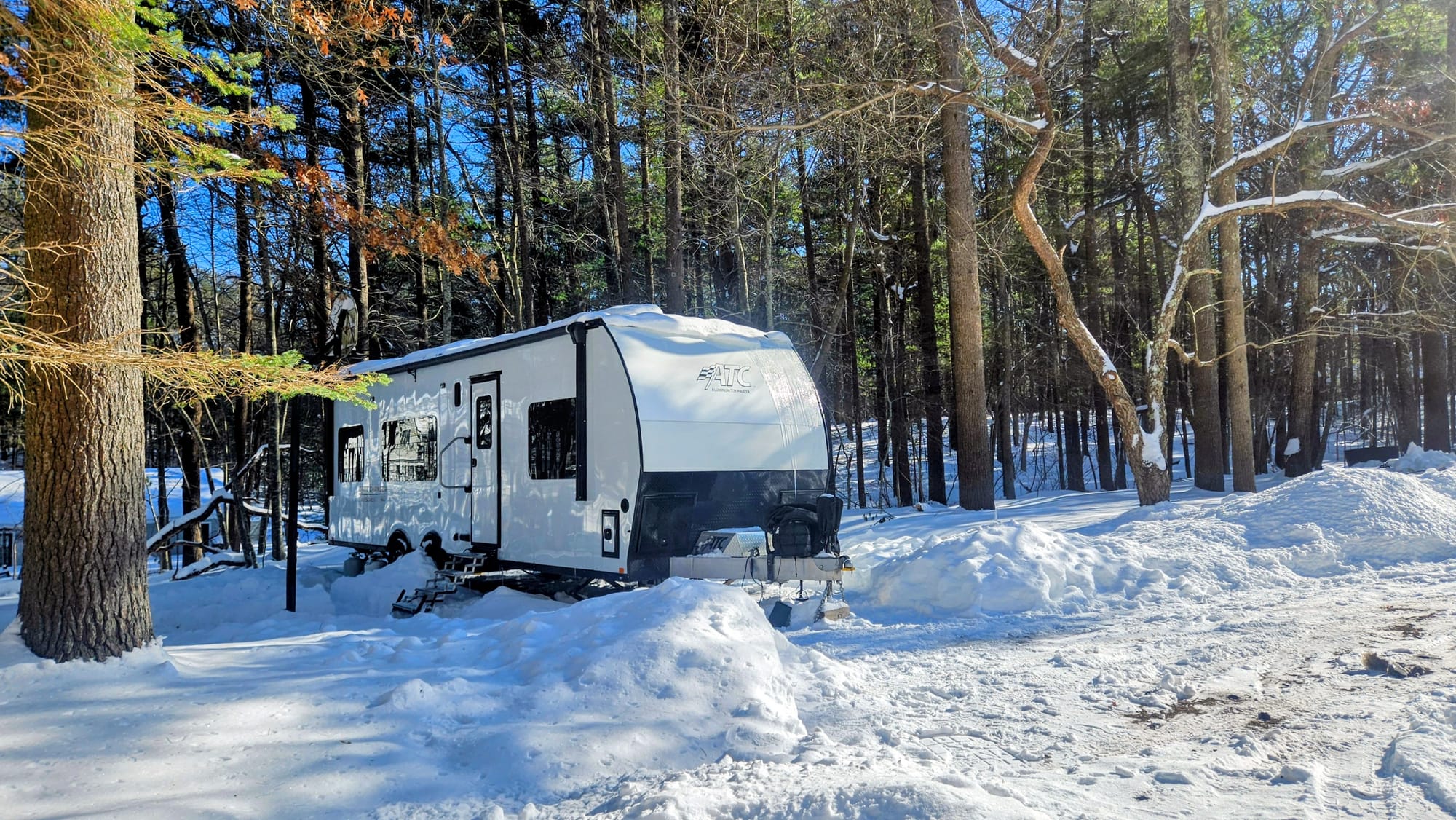
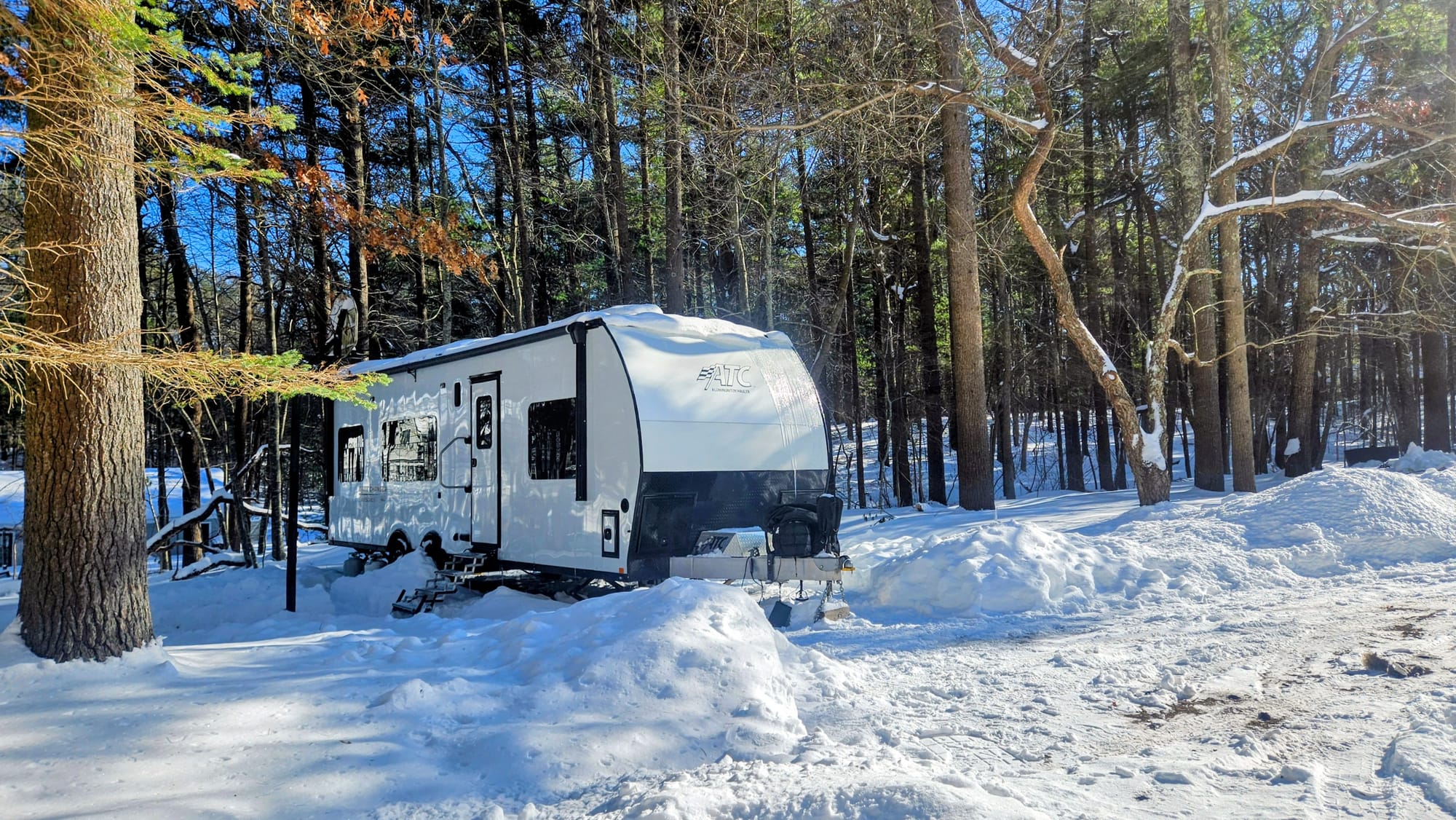
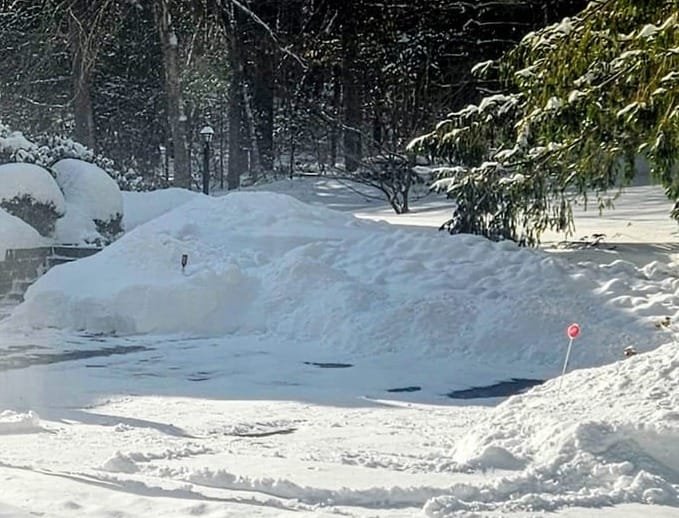
We had gone years without facing plowable snow at our MA home-base, until now. After getting 19 inches, our parking spot was completely covered, with snow piles reaching as high as the frame of our trailer. Then when the plow came, the piles grew feet high, and there are only so many places to put it. The temperatures remained so cold that the driveway snow couldn't melt, creating indefinite slickness. As we walked around assessing the damage, Nicole remarked, "So much for considering leaving in February. We couldn't leave even if we wanted to!"
It was fine; we had no plans to leave, anyway. We had gotten into a groove with our prolonged stationary time, and while a trip to warmer weather seemed lovely, we needed to face the fact: This year was less about adventure and more about investment. Staying still allowed us to prioritize work and money goals. We had a mountain cabin to think about.
We also had future weather predictions to contend with. As soon as this first storm rolled out, the forecast showed an extreme low pressure system that could drop an arctic air bomb cyclone on the eastern part of the US just one week later. Once again, eyes were on the Southeast. We always think about our "alternative" choice, this time being if we had chosen to travel south for a bit. We typically set ourselves up in South Carolina for a while. These two storms were not making the Carolinas very appealing at this point in time. It's not just the storms, though. It's facing storms when we have travel plans in place, when we don't know what road conditions will be like. It's being far away from home and not having the resources of our home-base. We faced that issue last year in North Carolina.
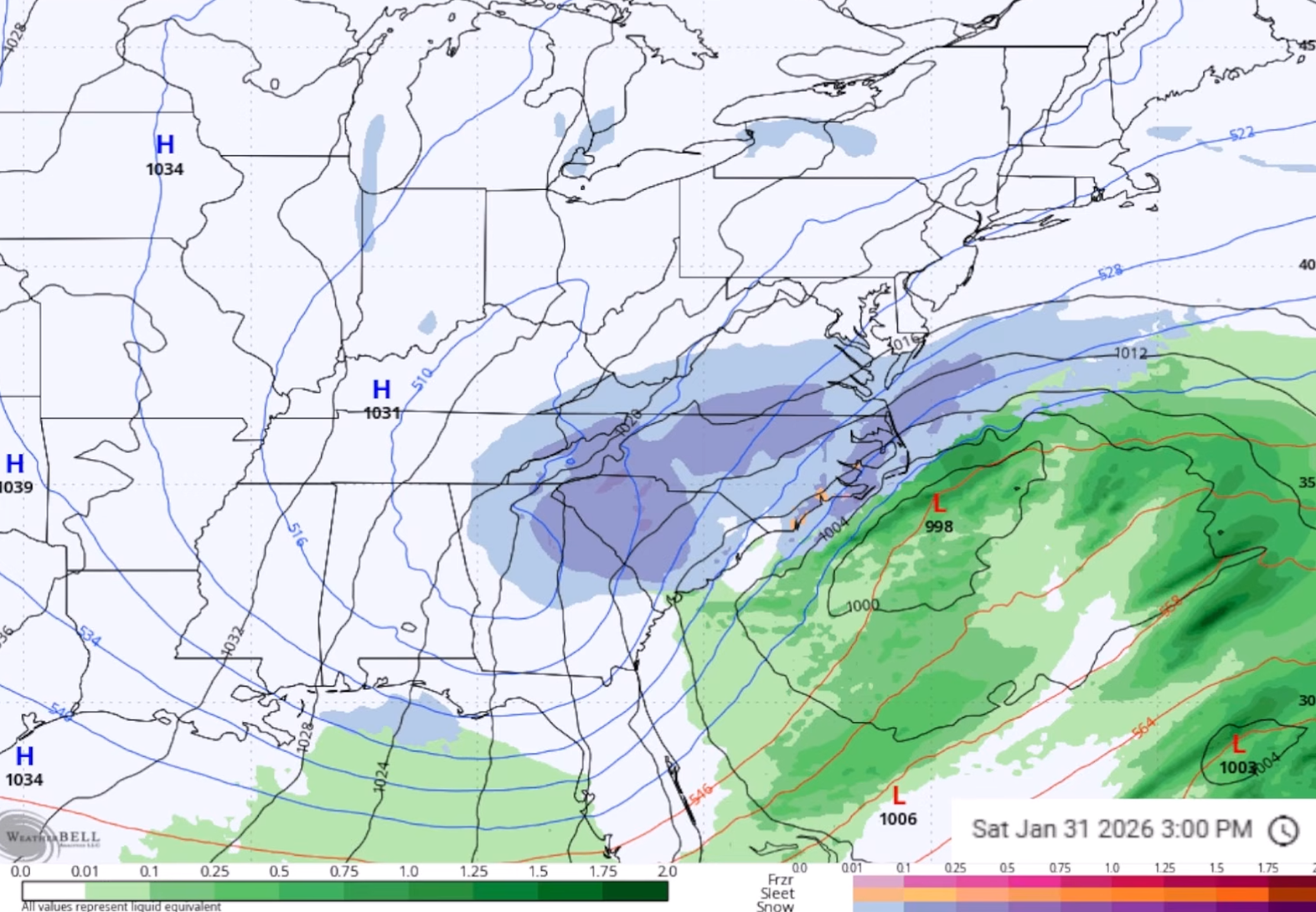
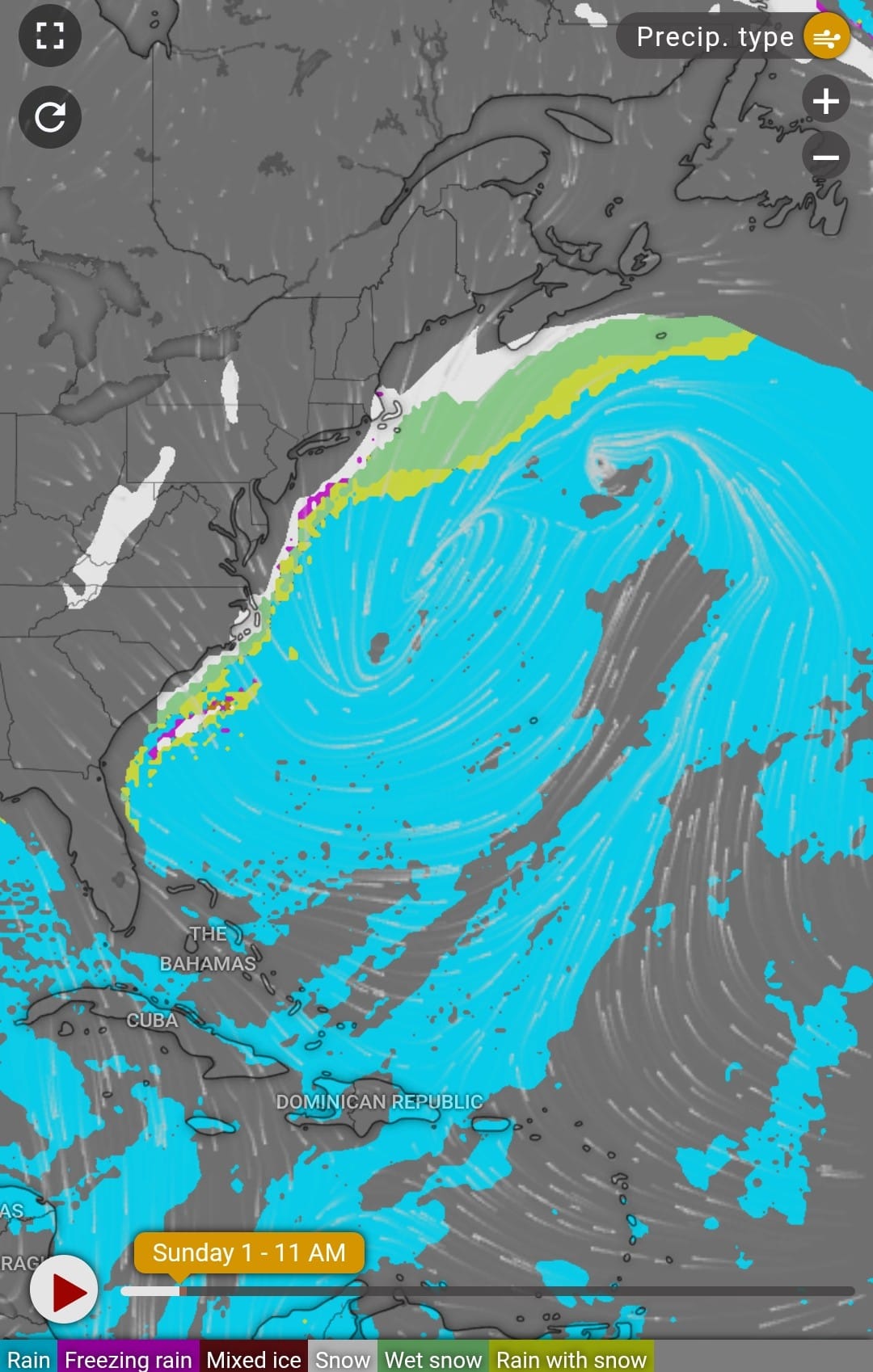
Where would this storm go after hitting the Southeast? Hopefully off-shore, but there was a chance it would turn more inland and fly right over Southern New England. Meteorologists advised us to brace for a potential blizzard just in case. Snow predictions stayed relatively low, but we could face gusty winds. Any sustained winds over 40mph or gusts in the mid-to-high 50s, we would need to take refuge inside the house. Nothing we haven't done before, but this time the risk of a power outage was high. If our barometric pressure drop is severe enough, it wouldn't just bring the winds, but we would still get precipitation. Even if the snow totals weren't much, they could be enough to freeze on/weigh down power lines.
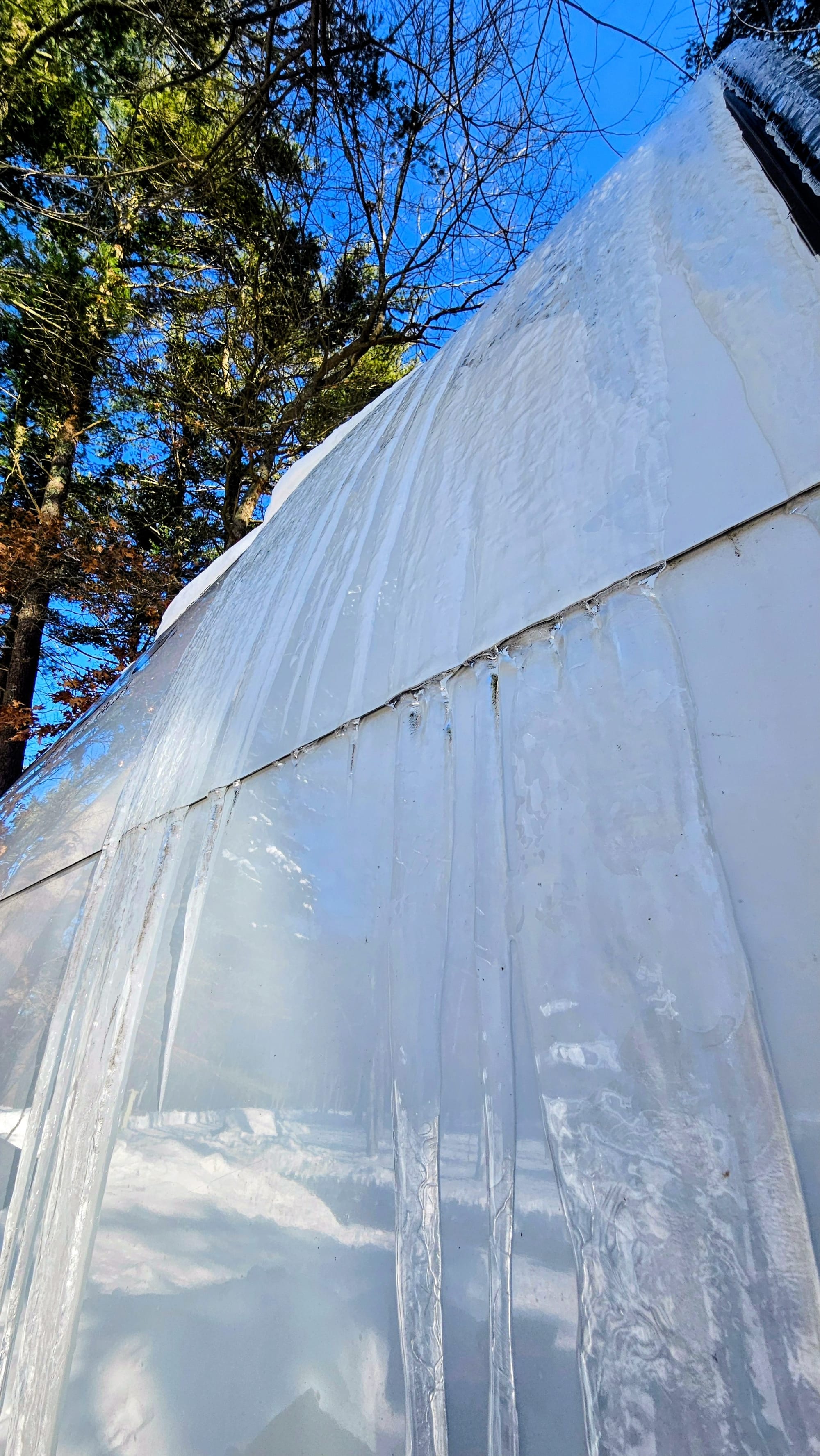
In the days leading up to this second storm, we monitored the forecast and went about business as usual. Our trailer was still functioning great. In fact, the snow piles helped to insulate underneath our rig, making our heaters work more efficiently. If you recall, we couldn't skirt our trailer for the winter because we didn't know we'd be living there until the temps got too cold to attach a skirt. Now we had nature's skirting! We affectionately call this the "rigloo" effect.
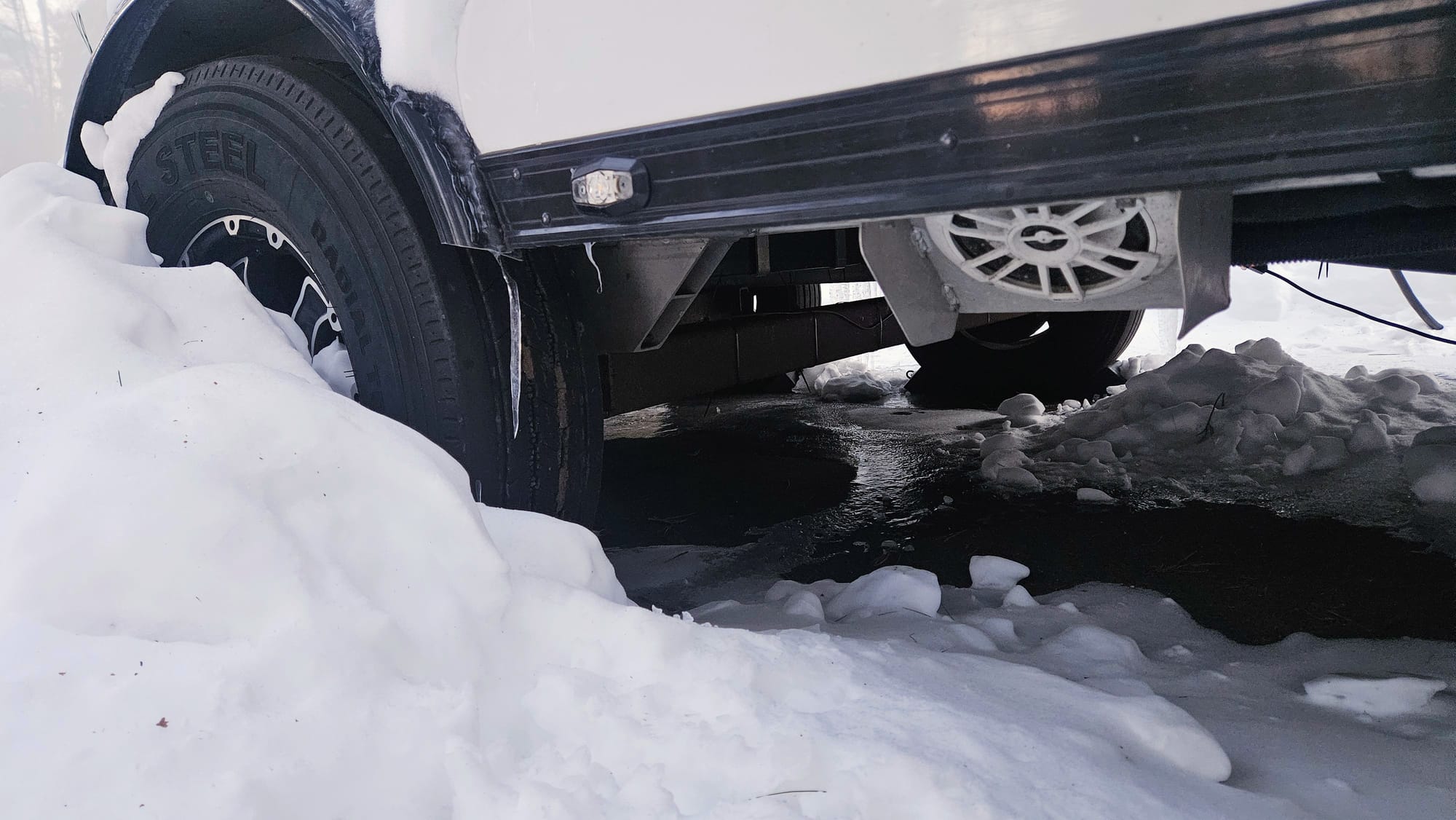
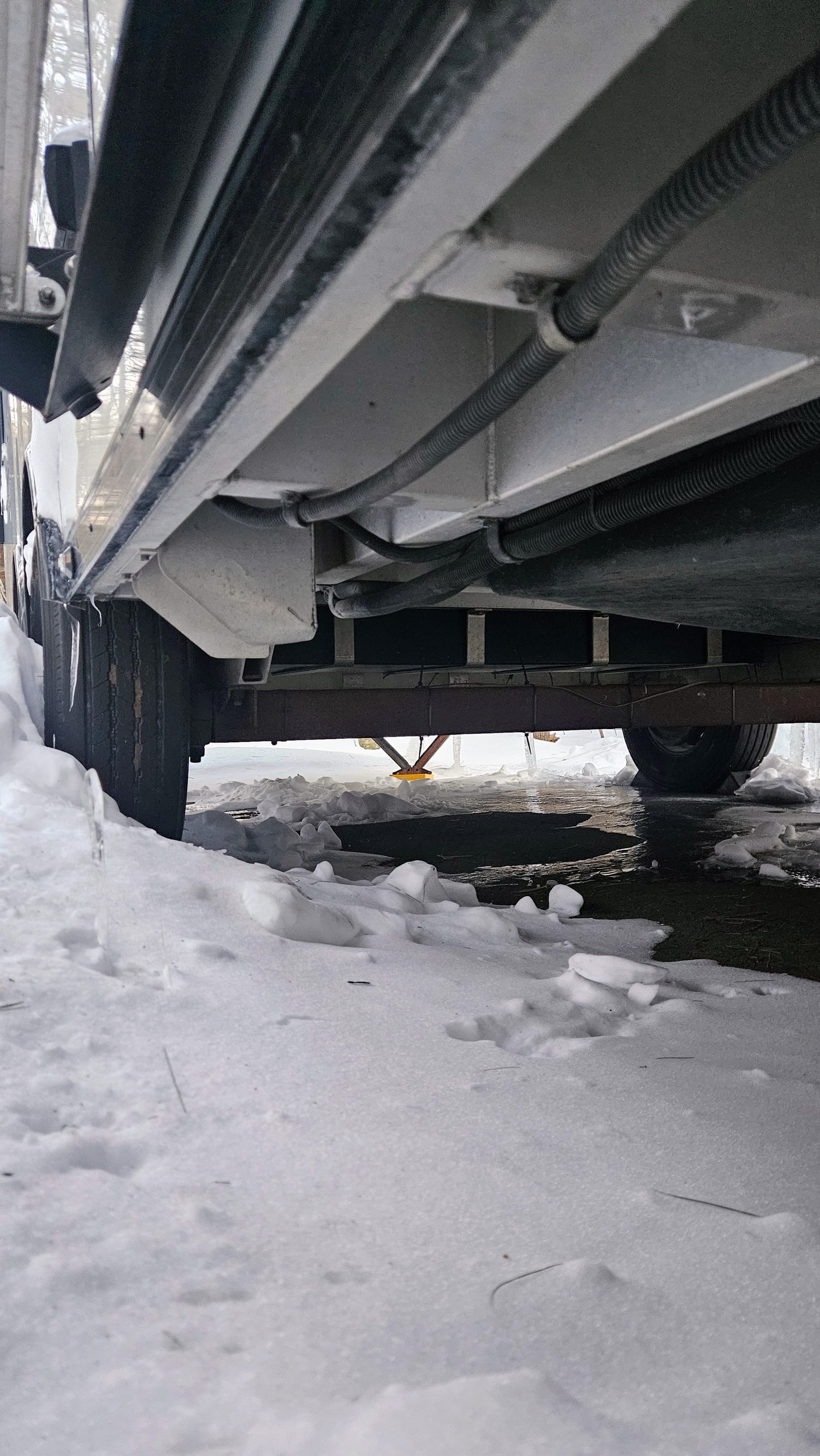
We scheduled our tanks to get pumped out that Thursday. At first, we wanted to wait until the following week when the temps should be a tad warmer, but we began hearing the "gurgle gurgle burp burp" of our toilet and couldn't risk the delay. We just hoped that our RV antifreeze kept everything thawed enough.
We may have prepared ahead of time, but last-minute obstacles came the day of. Anthony noticed that our Valterra valve was frozen solid. This is the secondary valve on our sewer port and needs to be open in order to drain either tank. Time to get out our trusty propane heater. As with all our previous times using it, we make sure to keep it at a distance from the source we're trying to thaw. It's all about gradual ease to prevent breakage.
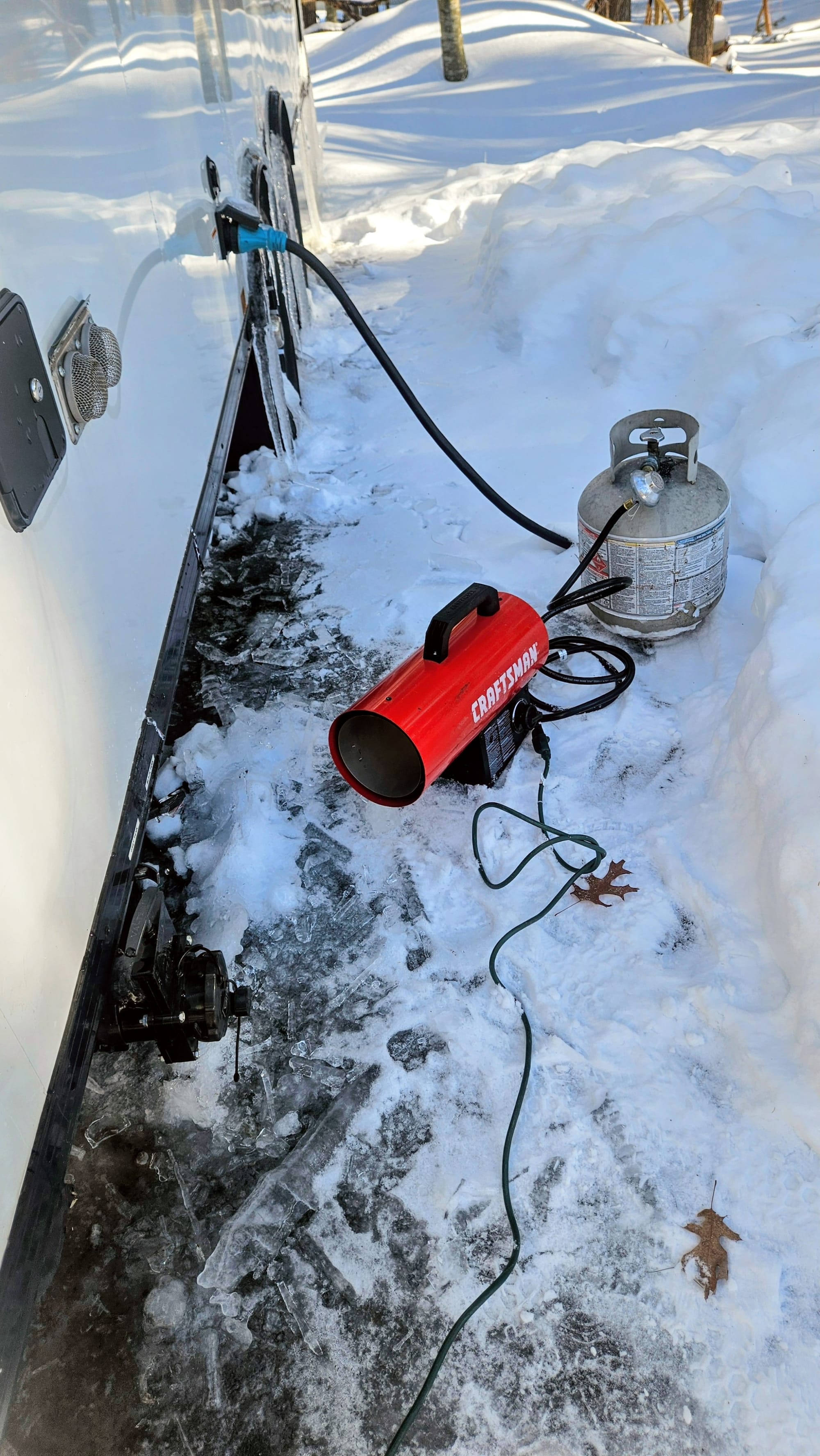
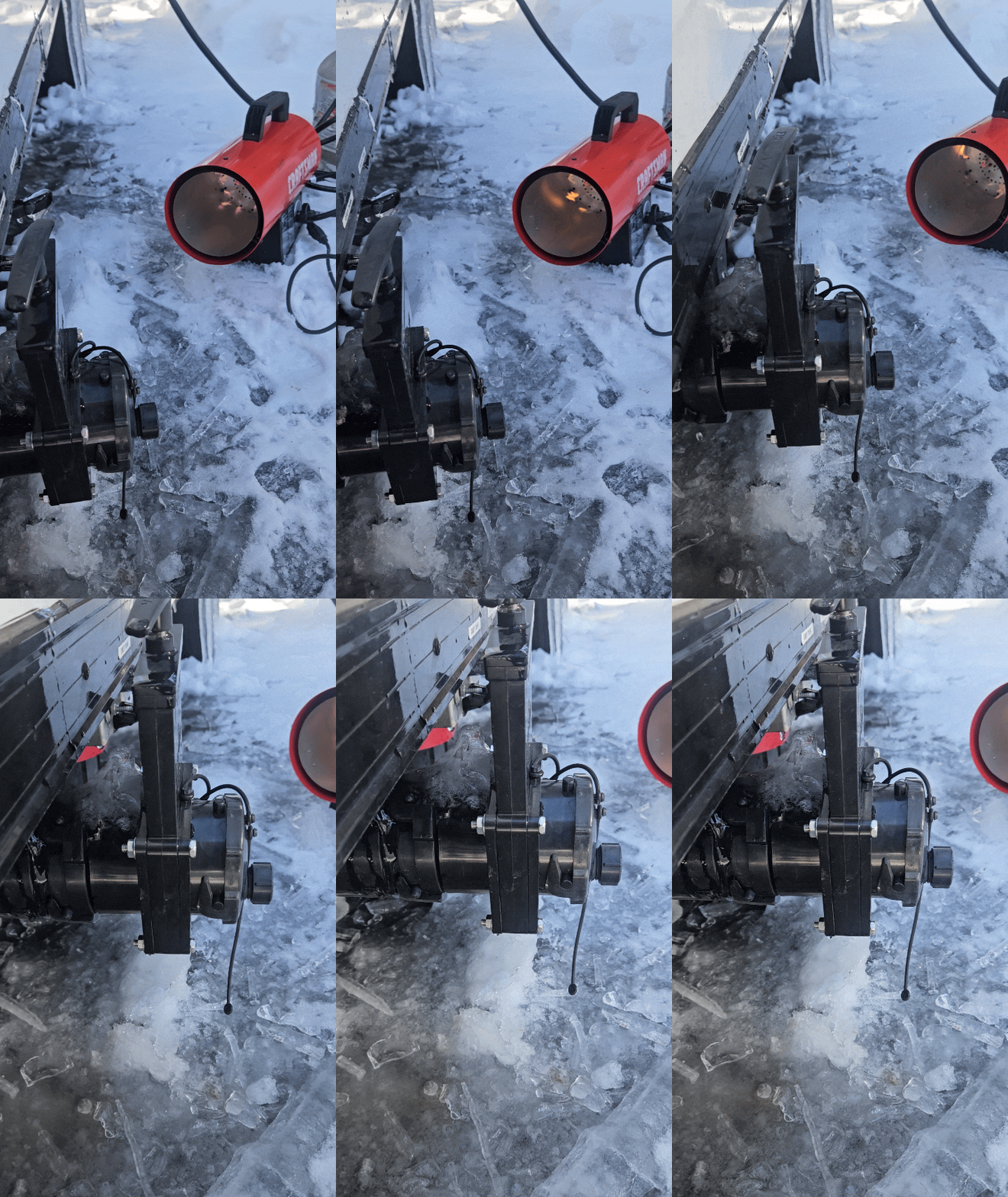
James the pumpout guy didn't arrive until after dark, and as soon as he arrived, we got a knock on our door. The waste tank valve handles – the ones we pull out to open the valve and let the tanks drain – were frozen. Time to get out the propane heater again, and since James had his own heat gun, the guys were able to double-blast.
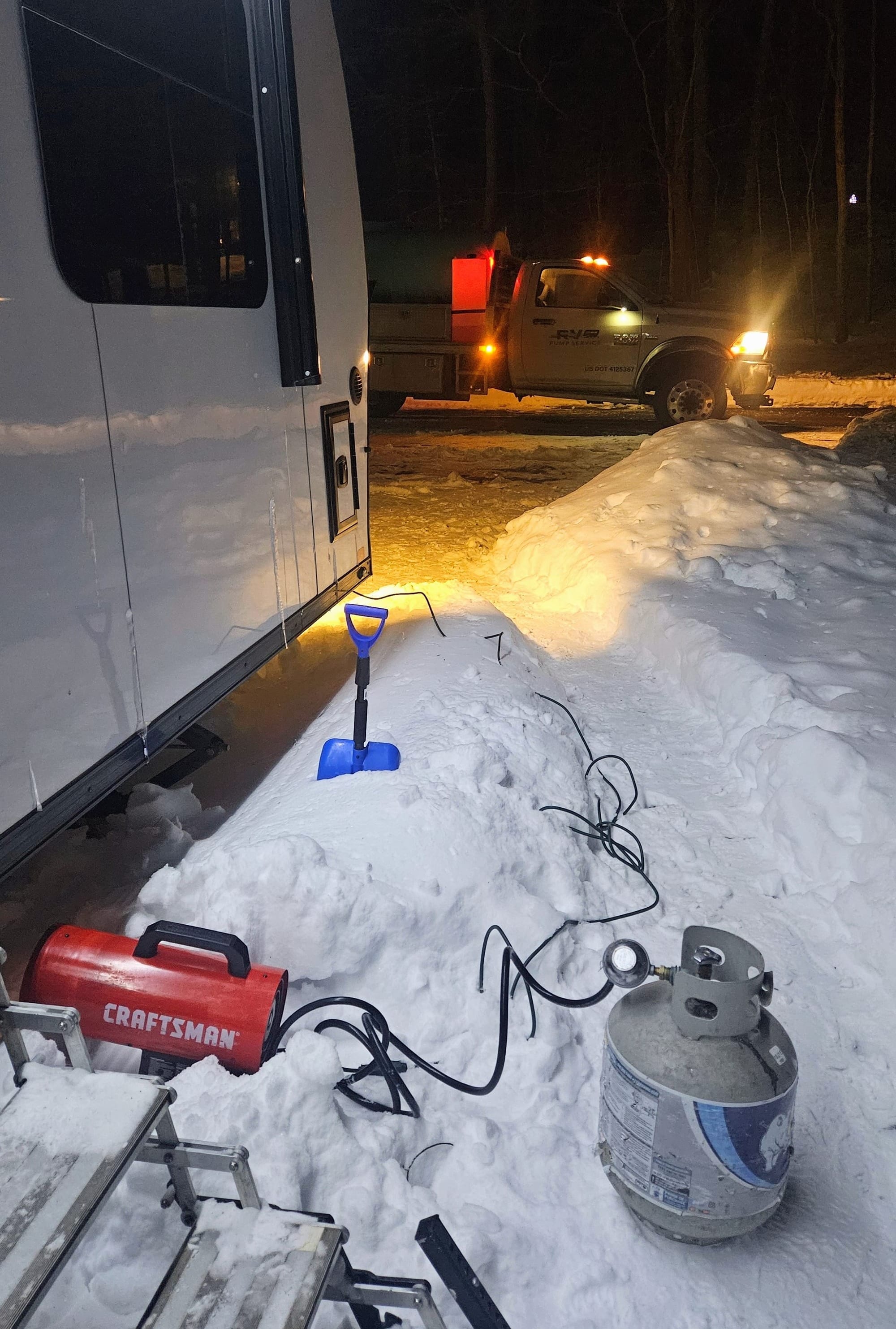
James told us that all of his appointments that day had similar problems. We weren't surprised about that, but we were surprised that there were more crazy wackos winter RVing during a cold blast!
Finally, the valves unfroze and James got to work. Only, as soon as he started pumping, he ran into the next issue. He had driven all the way from NH on his way to us, and somewhere along the way, some water in his hose froze, and a piece of ice ended up lodging into the pump. This should have been game-over, but James is an absolute trooper. Next thing we knew, he was draining our black tank into a pail and hauling it over to his truck by hand, in what is easily the grossest Jack-and-Jill rendition we've ever heard. That is dedication beyond comprehension.
We told him not to worry. We still had space in our black tank, and now about 10 gallons more after his disgustingly valiant effort. Our gray tank was less full to begin with. We tipped him well (a tip he didn't even want to take at first, but come on James, do you know what you just did?), and he made plans to return as soon as possible to get us pumped out the rest of the way. At this point, we could probably make it until the next above-freezing day, which could make everyone's lives easier.
We've sung the praises of our pumpout company many times in the blog, but we need to give another huge shoutout to Joe and his team. What James did that night was so above-and-beyond, it's unfathomable. We half expected to get a text saying it was too cold to come at all, and honestly, we would have totally understood. But no. James drove from NH through rush hour traffic, to spend an hour with us in the freezing cold and dark. He was patient and personable the whole time, and he did a task that should single-handedly revive the show Dirty Jobs just so he can be featured. We aren't exaggerating when we say these guys are a huge reason we even continued full-timing for as long as we have.
Want another story of how our pumpout guys are absolute BOSSES?
 Nicole Anderson
There is another side to this story, though. Anthony disconnected one of our propane tanks to attach it to the heater. This left us with only one almost-empty cylinder connected for our heat, and eventually, it got too low and the furnace turned off for about 20 minutes until Anthony could reconnect the other tank. This should have been the end of the story. We had enough propane in our remaining tank to get us through the night, and Anthony would get the refills the next morning. Not so much. We ran into a quintessential RV problem, where one issue leads to another, and suddenly, we're in a domino effect.
Last year, we had several nights of no propane heat, which made us ever so thankful that we weren't dealing with that issue again this year, especially with temperatures far lower than we endured last year. It would be brutal! But now here we were, having a night of heat issues, with a low of 6°F and a feels like of -7°F. So what happened?
When we turned the furnace back on after reconnecting our remaining tank, we noticed that cooler air was coming out the vents. It wasn't cold, but it wasn't hot either. More like lukewarm. We thought maybe it just needed to run for a while, but as we turned in for the night, we noticed that the temperature in the rig was getting colder. We did all the usual troubleshooting. We tried cycling the heat by turning it off and on again. Anthony went outside and primed the tank. We still couldn't get more than lukewarm air. We resigned ourselves to a night of space heaters and heating pads.
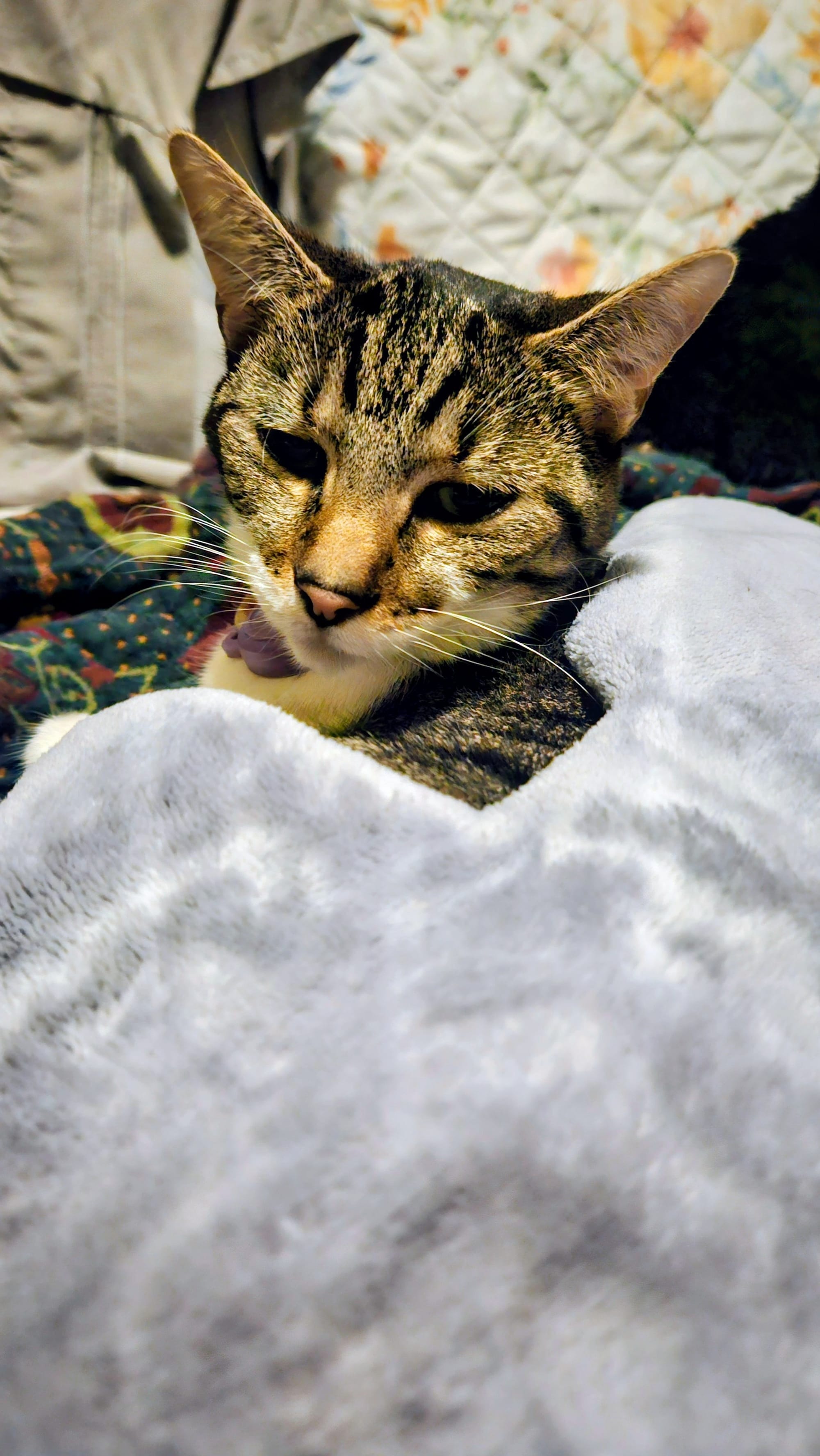
We were thankful to have our new space heater which is safe to run while sleeping. Only, we had another limiting factor, which is power. We only draw 8amp from Nicole's parents' house, so running high-electricity appliances depletes our batteries. The space heaters also aren't as powerful as the propane furnace, so we faced a cold, uncomfortable, sleepless night.
The next morning, Anthony planned to get propane as soon as the place opened. At this point, the "lukewarm" air was blowing even cooler, and the furnace had not shut off the whole night. Nicole wondered if it was making the rig colder by blowing the cool air, and so we shut it off for a little while to see if the space heaters alone worked better. They did not. About 20 minutes later, we turned the furnace back on...and hot air started blowing.
Huh?! We were stumped. Clearly, the propane tank just needed a longer rest than it got when we cycled the heat the night before, but why? It started working again at the lowest temps of the night, so it wasn't that the outside air was warming up. Our minds immediately went to the regulator. Past experience has taught us that it can get a bit finicky in the cold weather. AI agreed with our theory when Anthony described the situation to Claude. Remember how we always talk about those snuggly heated blankets for our cylinders? When we first reconnected the propane after it had been used for the heater, it was likely quite cold because it hadn't been wrapped in the blanket. Cold propane traveling through a cold regulator could cause the regulator to freeze. We think that turning the heat off for a more substantial period of time allowed the propane to warm up more, before traveling to the regulator. Whether this is the true reason didn't really matter. The furnace was blowing hot air again, Anthony was able to refill our other propane tanks that morning, and if the problem occurs again, we now know to shut the furnace off for a longer period of time. And, most importantly – and a far cry from last year – nothing is broken.
With our night of rig-frigerator camping behind us, we looked towards the weekend. Forecasts were predicting 1-3 inches of snow or less. Not a big deal at all. But what would we face for wind? Would we avoid disaster 2 storms in a row?
The Carolinas got hit with snow as expected, but by the time the storm traveled north, it veered into the ocean. We got some moderate gusts of wind and about an inch of snow, but for MA, it was just a normal winter day.
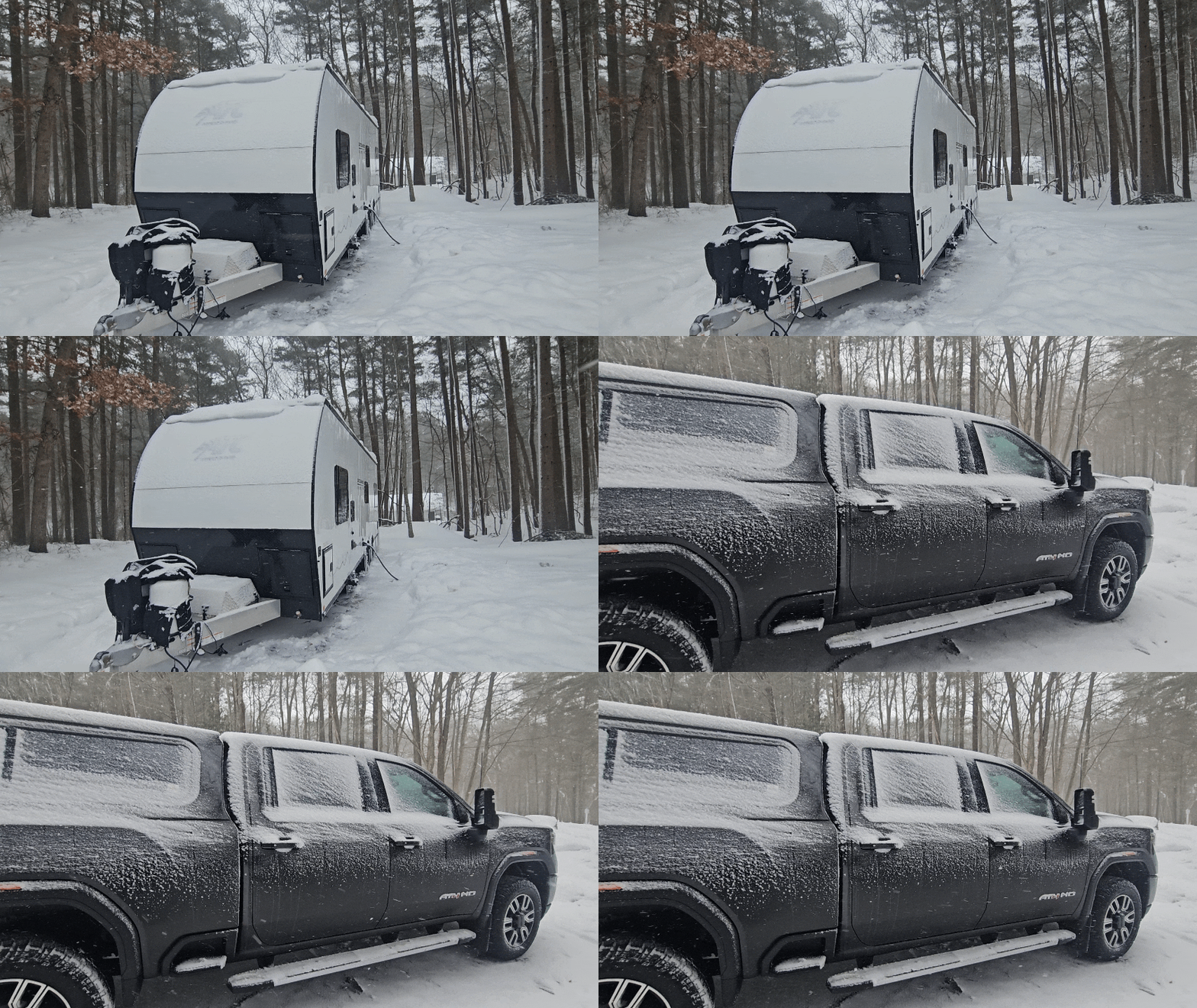
And by mid-afternoon, the sun came out.
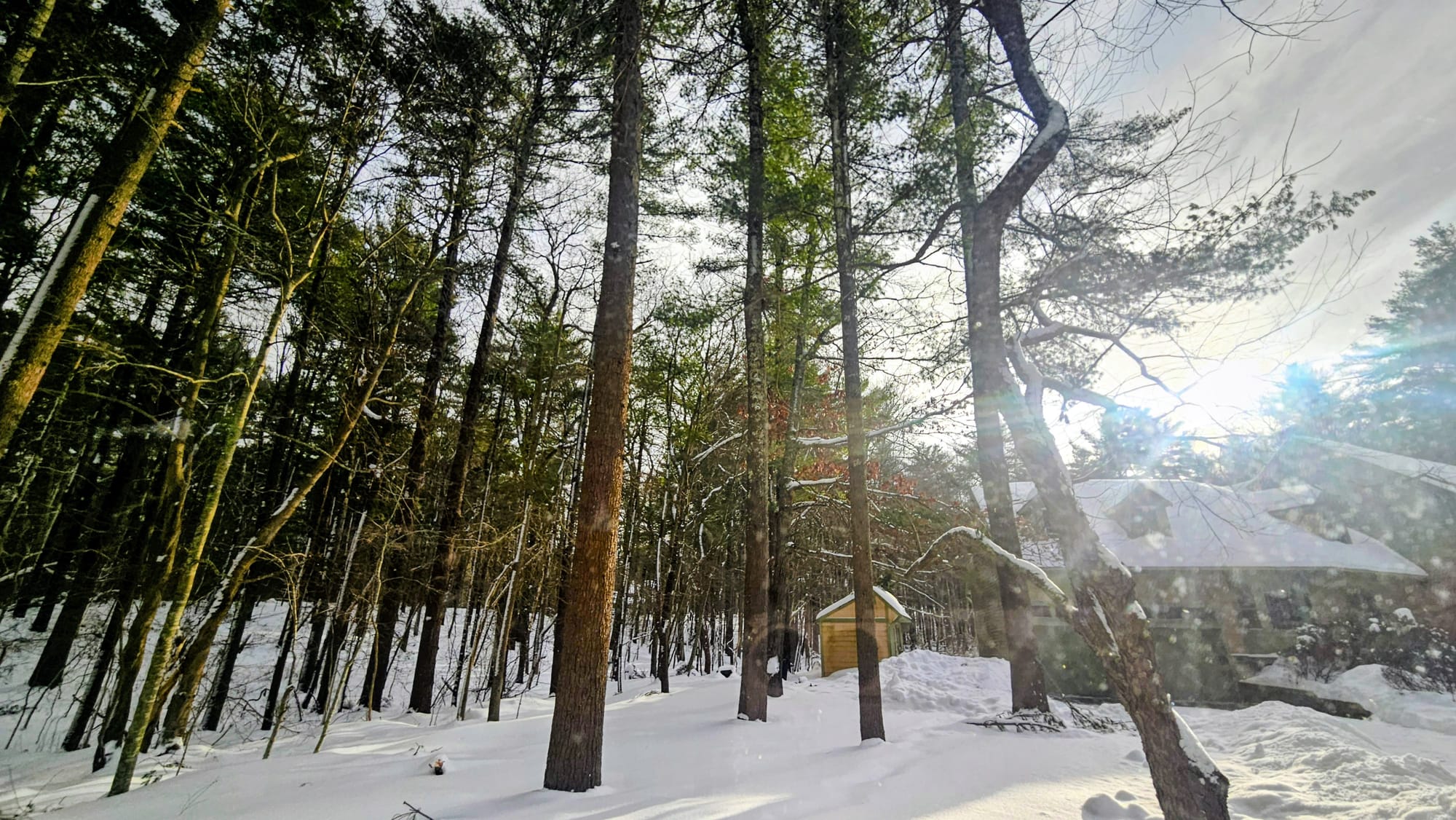
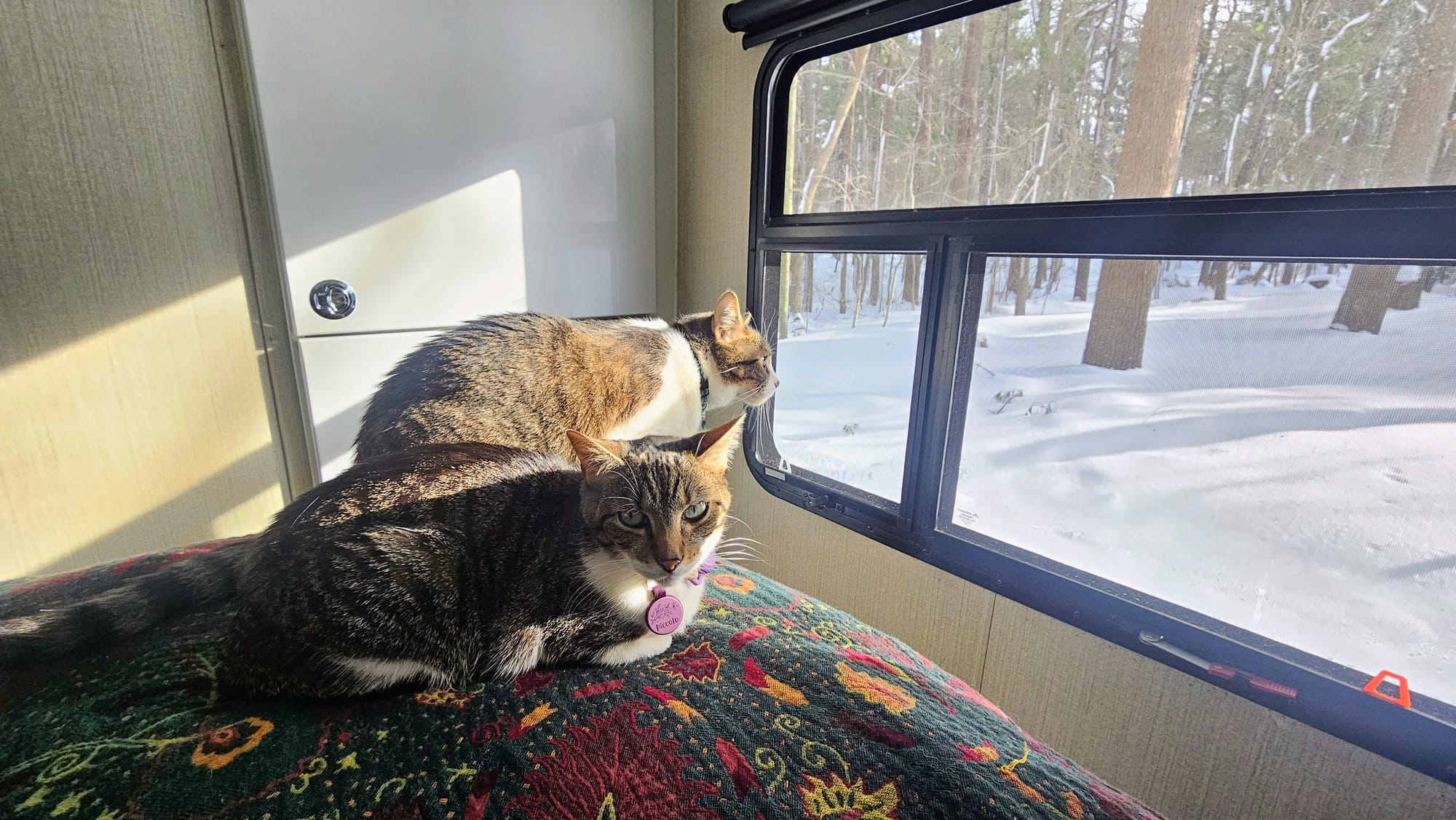
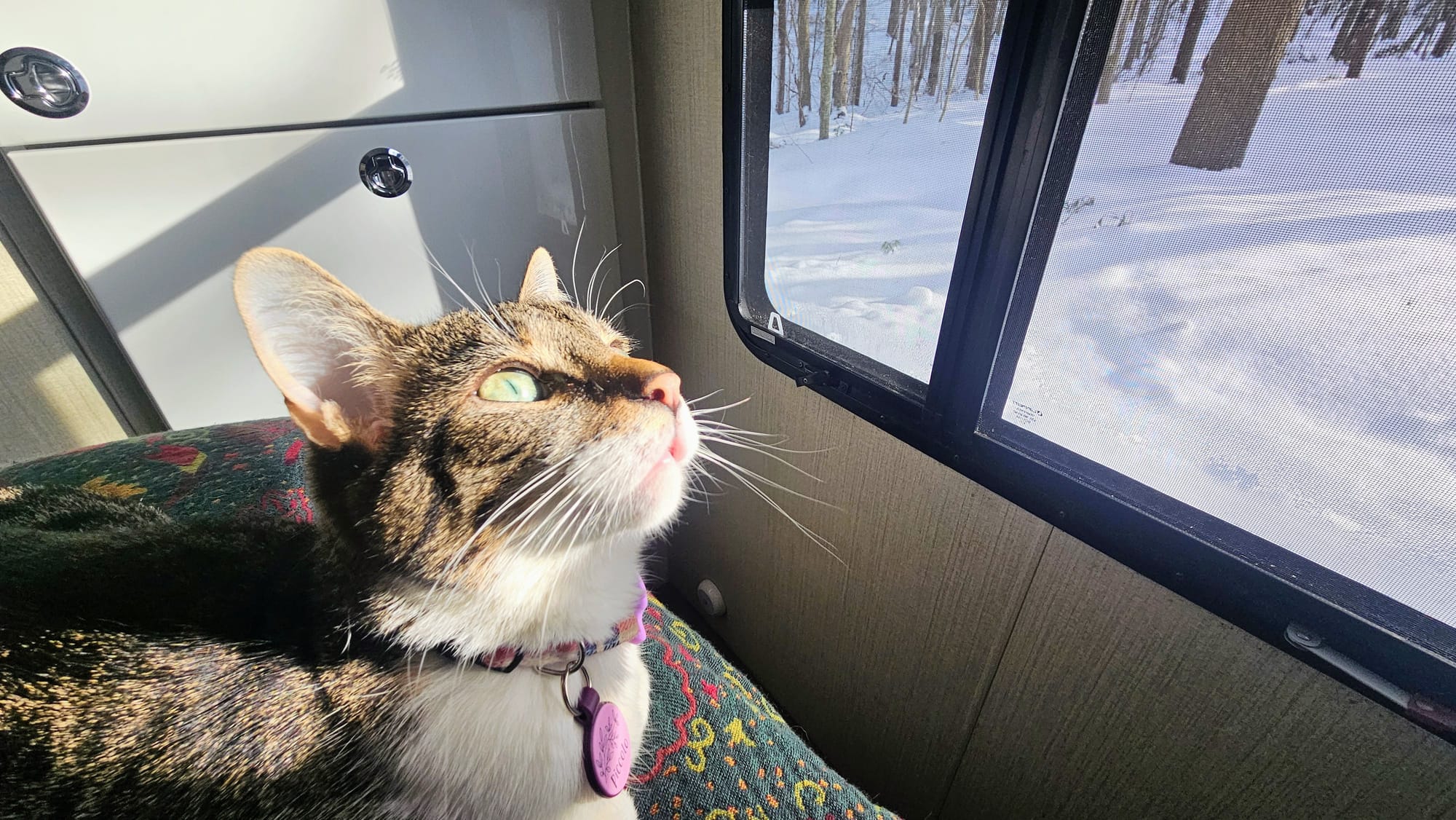
We can't always make the right decisions in regards to weather, but staying in New England through January turned out alright. We avoided storms we would have otherwise hit down south. We had resources to handle our equipment troubles. We felt content weathering winter in our comfortable stationary spot. Only now, the dreaded month of February had arrived – a month we only experienced once in our RV out of newbie necessity. Would we continue riding out the season with ease, or would the month end up as dreadful as we feared? Only time would tell.