
We planned an entire RV trip using AI



Now that we're part-time RVers, we've come to realize that the way we approach travel is going to change. We jumped right into full-time RVing shortly after we got our trailer, so extended travel that doubles as normal life is all we know. For almost 5 years, the RV was our only home. We didn't have a place to set off from, and when the trip was complete, return to. Until recently, the idea of "completing a trip" wasn't even in our vernacular. Now, we suddenly had a whole new perspective: We could plan a trip for as long as we wanted, create an itinerary, go, and then come home.
It's a bit of a double-edged sword, because we could wind up in "vacation mode," where we start overbooking ourselves to squeeze tons of adventures into our now finite trips. But we need to remember that the road will always still be there. We may have a home now, but we still have flexibility in our lives that allows us to pick up and go, basically whenever we wish. We still have remote jobs, we're free of obligations that keep us in one place, and we still have the RV. After our breaks, when we feel the road calling again, we can simply ask ourselves, "Where to next?" without the pressure to stay on the road indefinitely. There's a freedom in this that sometimes feels more poignant than the freedom we had full-timing.
Once we settled into our new cottage in Myrtle Beach, we slowly started feeling wanderlust again. We're not ready for a giant weeks-long adventure, but maybe we could dip our toes back in with a small trip, and see how we feel. We considered taking a trip after all our RV repairs were done. We'd want to check the functionality of everything anyway, but more than that, we hadn't enjoyed a functioning RV in months, and we owed it to ourselves. For the first time ever, we could plan a real trip – where sightseeing and exploration is the main goal, and there are defined start and end points.
But how would we even start planning such a trip? We could go back to what we used to do pre-RV life, jotting endless ideas while looking at maps and websites. But the problem with these old road trips was, we jam-packed them to the point of overwhelm. We could adapt our typical RV trip planning, but we'd have to gauge how much "adventure time" we'd want vs. "downtime," and we honestly couldn't predict it. In our full-time RV lives, we purposely had regrouping days, where we could do chores and work. For a shorter trip, we'd have fewer chores, but we would have work because we didn't plan on taking time off. We'd still have to account for potential RV problems, but they wouldn't be as consequential because we were no longer stuck in the RV when they occur. Factoring all this into our trip was disorienting.
So we decided to try something completely new – so new that we couldn't have planned like this years ago. Heck, we couldn't have planned like this even last year! We wondered, instead of diving into our own research and making all the decisions ourselves, could we instead offload that initial planning to AI? As two people who've been closely following AI developments, we were intrigued. Were the models now "intelligent" enough to yield us itineraries for a suitable RV trip – even when we're unsure of what we'd want from this trip ourselves? It was time to find out.
We formed a plan. We wanted to utilize the top 3 models: Google Gemini, Claude, and ChatGPT. We'd feed each model the same prompt, but after that, we'd communicate with it by answering its questions and allowing a natural progression of the discussion. Hopefully, by the end of it, we'd have an itinerary carved out for us. Because Nicole typically uses Gemini as her go-to model and Anthony uses Claude, we decided to have our own correspondences with each, and then afterwards, "present" our itineraries to each other. Then, we'd both prompt ChatGPT together. Finally, we wanted to test out the newest AI model to hit the mainstream, Meta Muse, which was advertised to be highly advanced in travel planning – even having the ability to make bookings on the human's behalf.
Our prompt was purposefully simple, to encourage further discussion:
"We're thinking about taking our RV from our home in Myrtle Beach up to the Blue Ridge mountains in NC around October 14 through 19, give or take. Can you help me plan the trip and itinerary?"
We had decided on the location and general dates ahead of time, to make sure we kept the trip contained. We didn't want it to be long, nor did we want to drive too far. We had been missing the fall weather, so a foliage trip seemed like the obvious choice, if we could swing it on such short notice. We started planning at the end of September, which meant we had only a couple of weeks to settle on an itinerary for a place that typically sees peak crowds this time of year. We'd need all the robotic help we could get.
Then, before starting our respective correspondences with our AIs, we set a few parameters to keep consistency:
- We needed to be consistent about our rig size. Sometimes we call our trailer 28ft even though, with the tongue, it's technically 34ft. We agreed to call it 34ft for these discussions. We also needed to inform AI that we travel with pets.
- We wanted to prioritize nature-focused activities, particularly hiking, nature walking, or scenic drives/viewpoints. However, we needed a balance of active and relaxing – though we were still unsure of what would be the best balance for us.
- We'd prefer to not switch campgrounds in the middle of the trip, but we'd be open to it if necessary to achieve the optimal itinerary. We'd also be open to overnighting at a Harvest Host either on the way there or back, to break up the drive from the coast to the mountains.
We dove into our discussions with AI, but soon realized that we left out one of the most important parameters. We didn't just need a balance of active and relaxing. We needed to work, too! So we added a 4th parameter:
- Time to work between excursions + letting the AIs know what capabilities we have for working remotely (i.e. Starlink, cell hotspot, workspace in the RV).
Starlink, you say?!
 Nicole Anderson
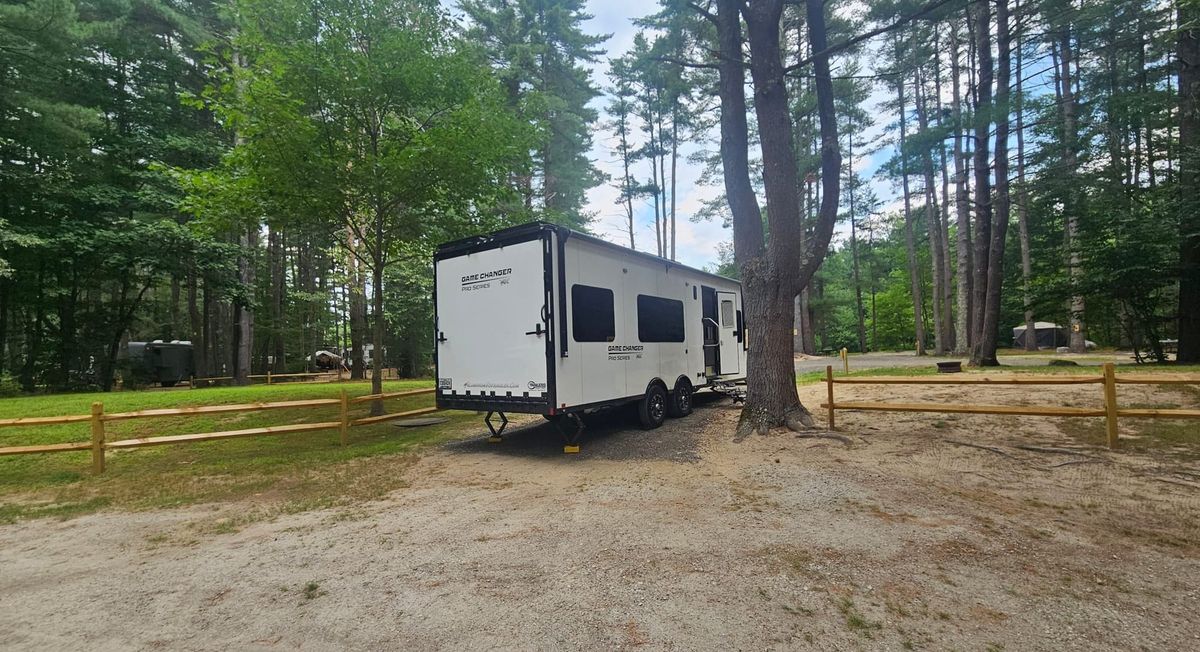
OK, sidebar: We held off getting our new Starlink because we knew we wouldn't be traveling for a while, but as soon as we tentatively put this Blue Ridge trip on the calendar, we ordered our new dish, just to make sure we had it. We just didn't activate it until we needed it. So now we officially have a Starlink Mini for the first time and look forward to seeing how it revamps our internet use compared to our old dish. As for cellular, we don't need to worry about our defunct Verizon hotspot for a short trip. If the mountains and trees cause Starlink interruptions, we'll have our built-in cell phone hotspots as a backup. But, since we know this area can have limited cell service, our connectivity was a good parameter to let AI know about, in case it needed to check coverage maps or yield us only campsites with clear views of the sky.
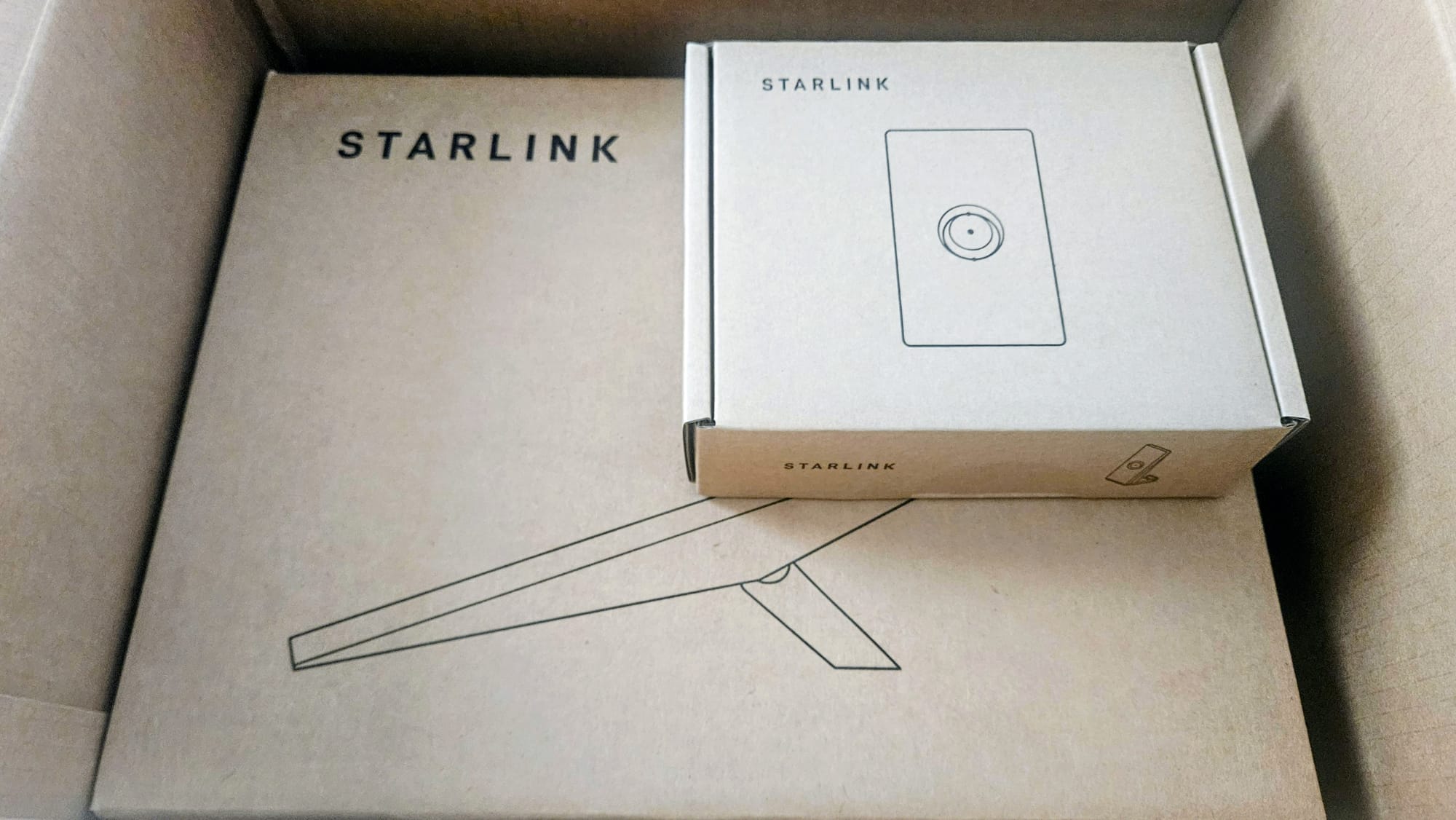
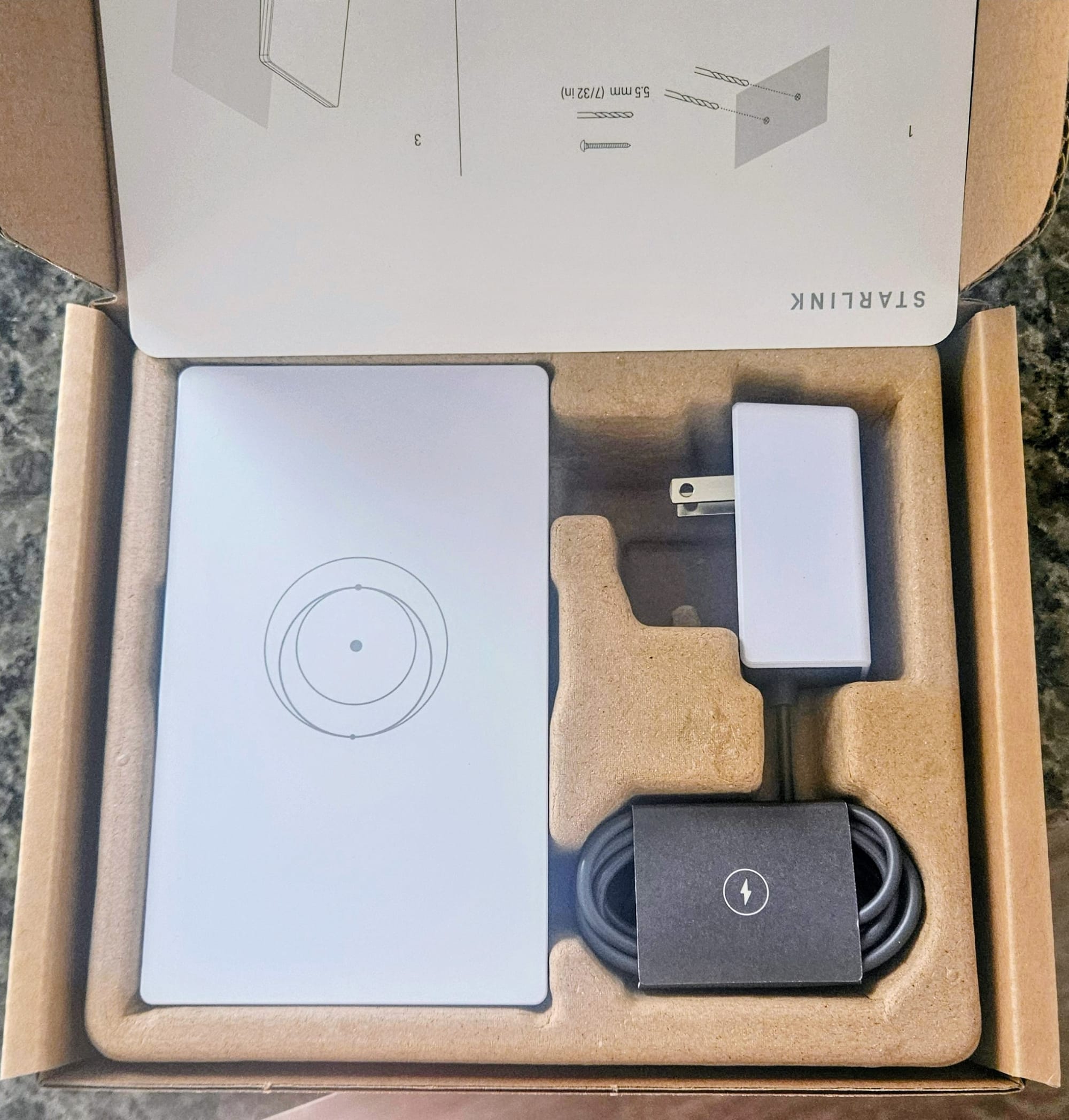

Unboxing the new Starlink
Nicole & Gemini:
(For the geeks: Gemini flash extended)
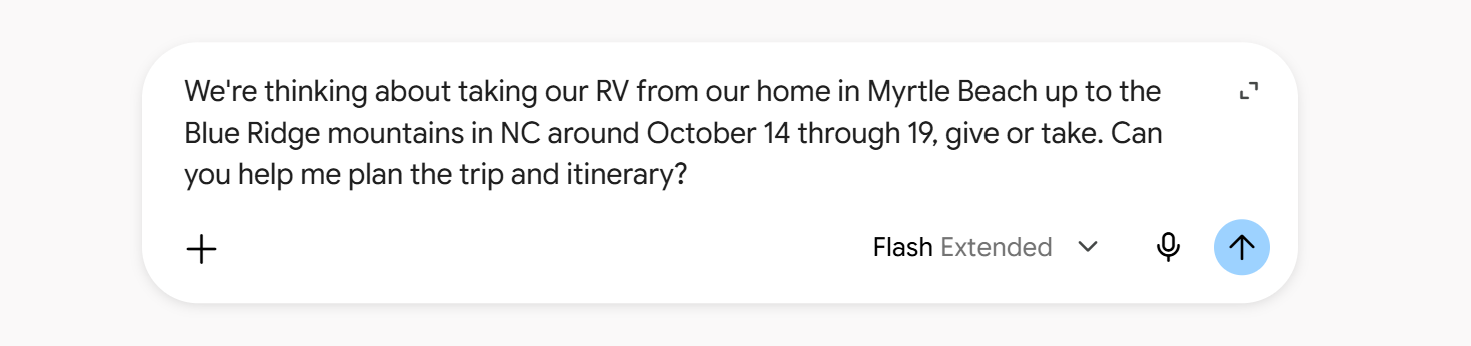
First, Nicole used the Gemini account connected to her personal email. It already knew that we RV with our pets, plus some info about our trailer. Logic would say that this would help push the conversation in a good direction, but it turns out, the conversation went nowhere. After submitting the prompt, Gemini fetched an itinerary and followed it up with zero questions. Very un-AI-like.
Of course, Nicole could have initiated further discussion, but the whole point was to follow the lead of the AI by answering questions and then building to a conversation. Instead of continuing on her personal account, she switched to the Brighter on Wheels account – one that neither of us had ever used Gemini with, so this conversation would be starting from scratch.
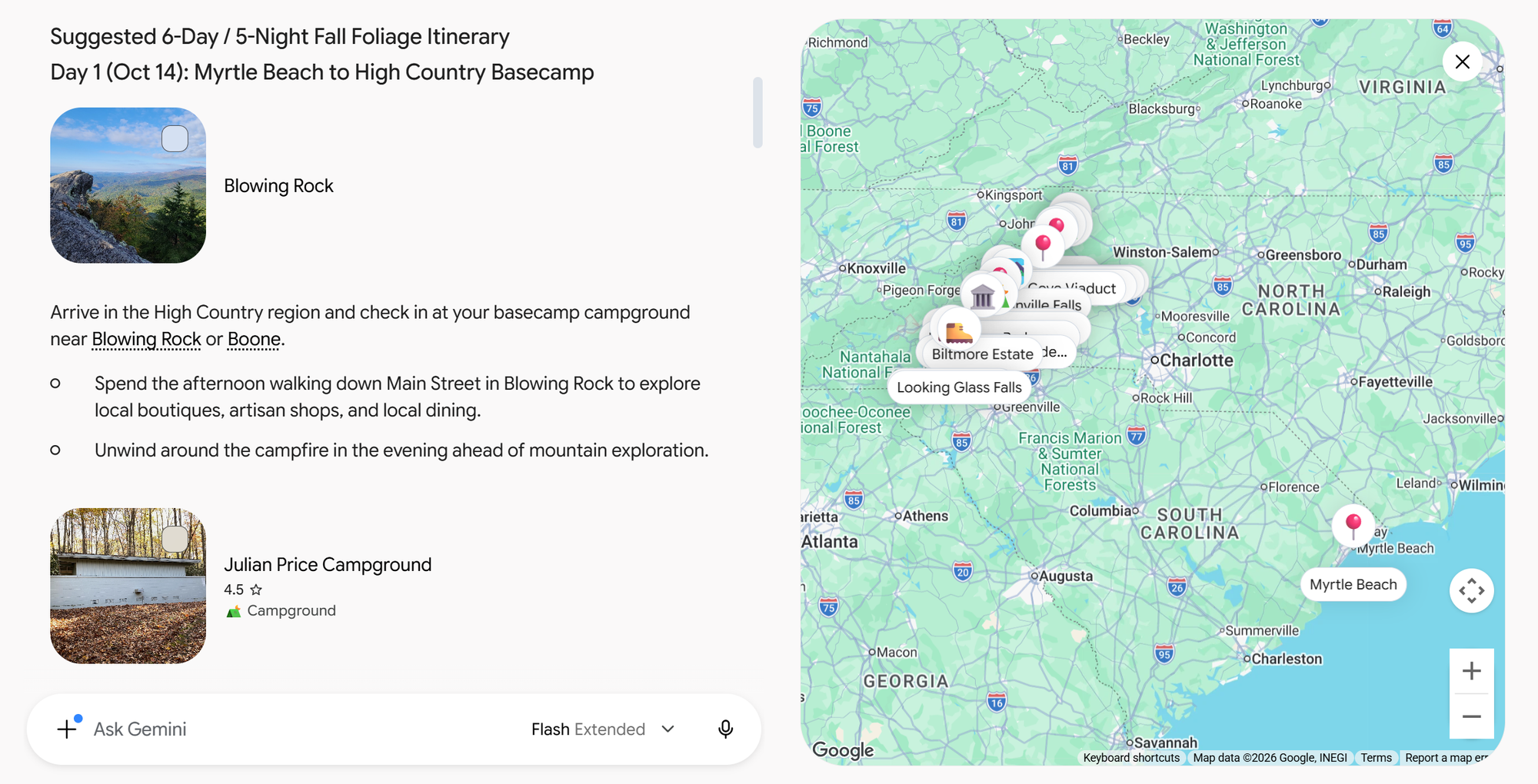
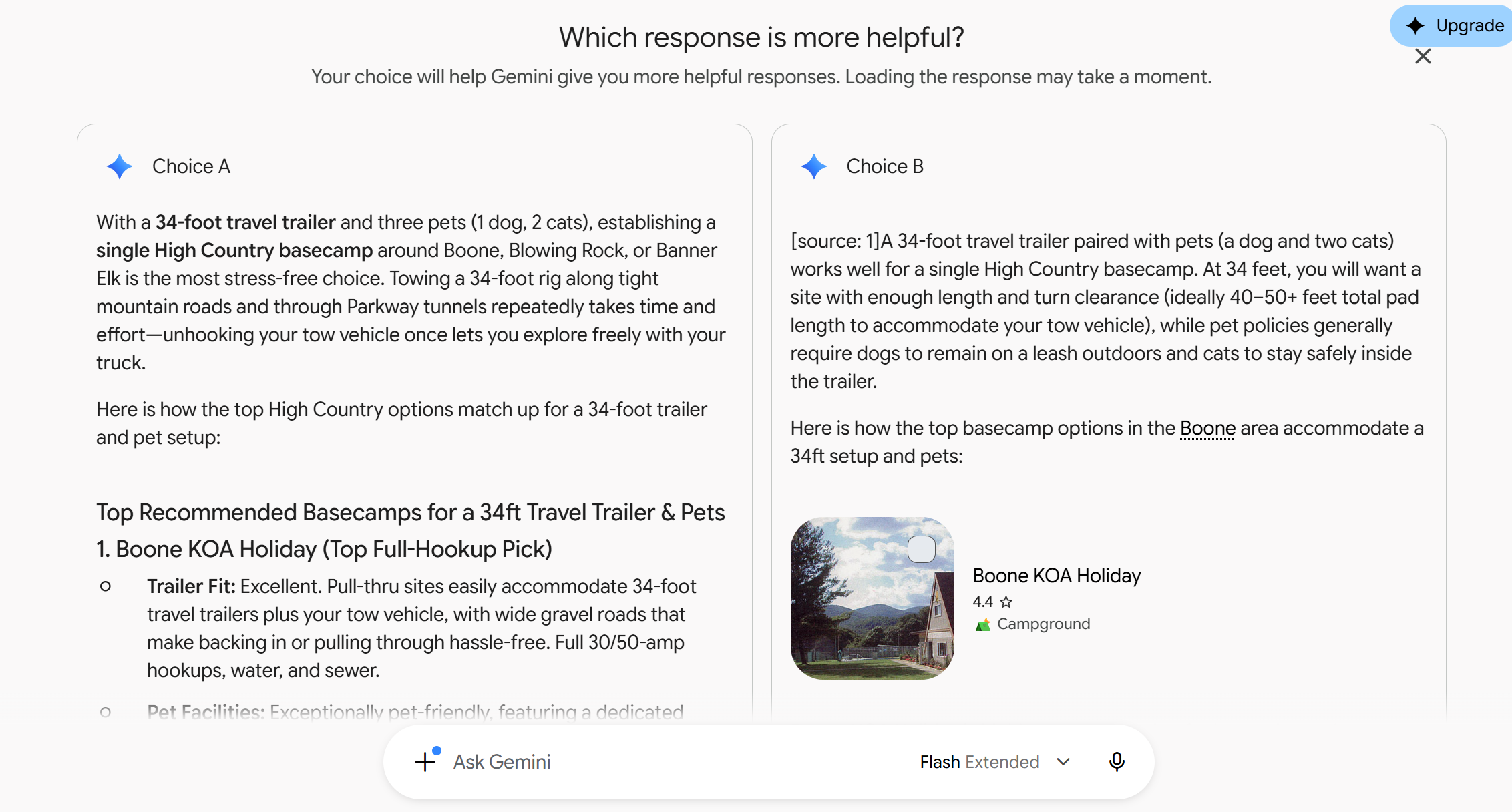
This chat was much more fruitful. The model first fetched general info and then opened up a Google Maps window to offer campground and activity recommendations. It referenced each recommendation with icons showing where the location was on the map. Later in the conversation, it offered 2 choices for response as a user feedback invitation, and Nicole got to pick which response she felt was more helpful. This personalizes Gemini's responses to better match how Nicole prefers to receive information. At the end, it asked a follow-up question: "Would you like more details on specific RV campground site hookups, full-service amenities, or guidance on Parkway clearance limits for your RV length?" This opened the door perfectly for further discussion.
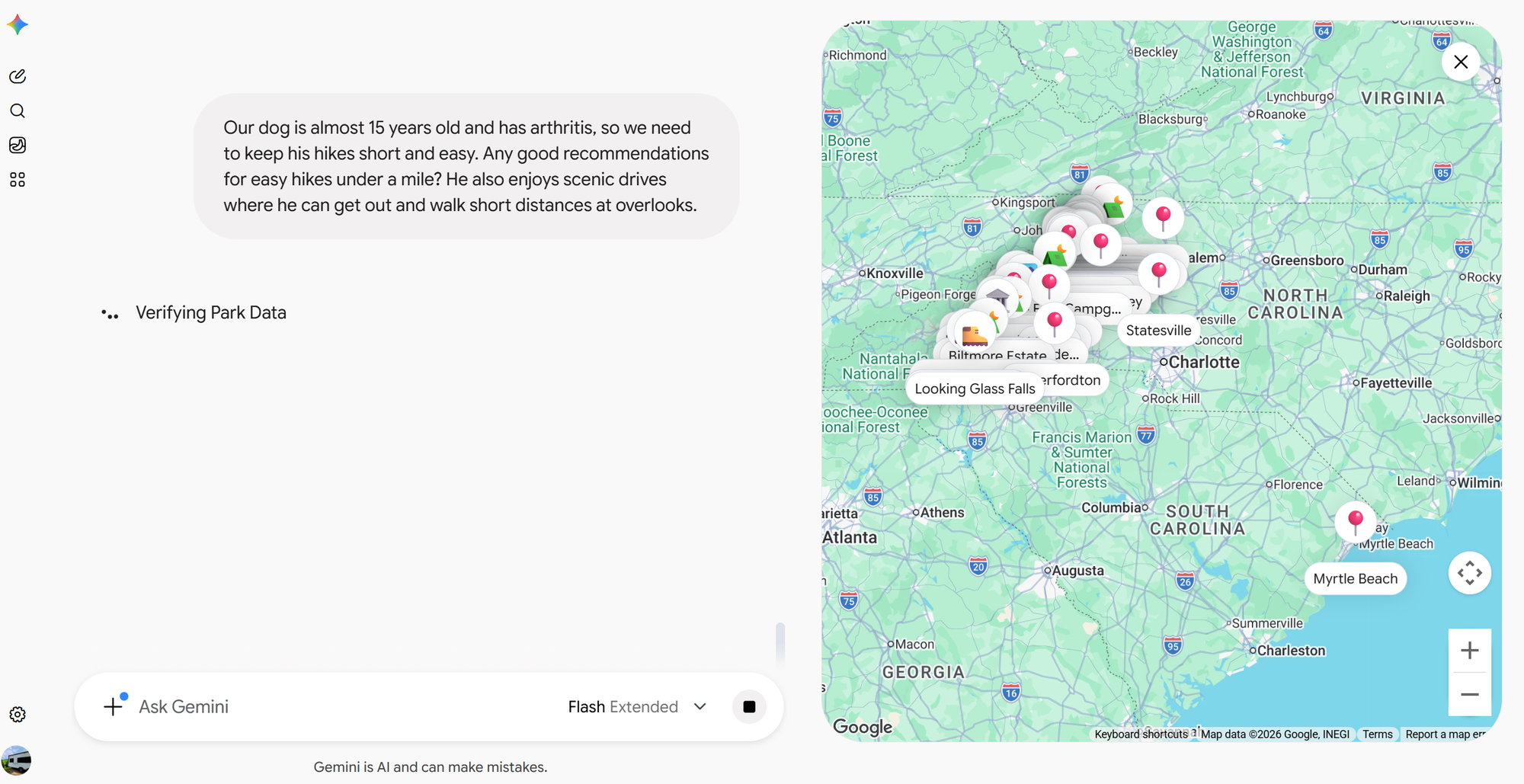
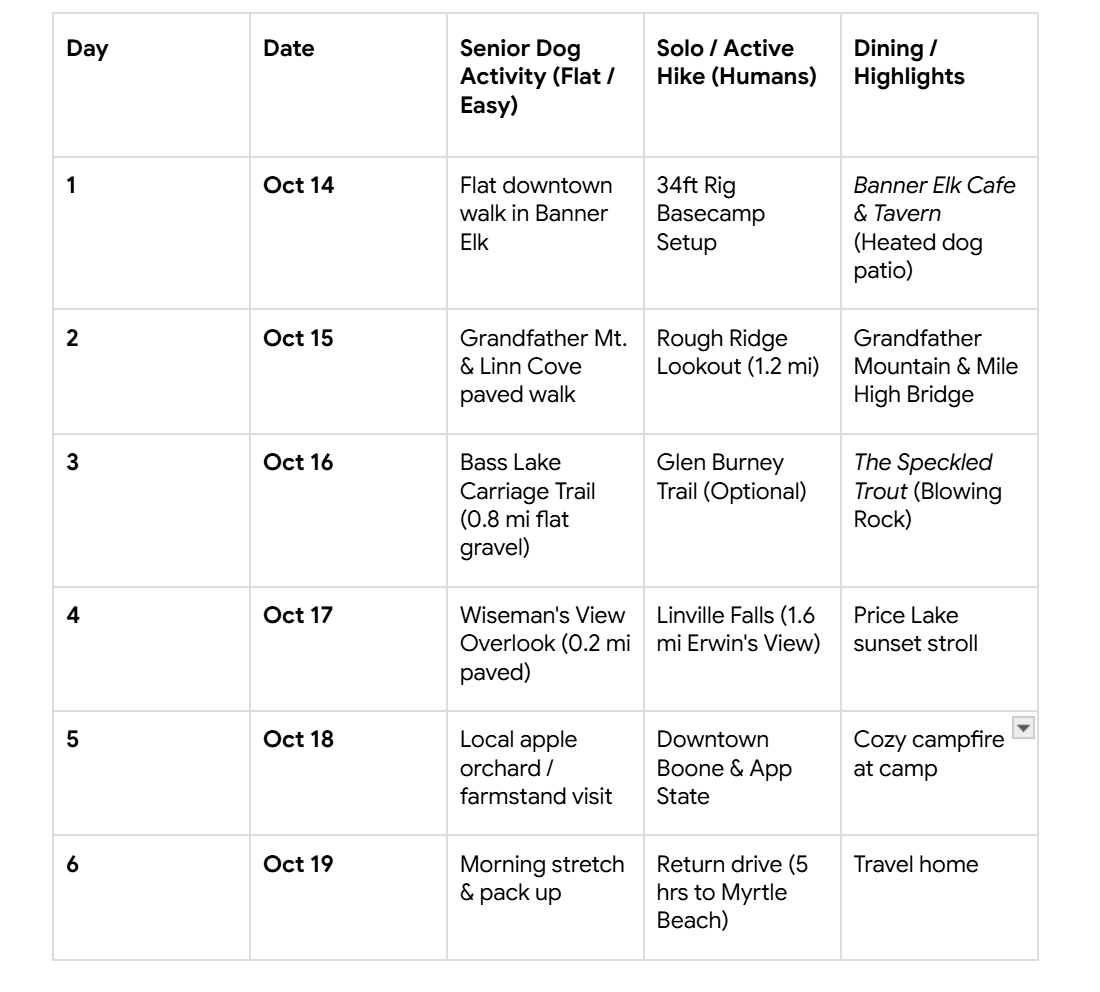
After talking about "balancing" senior dog-friendly activities and more active human adventures, Gemini ran with the concept, yielding an itinerary that suggested one dog-friendly and one humans-only activity per day – a little more than any of us would pile into our schedule, but more suggestions meant more to choose from when we finalized our plans.
You can view the chat history in the PDF below. Some superfluous parts have been redacted.
Anthony & Claude:
(For the geeks: Claude Code, Opus 5.5, auto mode, medium effort)
The initial prompt yielded a similar response, first giving a general overview of the trip, and then jumping into creating a first itinerary. Because Anthony uses Claude on a regular basis, he's trained the model over time to respond with the following structure: Issuing several questions at once, with suggestions of what it thinks the right response is, so Anthony can either agree or give it feedback.
Claude is known to be the more "neurotic" of the AI agents. It doesn't guess based on context as much, and would rather ask multiple questions to gain certainty. Anthony's training, plus his use of Claude Code, has increased this type of response. While it can be a bit annoying, it helps to identify and organize all the possibilities, so there's little guesswork. Great for Anthony's job, probably a bit of overkill for a family road trip. But Claude got the job done, responding to Anthony's prompts and refining the itinerary into one that we could use as a baseline.
You can view the chat history in the PDF below. Some superfluous parts have been redacted.
An important distinction between Claude and Gemini is that Claude is able to check campground availability real-time, so if you read the chat history, you'll see that it checks availability at 5 rec.gov campgrounds. Anthony didn't prompt it to research availability any further.
Presenting Our Itineraries
After we both reached a point where we got satisfactory itineraries, we reconvened to present them to each other. Even though each model takes a very different approach, we both ended up with a lot of similar recommendations. The biggest difference in the end was that Claude extended the dates of our trip. Compared to Nicole's conversation which only briefly touched on the Harvest Host possibility, Anthony and Claude dove in a bit further, and Claude attached to the idea of an overnight. The extended timeline would also help us avoid crowds. Gemini's solution to avoid crowds was to work within the constraints of the date range given, but purposely put the more coveted activities at off-times. Another noteworthy difference was that Nicole and Gemini talked about dining options further, so her itinerary includes restaurants, whereas Anthony's doesn't.
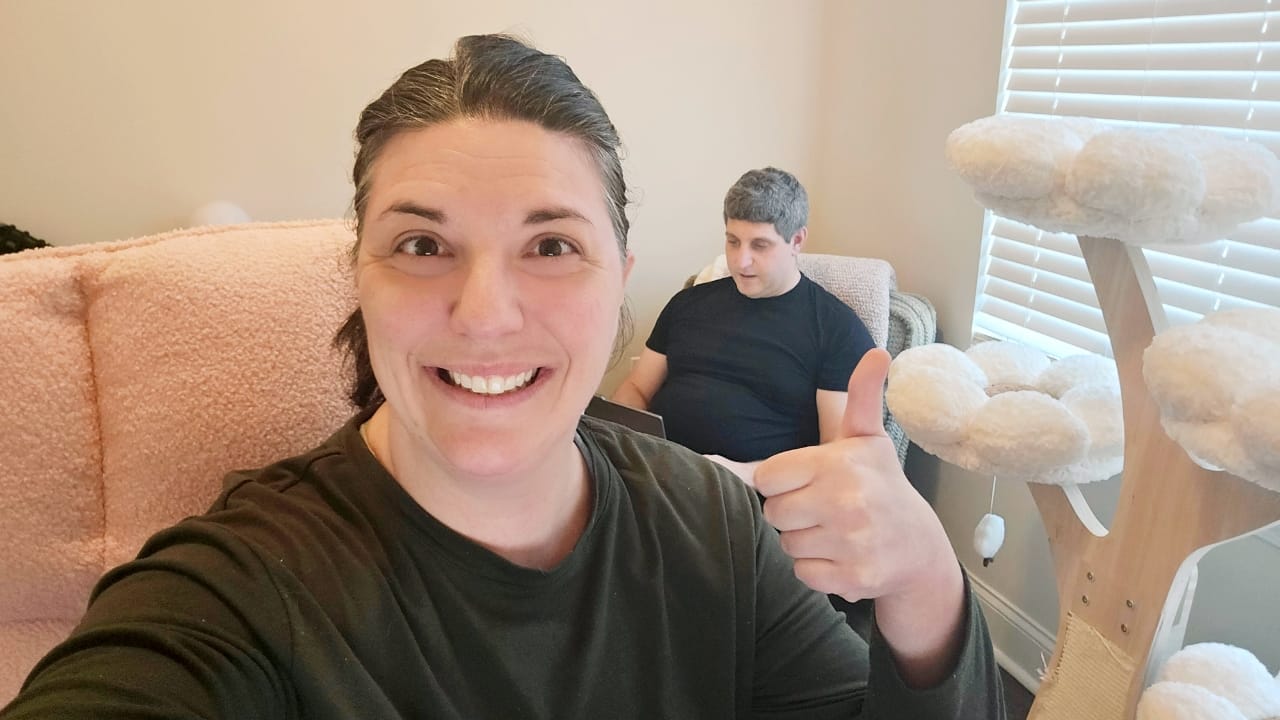

Presenting our itineraries!
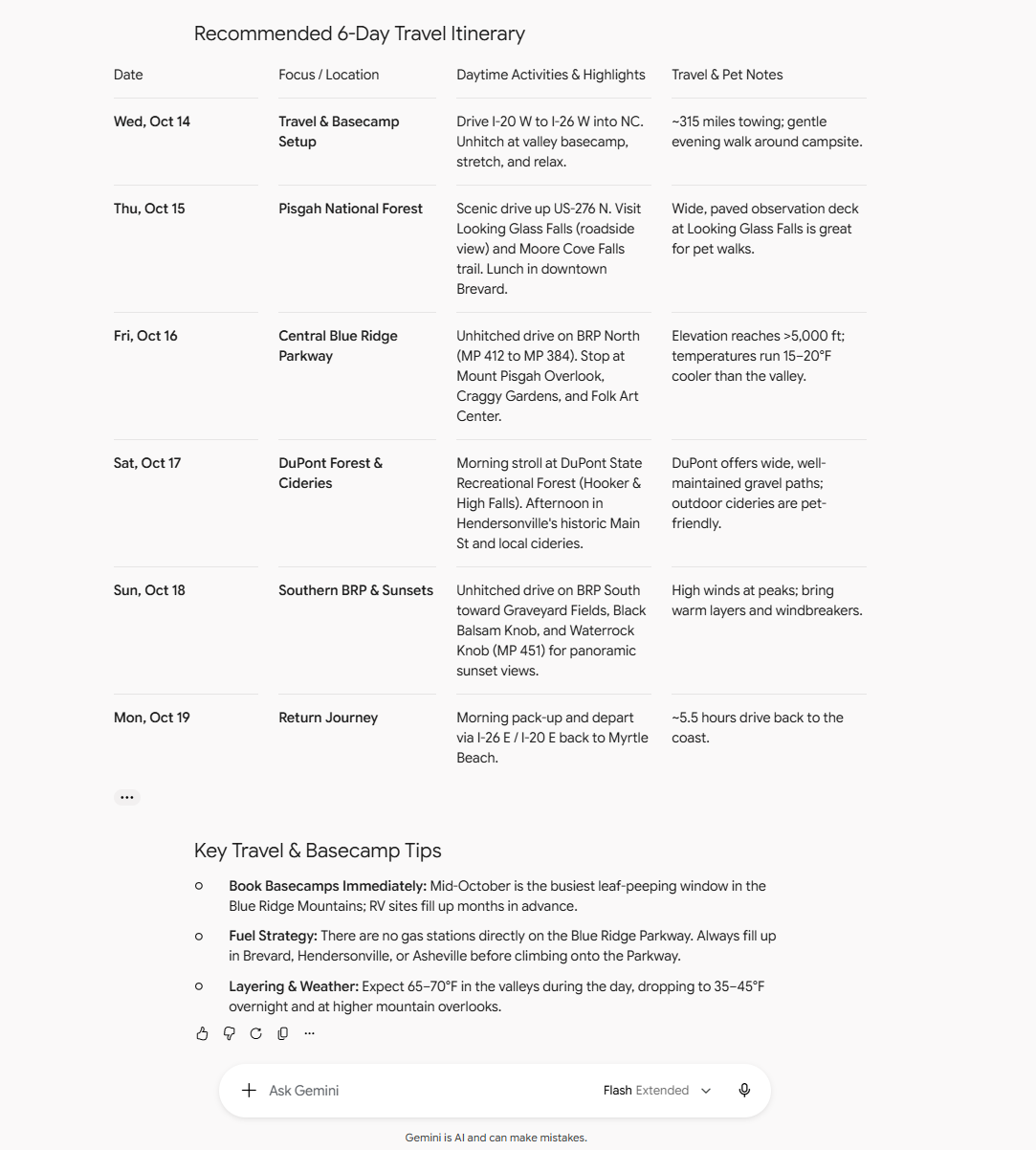
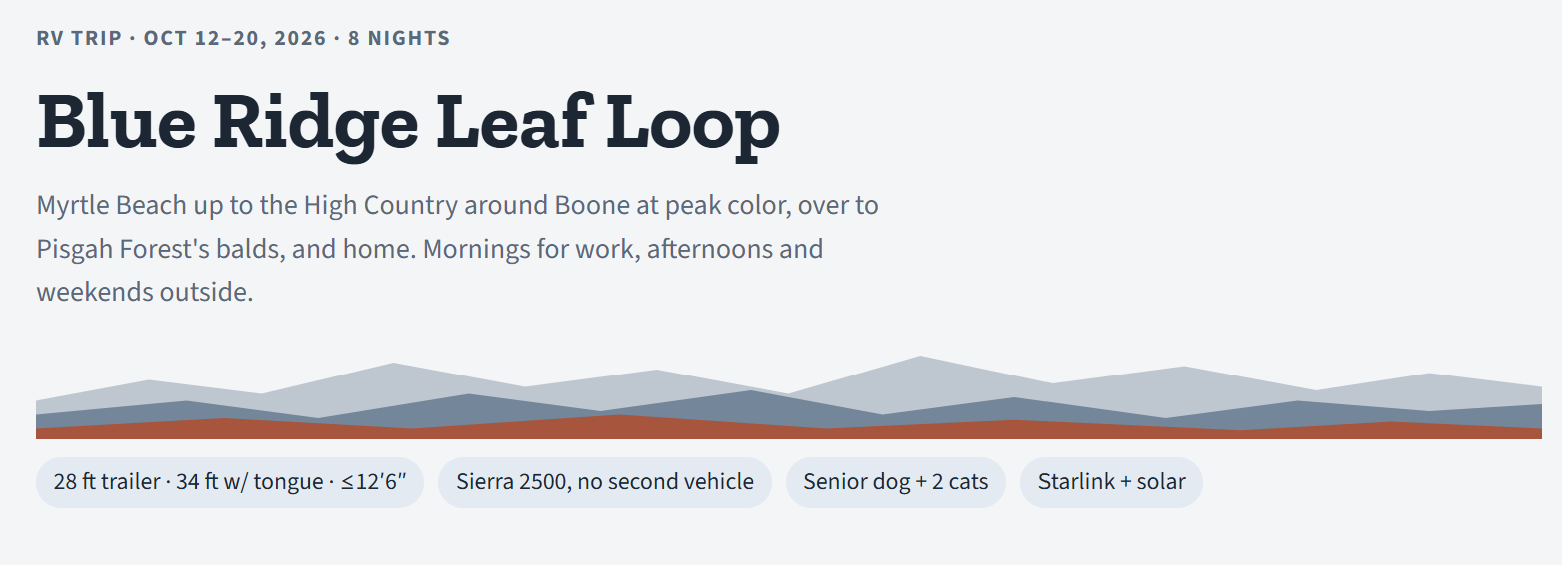
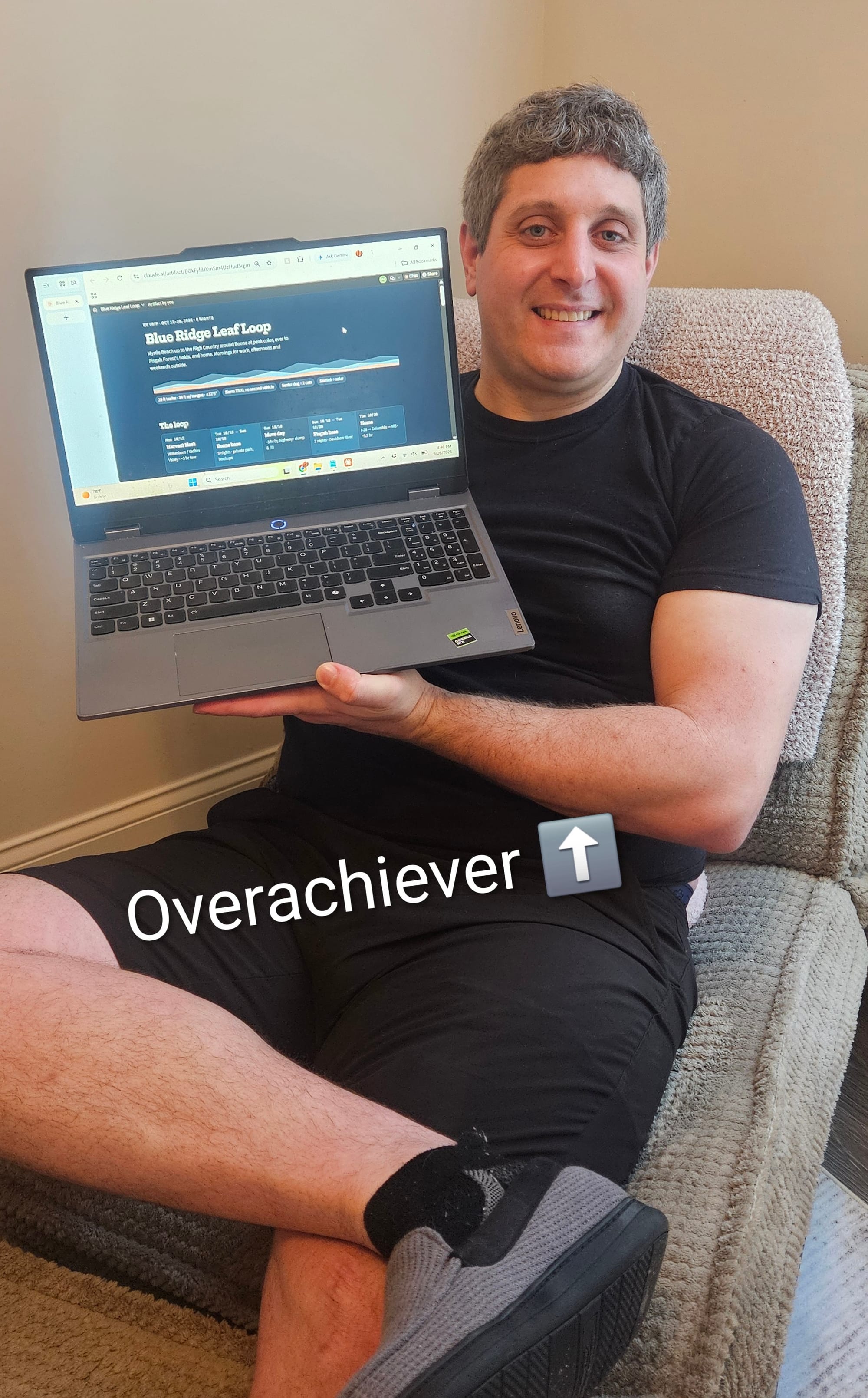
This was also where Nicole discovered that Anthony's relationship with Claude is that of 2 overachievers, overachieving together. While Nicole's presented itinerary looked like this...
...Anthony's looked like this:
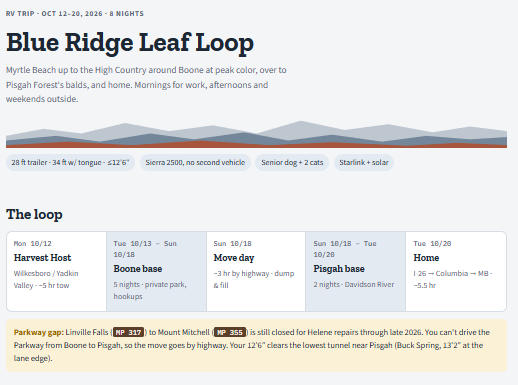
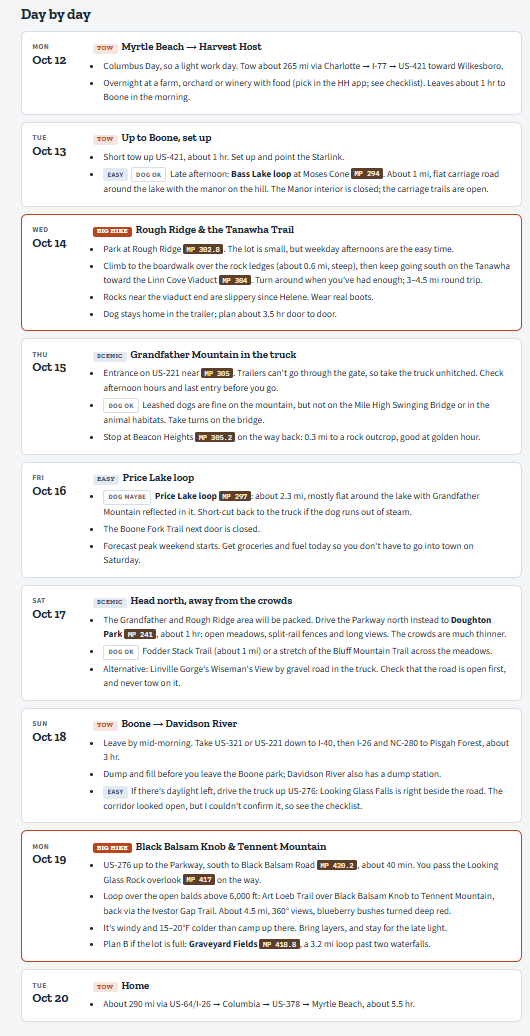
Those images are only part of the "presentation." Anthony was kind enough to have Claude generate a shareable link so you can see the whole thing! Click the image below and prepare to be wowed...or to have the same reaction Nicole did when she saw it.
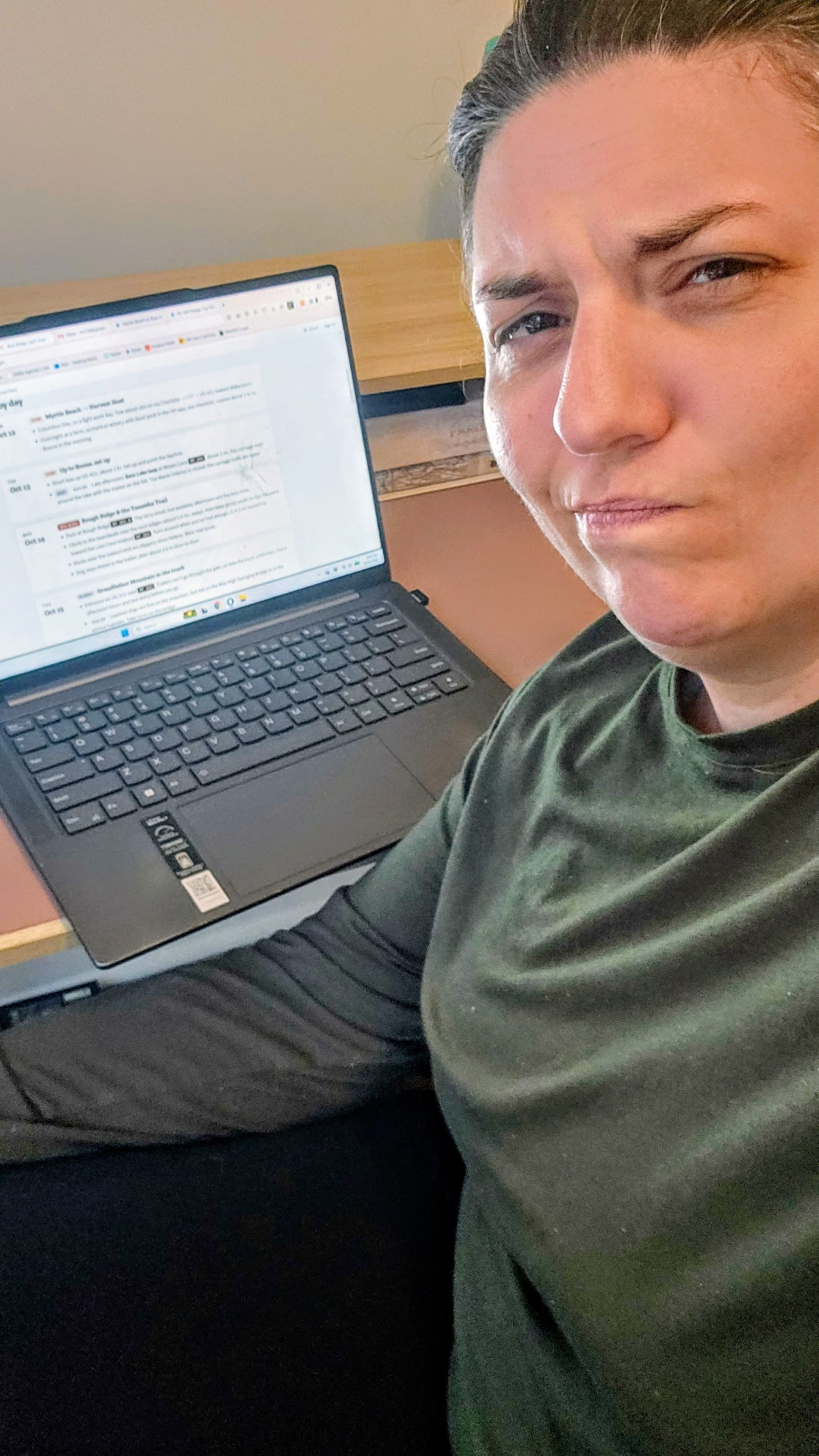
Our plan to each run individual chats and compare worked great. We each had similar overall itineraries, but with key differences due to what we each focused on vs. what we overlooked. We took the prompt to ChatGPT to see if, together, we could yield the optimal itinerary.
ChatGPT:
(For the geeks: ChatGPT high effort)
Spoiler alert: It didn't. At first, it suggested 2 basecamps so we could explore both sides of the Blue Ridge Mountains, closer to Asheville and then further into the high country. The other models did this, too, but when we let them know that we could skip Asheville because we'd already been (twice), they pivoted and planned our trip for the high country only (Gemini) or extended our trip (Claude). ChatGPT didn't. It insisted on keeping 2 basecamps until we specifically said we didn't want to move, at which point it set us up with one basecamp...in Marion. Where's Marion, you might ask? East of Asheville along I-40, and therefore requiring a multi-hour trip every time we wanted to venture into the mountains.
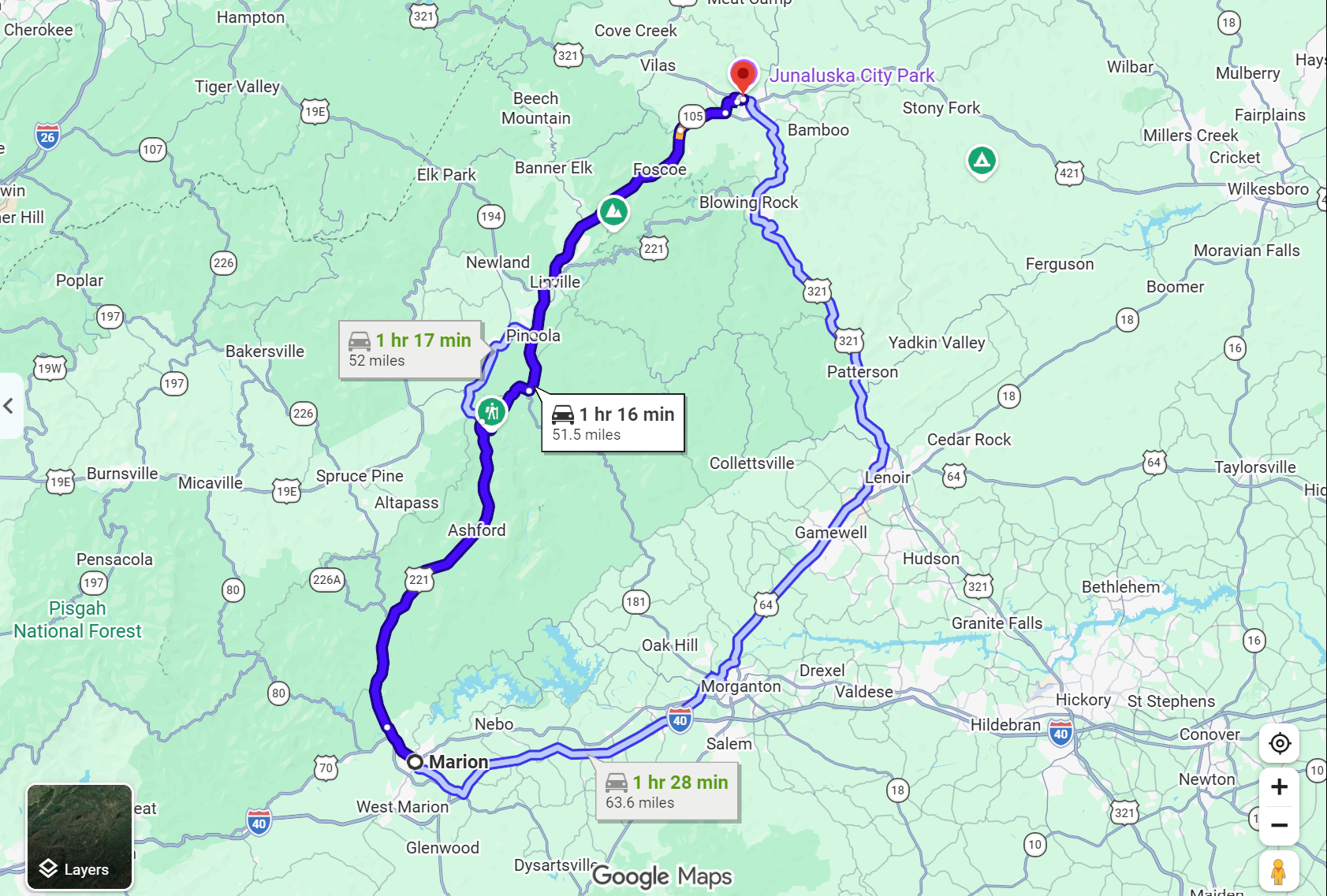
If this was a solution so we wouldn't need to tow into the mountains, fine...but we never said we wanted to stay in the valley. We'd much prefer towing to the high elevations and being near our activities, especially with our pets. Leaving them in the rig for all-day excursions that require at least 3 hours of driving is a no-go. And so was the ChatGPT itinerary. We scrapped it. ChatGPT is a good for image generation, but not for this type of logistical thinking.
Meta Muse:
Finally, the time had come to try the new AI agent, Meta Muse. We dove in with our prompt. Immediately, we noticed that its "voice" was very conversational. Like the other models, it first offered a trip overview, followed by a first draft of the itinerary. Then it asked follow-up questions to narrow the scope. What was different, was that it immediately let us know that it could check campground availability, and it issued an optional prompt for us to use this feature.
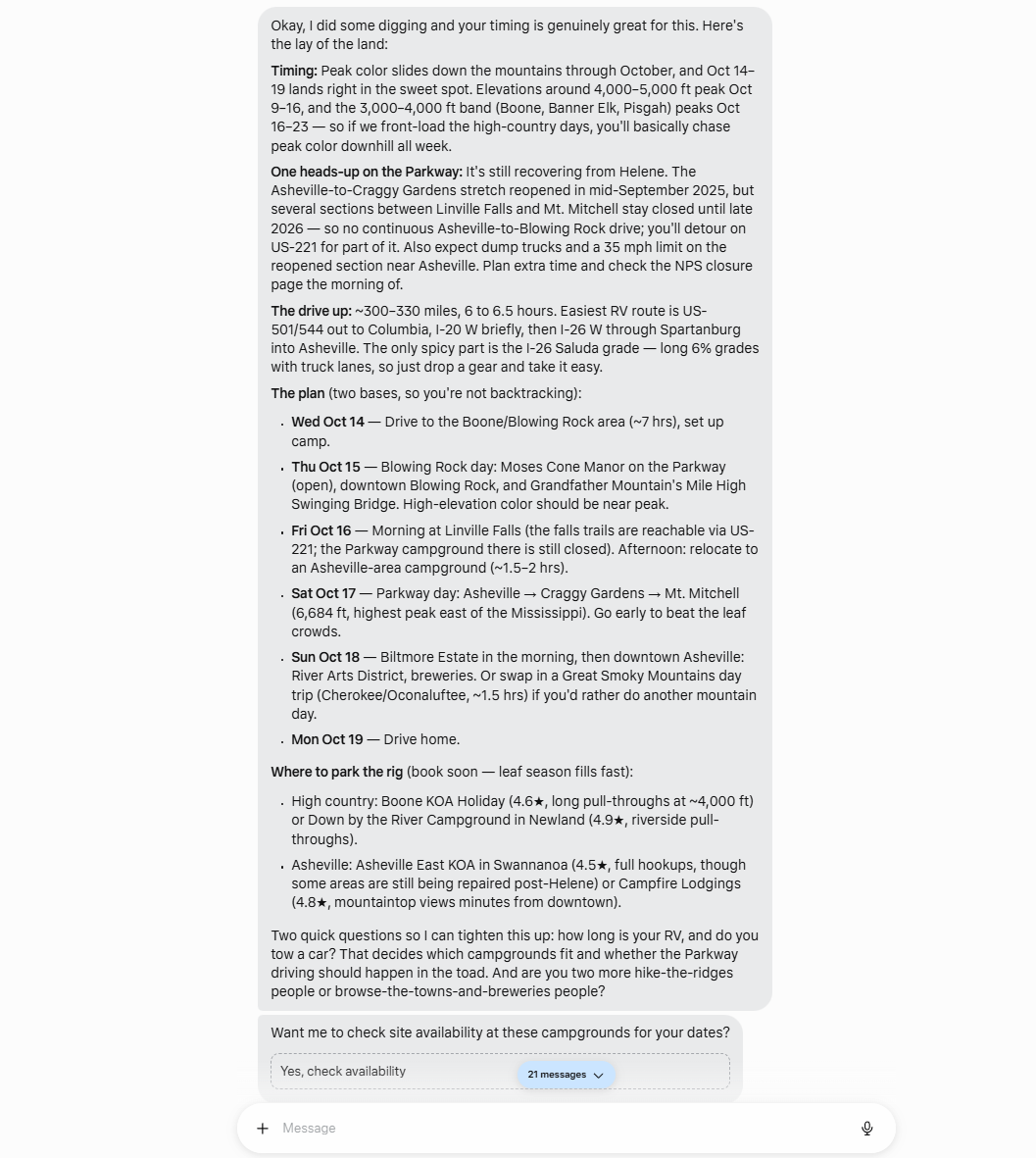
The results were strong, especially considering the model had never interacted with us before. Similar to the other models, it started off splitting the Asheville and Boone areas, but we let it know we'd rather stick to one basecamp in the high country. It stayed very campground-focused, which made sense because Meta has programmed this model to be a good planner. However, when we asked it to confirm availability, it only ended up checking 5 campgrounds, despite all but 1 having no availability. Trip planning during peak season takes a lot more optimizing than this! Nicole ended up doing her own research and finding a campground that wasn't mentioned, and she introduced it into the conversation. This technically went against our plan, as we wanted to only use AI-initiated recommendations, but we had to stay realistic to the fact that AI still has limits.
We noticed a discrepancy when we used Muse, and this was that, compared to Gemini, it told us different information about the dog-friendly parts of Grandfather Mountain. When we fact-checked it, we discovered that neither Gemini nor Muse had the rules accurate. This is a small detail, but evidence that shows that human research is still needed.
We narrowed the conversation more towards campgrounds, since that's what Muse seemed to do best. It has its own browser, where it pulled up campground websites, combed through availabilities and regulations, and told us all the info. We especially appreciated that it mentioned check-in and check-out times without prompting, as sometimes it's hard to find this on campground websites. Gemini doesn't comb through websites as diligently, and one of the itinerary versions mentioned "leaving the campground in the afternoon," which every RVer knows, usually requires permission for a late checkout – something Gemini failed to recognize.
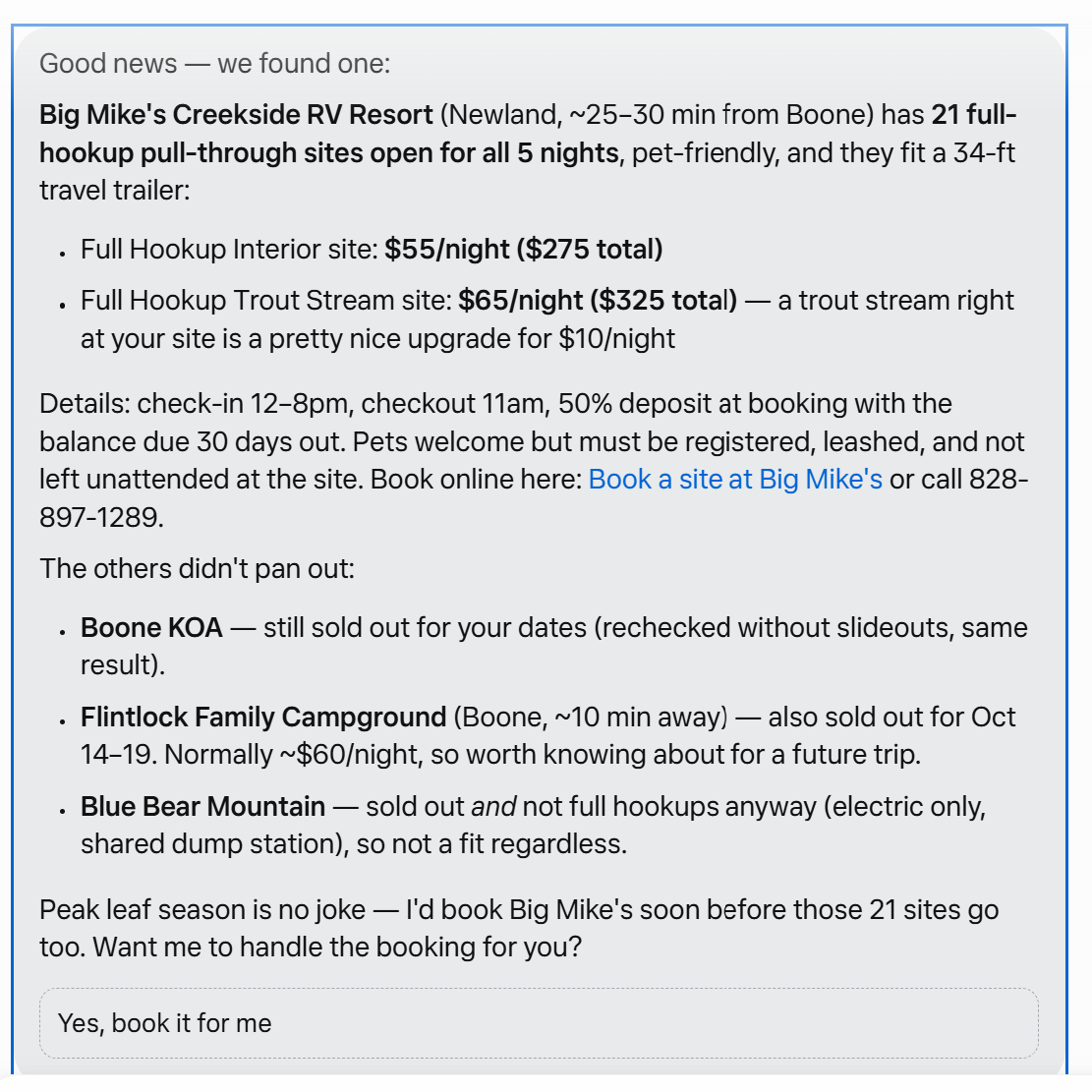
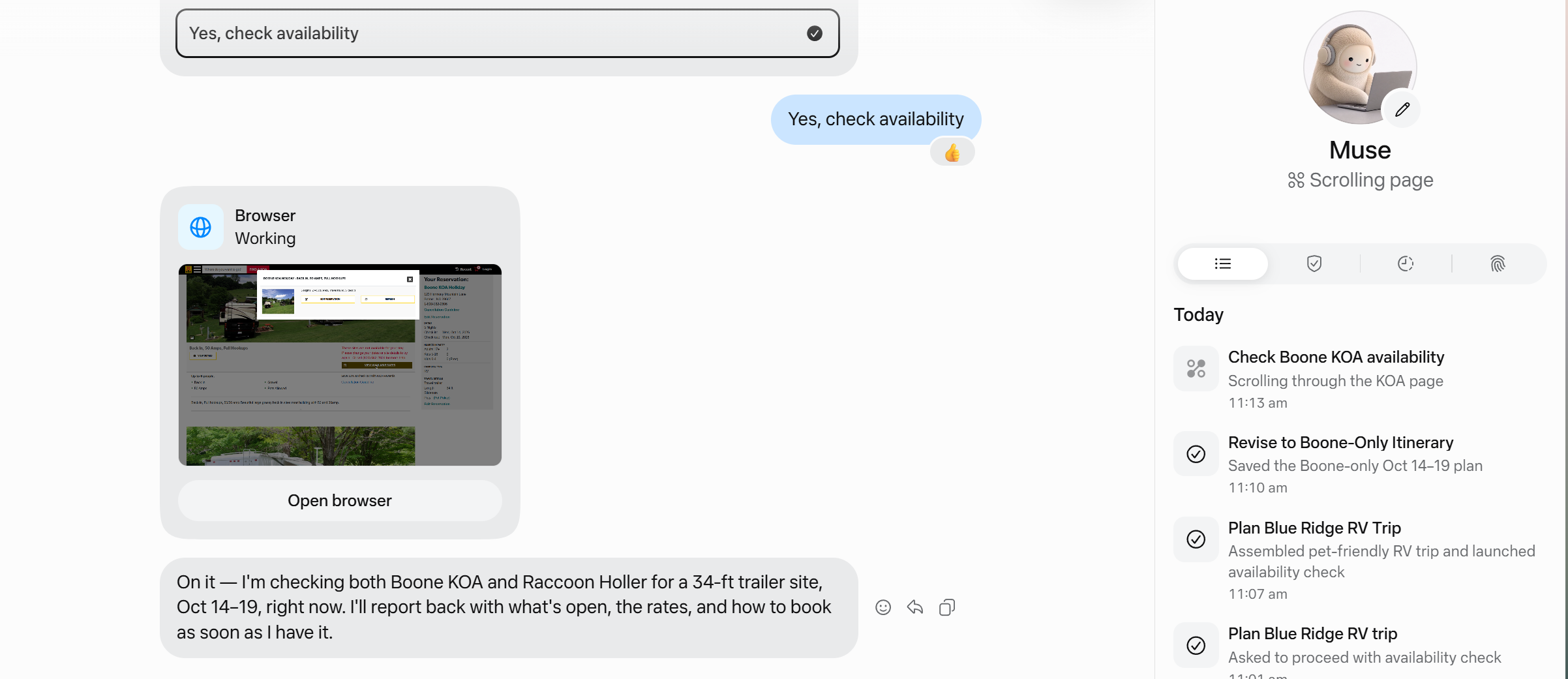
You can view the chat history in the PDF below. Some superfluous parts have been redacted.
The next day, Nicole went to save the chat history, which is more tedious than other AIs, unfortunately, but when she asked Muse how to save the info, it offered to create a presentable file, much like overachiever Claude...but dare we say, even prettier!
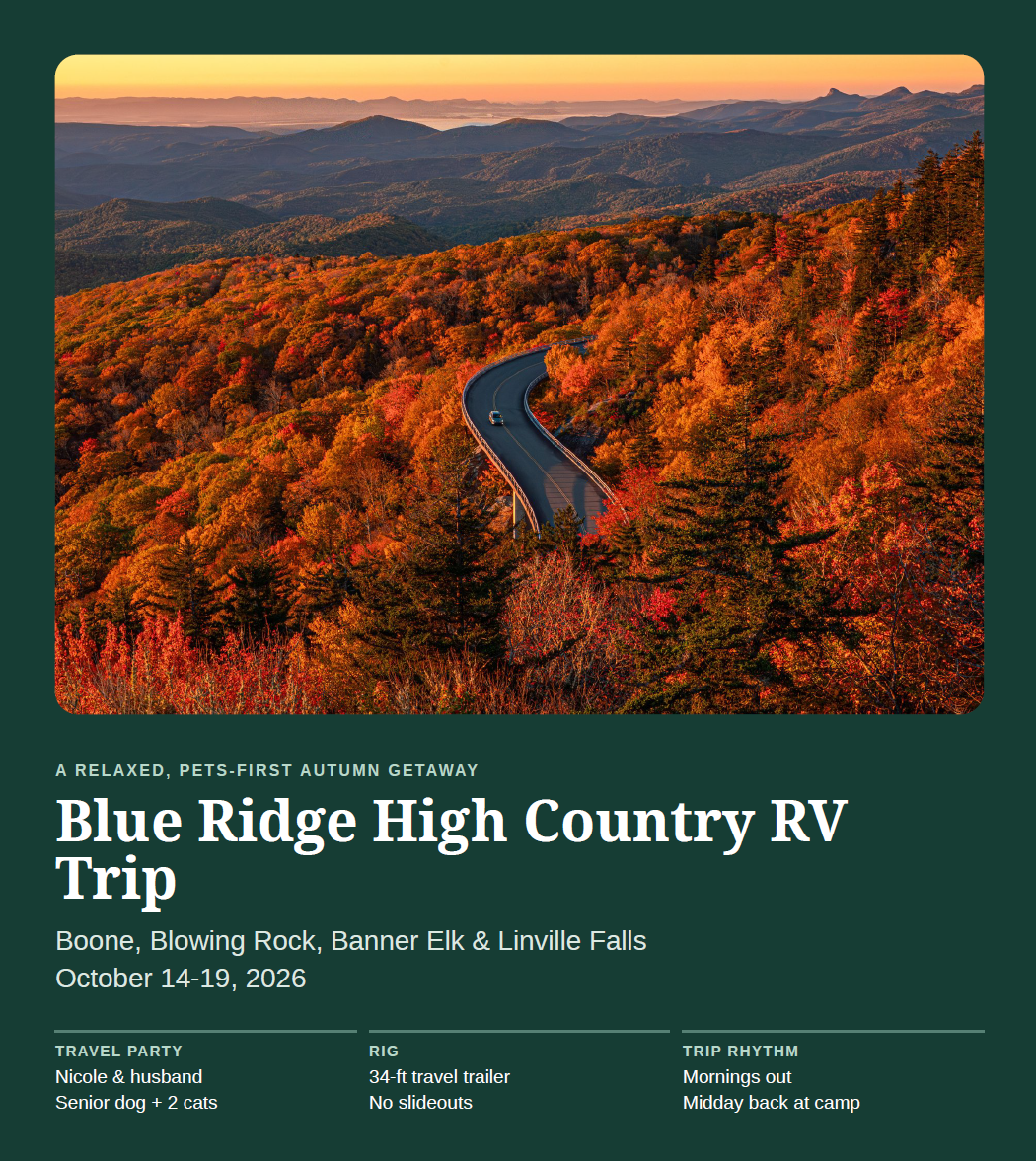
We weren't surprised that Muse developers seemed to take the best parts of the other models and compile them. We had the perfect blend of detail-oriented, overachiever Claude, conversational and context-aware Gemini, and the ease-of-use of ChatGPT. But how would it do with the one feature that currently sets it apart from the others: booking campsites? We needed to finalize our itinerary first, but we were excited...and a little apprehensive...to try it out.
Overall thoughts: Would we regularly use AI to plan our RV trips?
AI's ability to plan is only going to get more refined from here, but where it stands right now, we think it's a great planning tool but not the only planning tool. The models did exactly what we wanted, which was reduce decision fatigue and point us in the right direction. We got some cool ideas and learned how to space them throughout our trip. This saved us a lot of effort searching for preferred activities. However, we still needed to fact-check details, and we definitely still wanted to do our own campground research to make sure there wasn't something the models missed (which they did). Plus, AI can't call up a campground and inquire if there have been any cancellations (though some models advised us to do this). For initial planning, where we need to narrow our scope of activities and excursions, we think it was helpful. However, we still need to narrow everything down and make the final decisions.
That's where our next blog post will pick up. We'll dive further into the itineraries issued by Gemini, Claude, and Muse and decide which parts make it into our final itinerary.
To be continued.