
Weathering Winter: Arctic blast and loads of snow

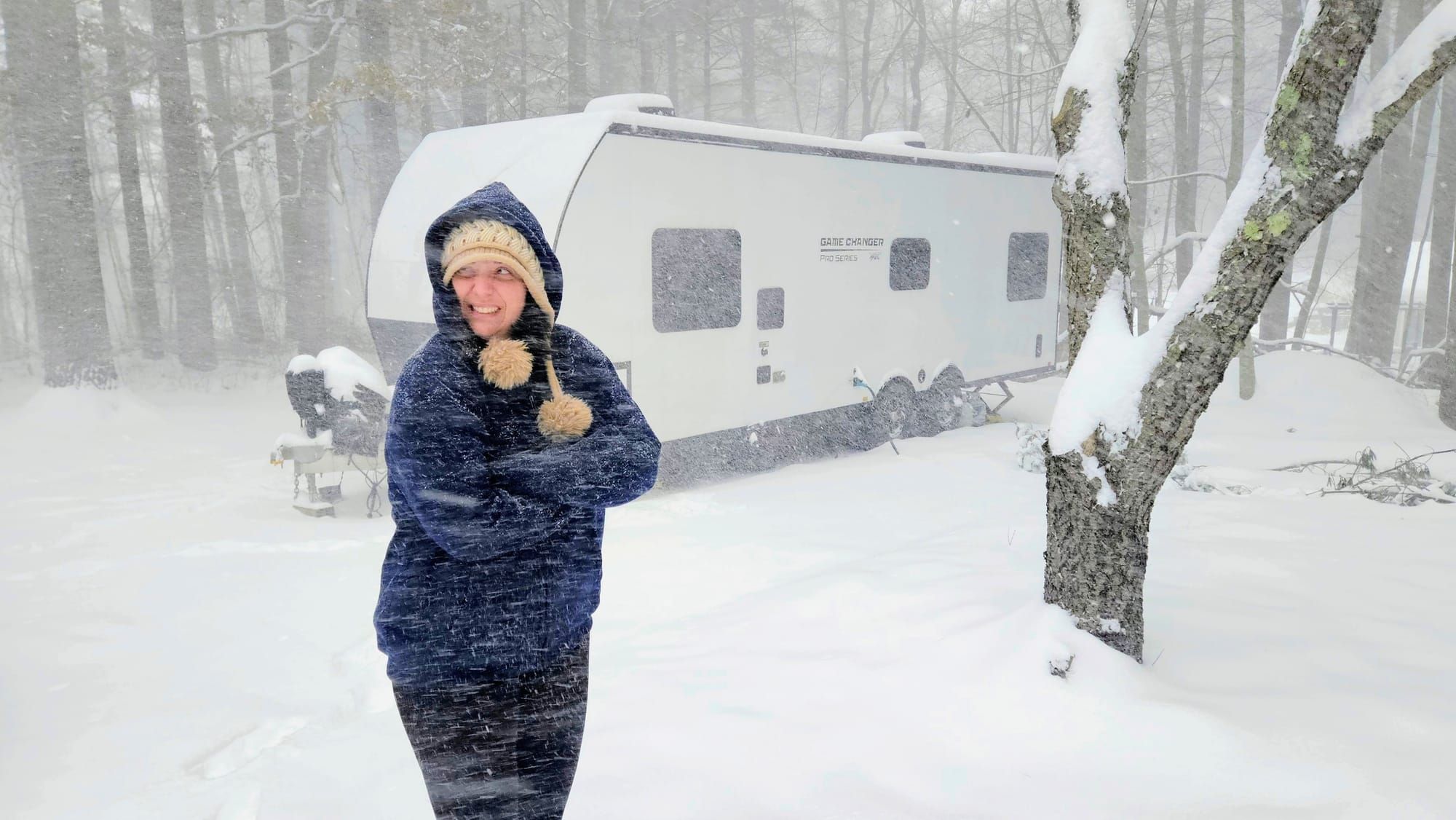
We're no fools; we knew that if we stayed in MA into the depths of winter, we'd face some gnarly weather. That's what happened when we stayed until February 22 the year we first launched on the road, and it wasn't pretty. Scratch that. The snow was pretty, but the circumstances were not. In the years after that, we actually made out pretty well in terms of snow. We faced some winter woes that were mostly cold-related, often made worse by equipment not functioning optimally in our rig, but every year, we got through it.
This year, winter camping at our home-base was a surprise, but despite not being prepared ahead of time, our main systems were functioning properly. Our propane furnace was less than a year old and pumping out heat like a boss. Our propane cylinders had heated blankets for better flow. Our tank and line heaters were all working for the first winter ever. With all systems go, battling winter was the lesser evil compared to launching back on the road before we were ready. We needed stillness and decided to stay put until and unless winter got to be too much. Our prediction: We'd be content until February.
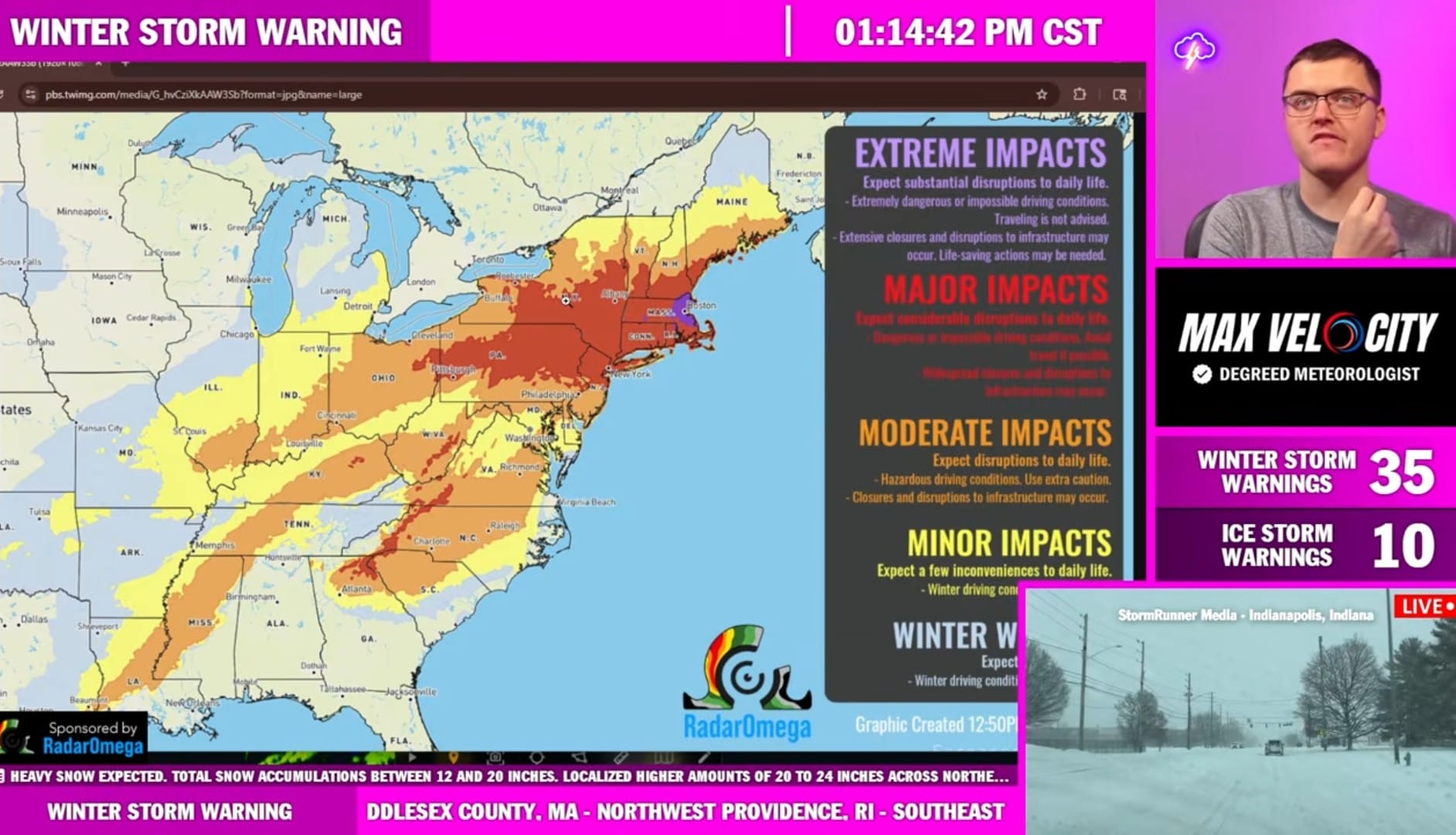
But then, winter reared its head before the turn of the month. Toward the end of MLK Weekend – the weekend we left our home-base last year – the forecasts warned nearly half of the country about a big storm approaching, due to a huge arctic blast radiating cold weather and precipitation southward. Most eyes were on the Southeast and southern Appalachians, some of whom could get a terrible ice storm that could wipe out power for days or even weeks. Up in New England, we braced for the end of that storm, and at this latitude, the precipitation would be snow. If predictions were accurate, we would see the most snowfall since we began RVing.
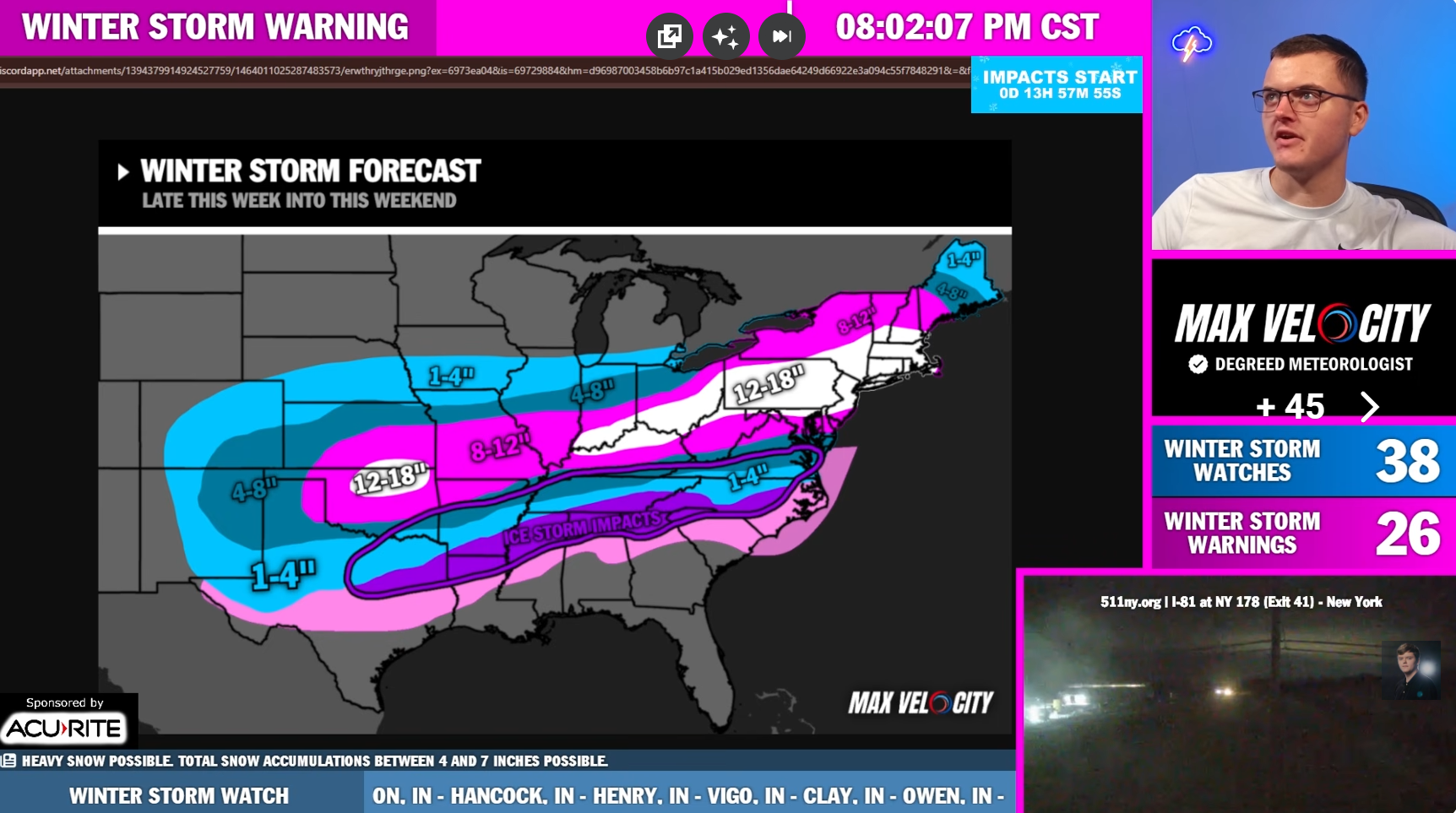
Max Velocity's US storm forecast
As we waited for the snow, we dealt with the cold. We watched the temperatures drop, noticing the day of no return approach on our calendars – that fated day when we'd drop below freezing and remain there for weeks. For the first time all year, we had the big discussion: Should we stay or should we go? Answering that question was easy. Things weren't looking too great down south, and it would take us at least a couple days to pack up and hit the road, at which point we'd drive smack-dab into the band of storms. The only choice was to stay, which led to the next question: What could we do to reduce the effects of this storm on us and the RV?
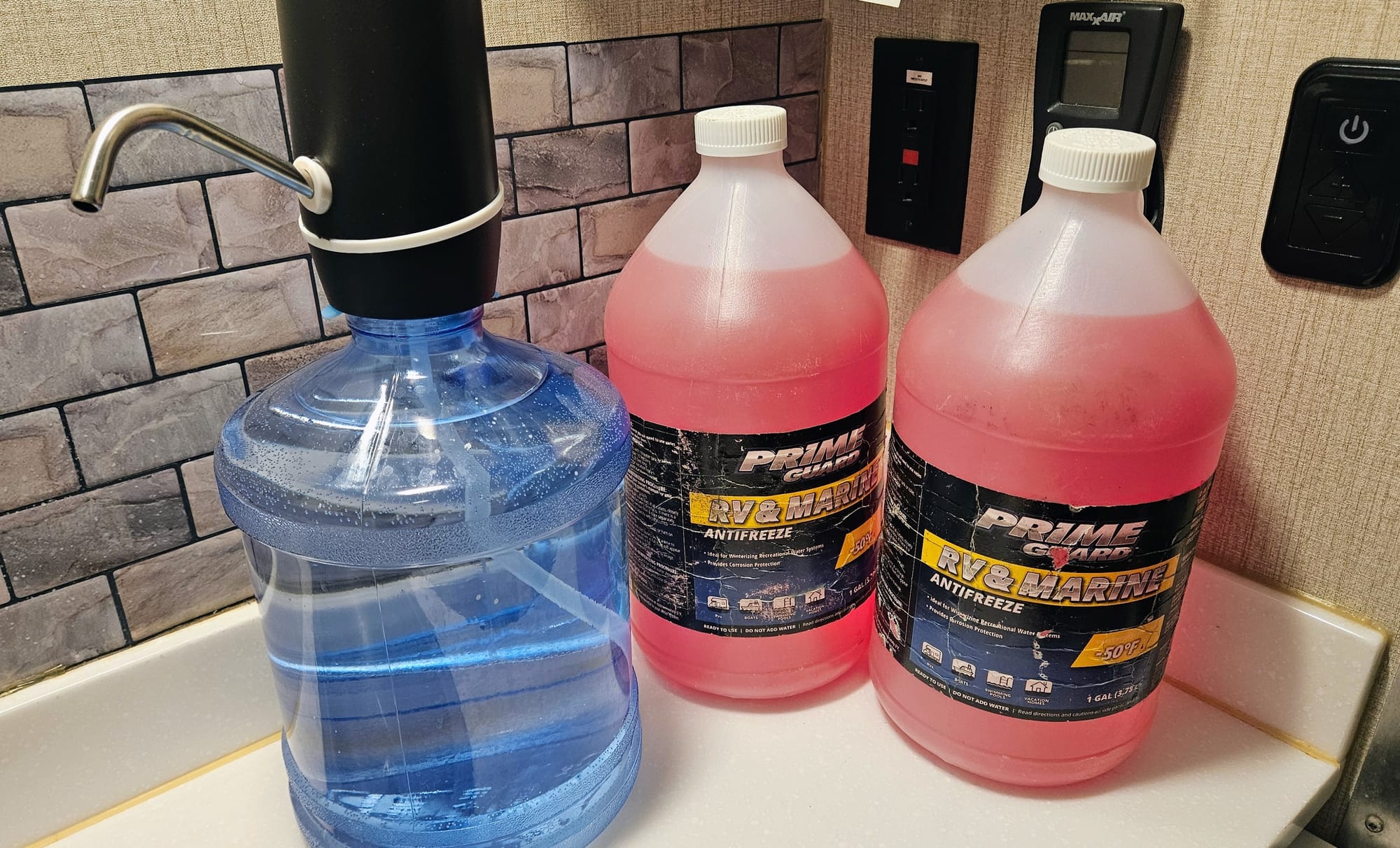
We already had our solution for frozen water tanks. Our new jug pump was working great and we had spare jugs laying in wait. Our next big obstacle was ensuring the contents of our tanks wouldn't freeze. We would need a waste tank pumpout before temps hit above freezing again, but if the contents froze, there would be no way to drain them. Even worse, the fuller our tanks got, the more we risked expansion if the contents froze. The solution was the simplest one: pour RV antifreeze down into them. This would (hopefully) ensure that the contents would stay unfrozen until pumpout. The downside would be that adding antifreeze automatically meant filling our tanks a little more, but this was worthwhile.
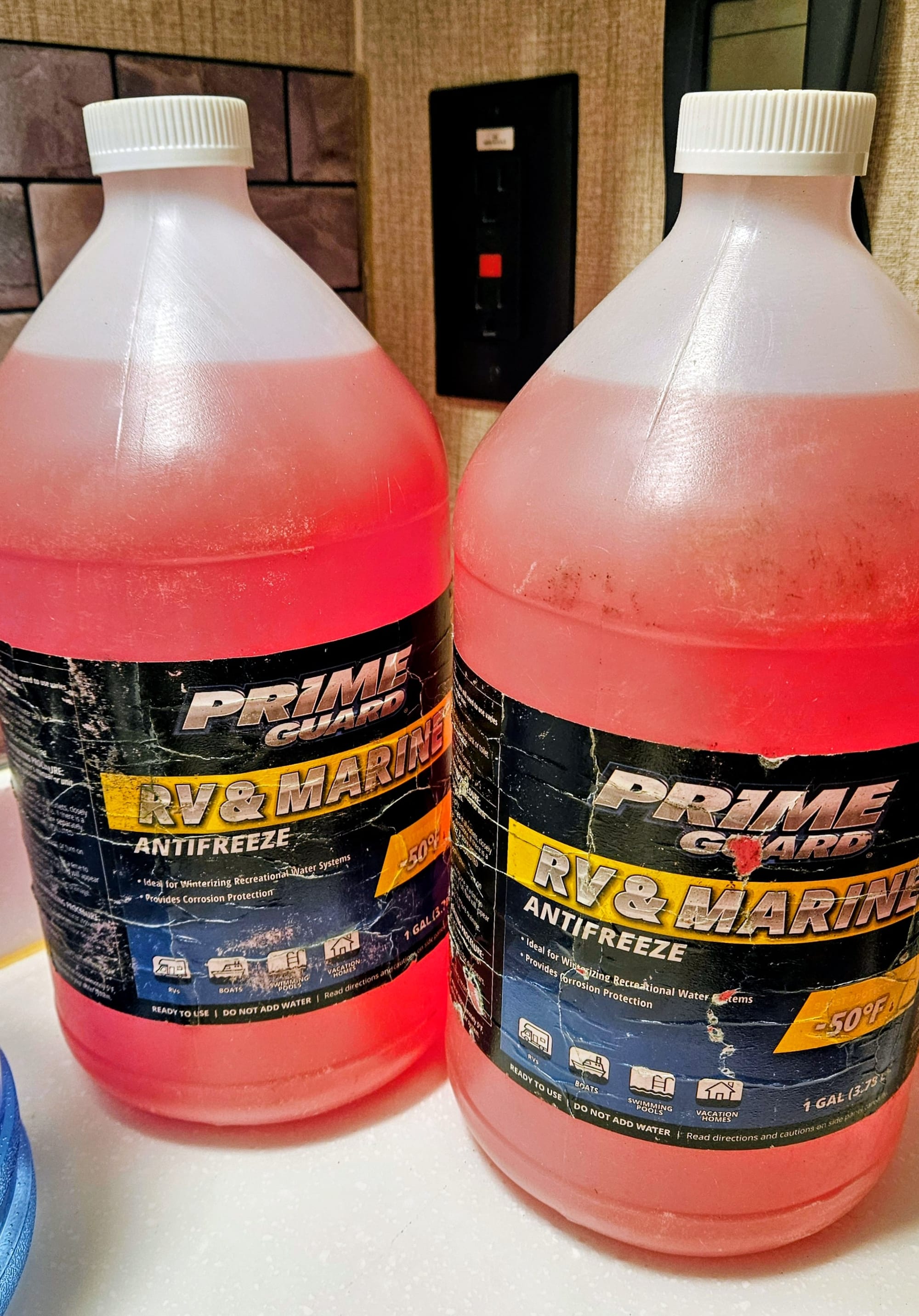
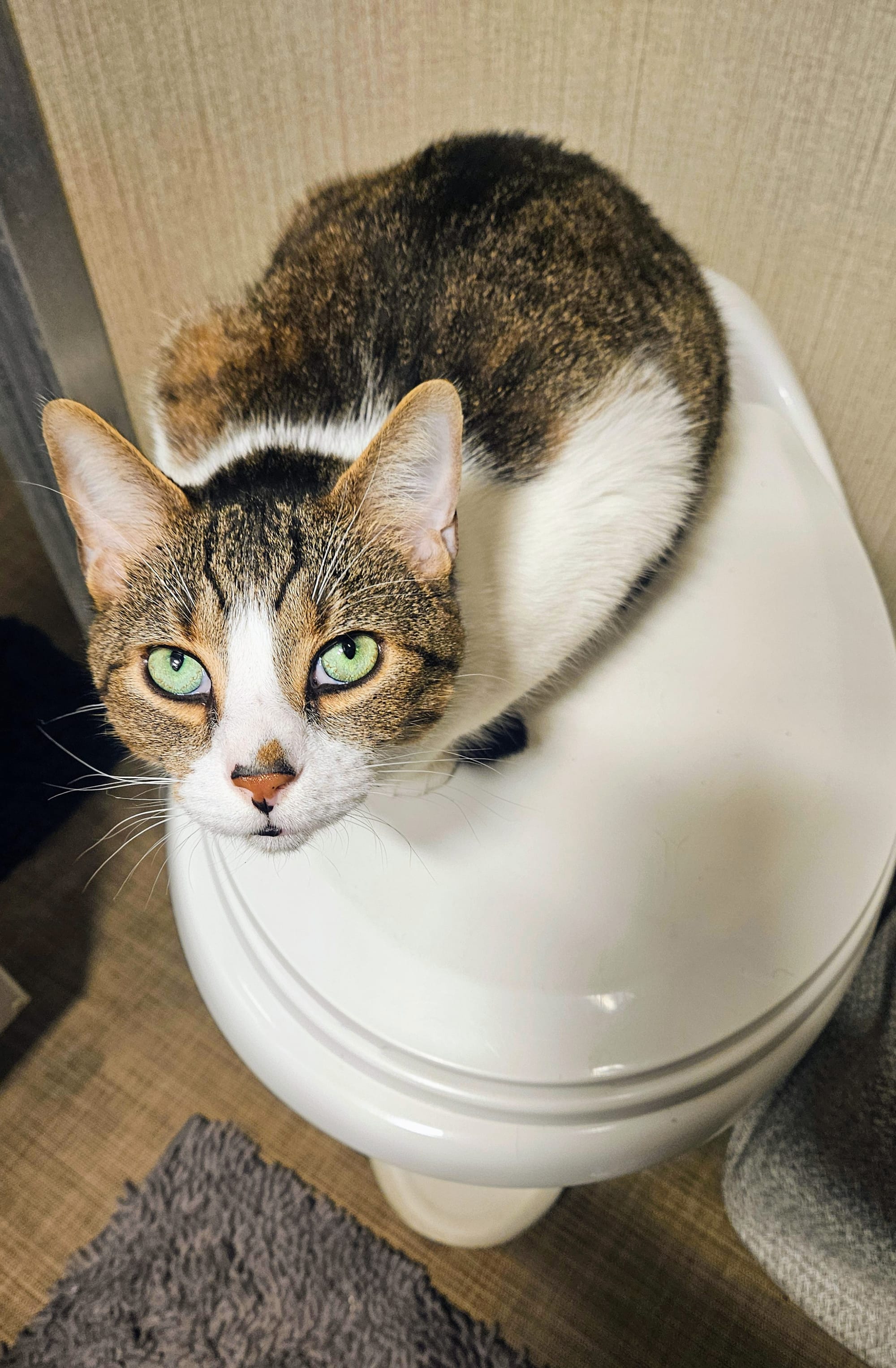
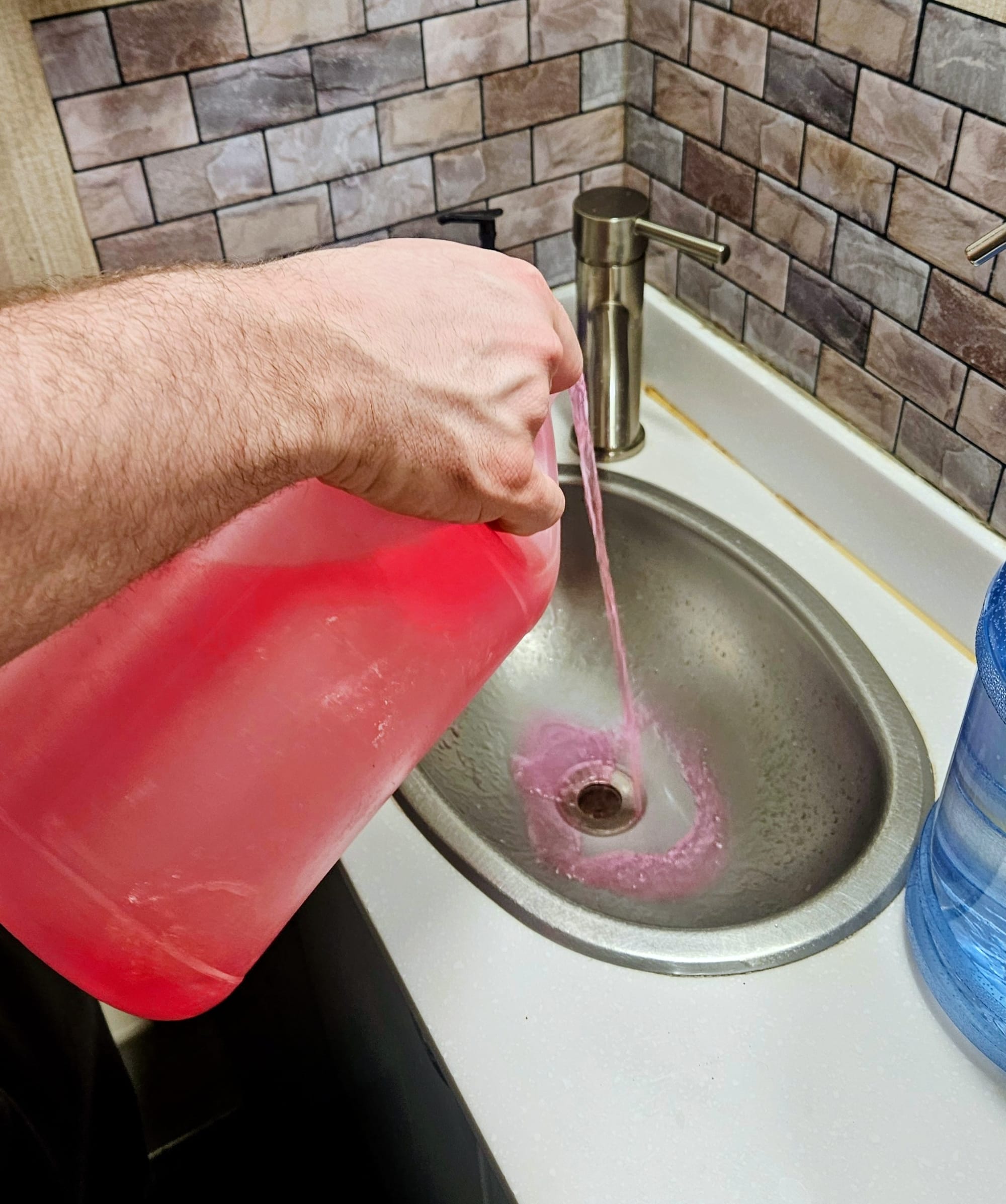
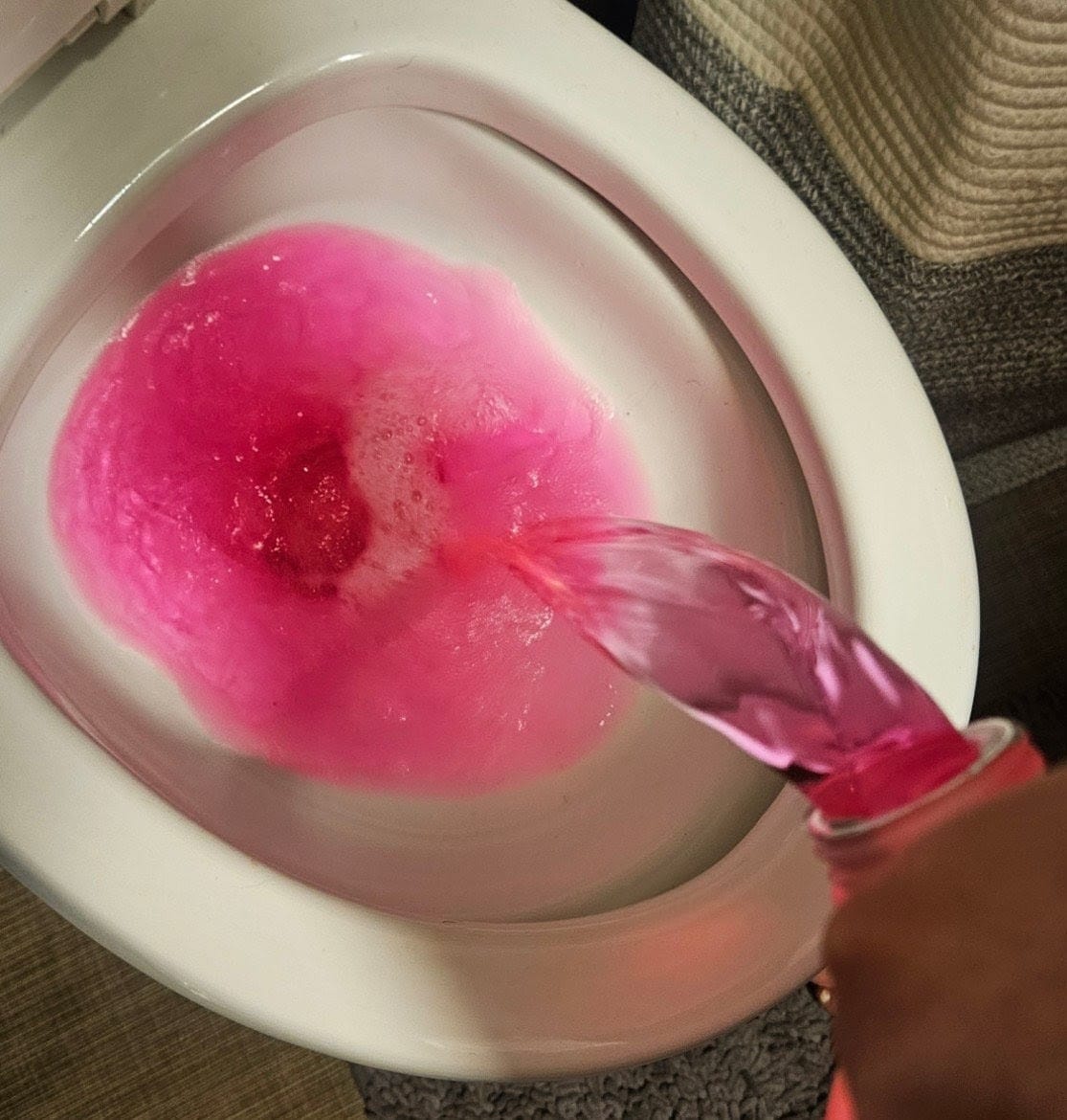
As for the freshwater, we had one day of warm enough weather to fill our tank using my parents' spigot, but we needed to be sure to only fill it halfway or less. We were not putting antifreeze into the fresh tank, so we needed to leave room for expansion if the water froze. The tank heater should be enough to keep things thawed, but we needed to be on the safe side.
Why fill the fresh tank at all if we were going to be without running water anyway? This is an important question with a very important answer. The tank heater works better when water is in the tank. It helps the heat conduct through the liquid and reduces the risk of the heater overworking and shorting out.
Right before the storm, we overnighted one more piece of equipment, something we had talked about getting for a long time. We've had a couple of small space heaters to supplement our propane heat, but we wanted a larger one that's safer to leave on at night if need be. With temp dips this low, it's nice to get an extra boost of heat, especially in the areas where we spend the most time. We wouldn't necessarily travel with a space heater this large, but we invested in it for our stationary time. Plus, at our home-base, we have the electric hookups to support it.
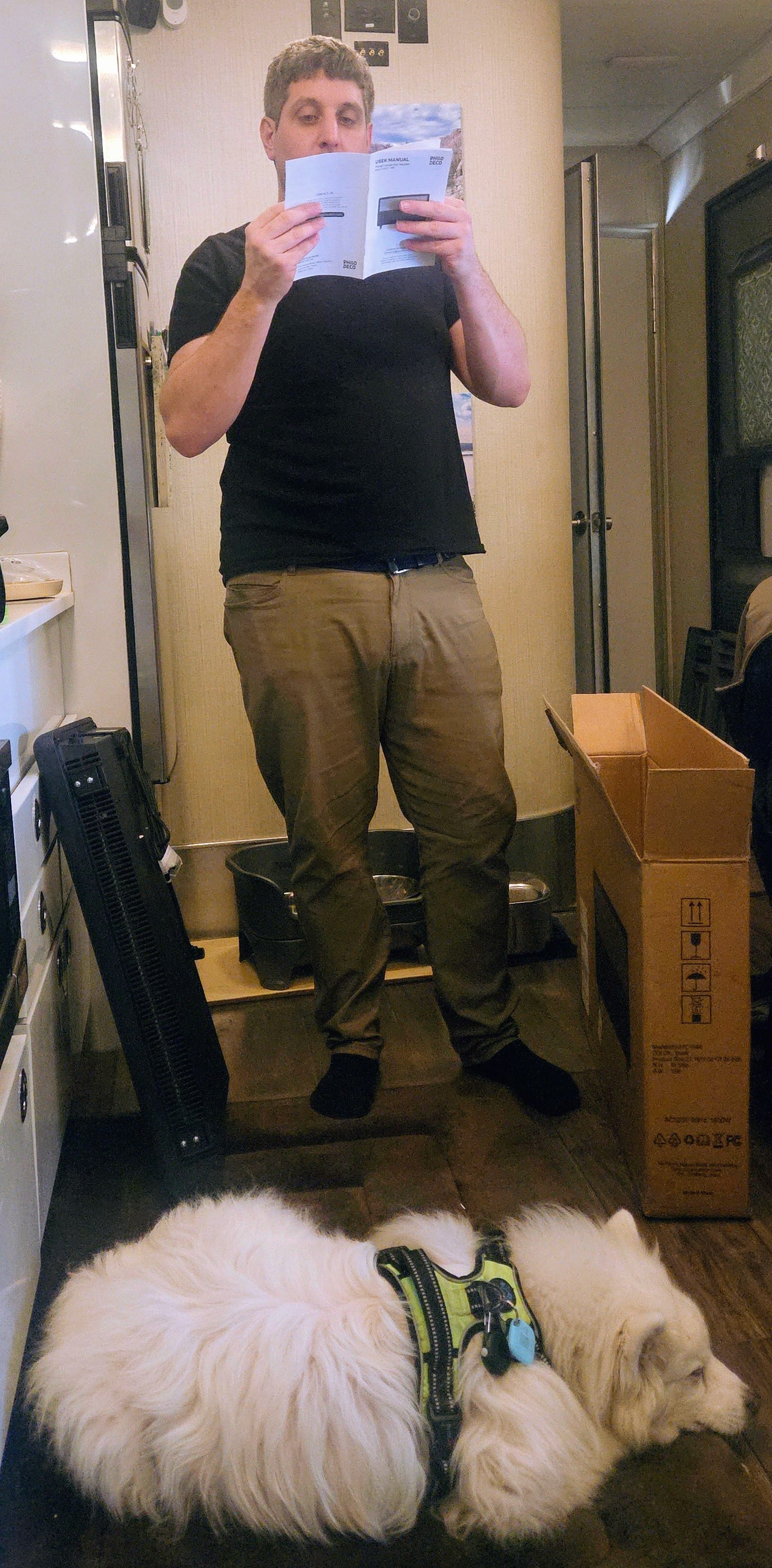
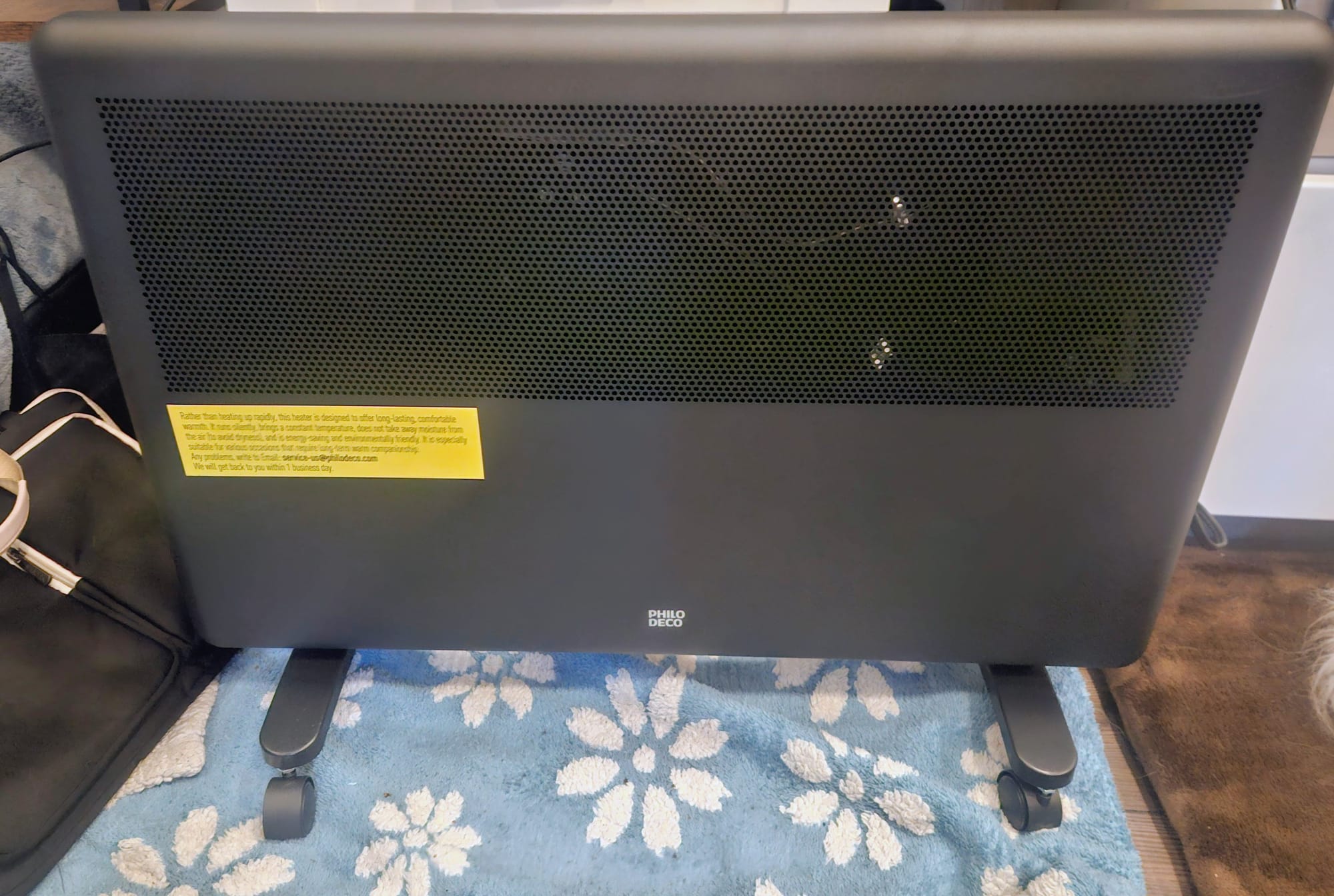
We do want to reiterate that the space heaters are only supplements. We make sure that our propane furnace is running regularly because the vents go through the inside walls and cabinets of our trailer. When temps get this low, heat isn't just about our personal comfort. It also helps keep our mechanics operating. Our propane furnace keeps our water pump, inside plumbing, and even our floors warmer. This does mean we're running for propane refills at least twice as often as usual, but we learned the hard way last year what happens when our furnace doesn't work properly.
On the final night before our point of no return, we drained our water lines and switched over to our bottle and jug system.
Once we took all our preparations, our final step was to commit to monitoring our tank and line heaters throughout the entire freeze. Our electric panel allows us to see wattage coming in, and so we can isolate each heater to make sure it's drawing power.
Emotionally, facing such an extended period of time below freezing felt daunting, but logically, we knew that as long as we took our preparations and monitored our equipment, a long period of frozen temperatures could actually be less dangerous than constant freezing and thawing. Those are the situations where materials can weaken and cause cracking and bursting. We just had to stay the course and then make sure to ease our equipment out of the freeze as gently as possible, whenever that day came.
With all that, we were ready to take on the winter craziness.
The snow came Sunday night, January 25 and dumped a hefty 19 inches on us, plus a little residual snow throughout the next day. That was indeed the most snowfall we've experienced since we began RVing. Even the snowstorms in February 2022 didn't reach these levels of accumulation.
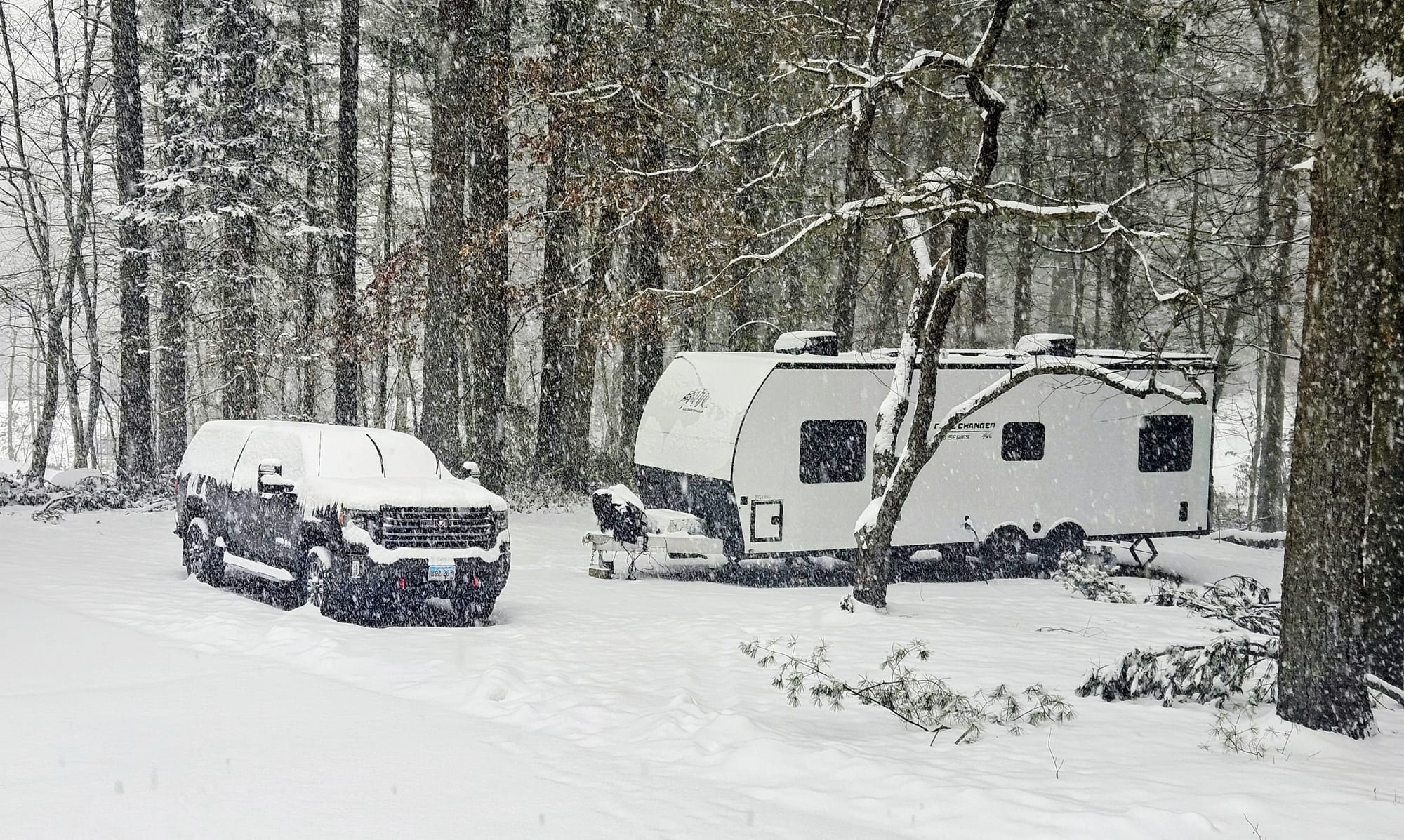
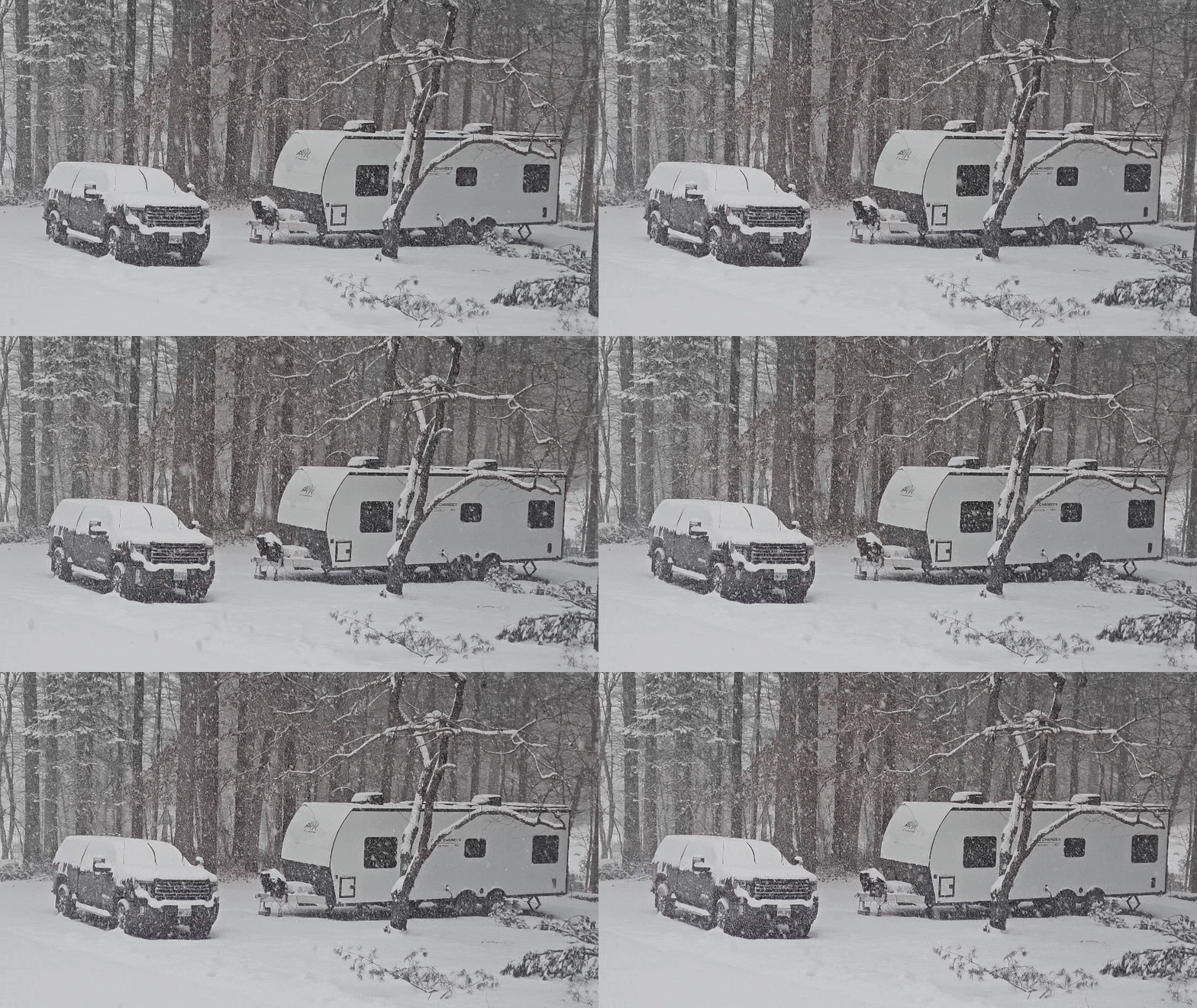
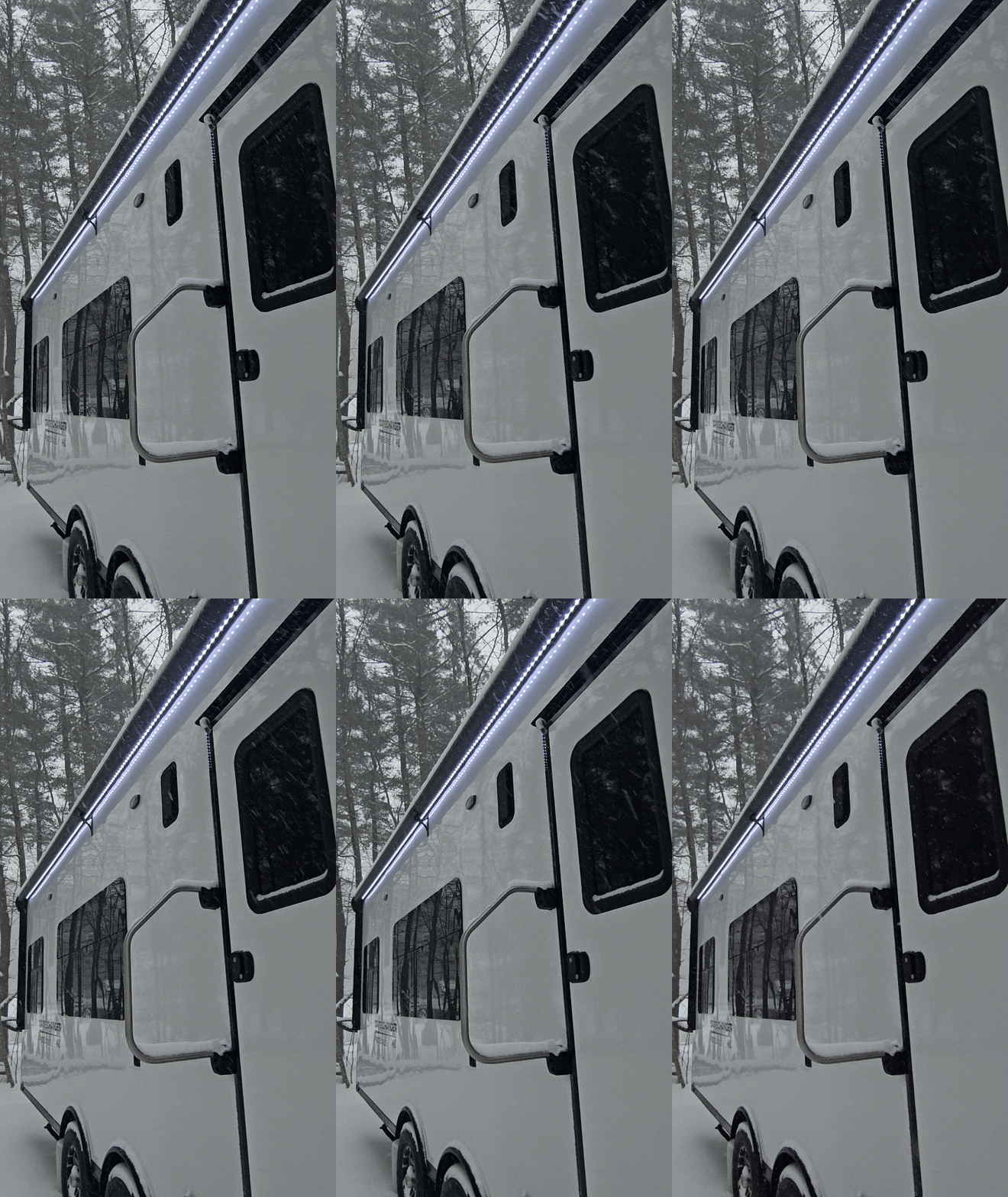
We mostly went into hibernation mode, with a few short jaunts around the yard to check the status of everything. After all, there isn't much to do when we're just waiting for the weather to do its thing.
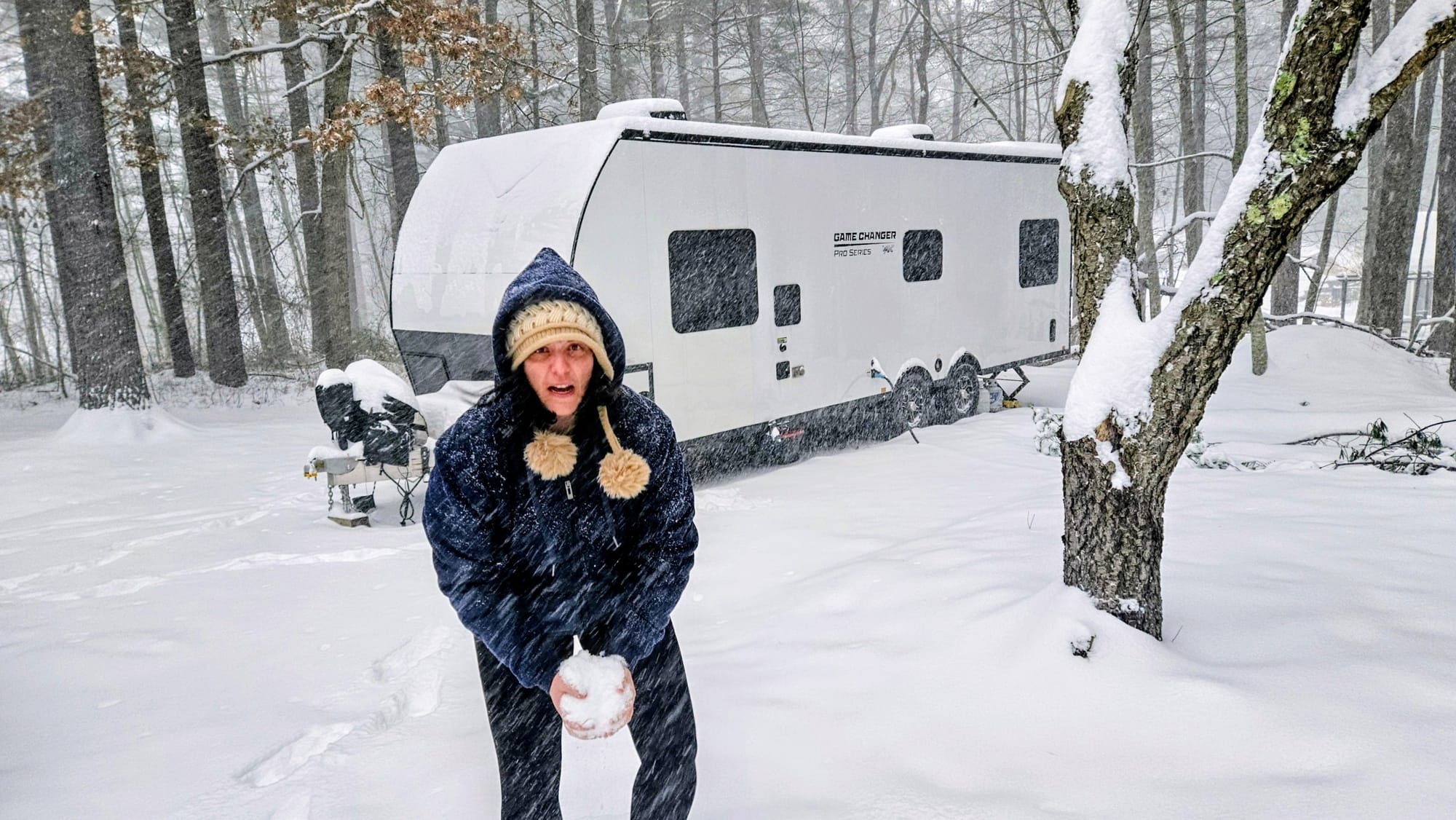
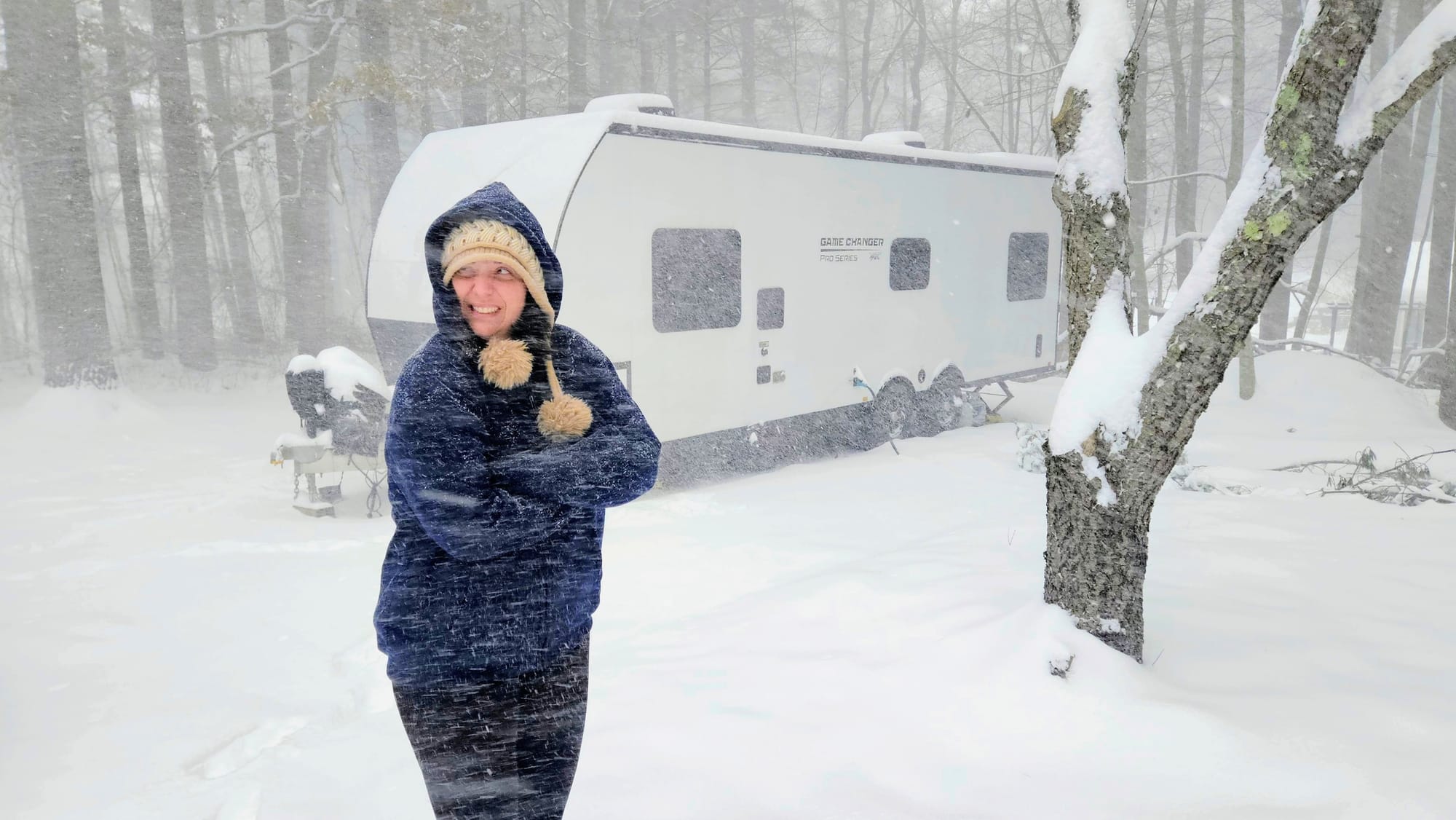
The real fun came as the storm died down. Anthony, my dad, our neighbor, and the plow guy got to work clearing the driveway and paths. Anthony shoveled a doggy patch for Tanner's bathroom, as well as a path around the rig and to get to the driveway. We had never seen so much snow buildup around our trailer! The wheels were covered and snow reached our bottom steps. Icicles hung from all sides of our trailer frame.
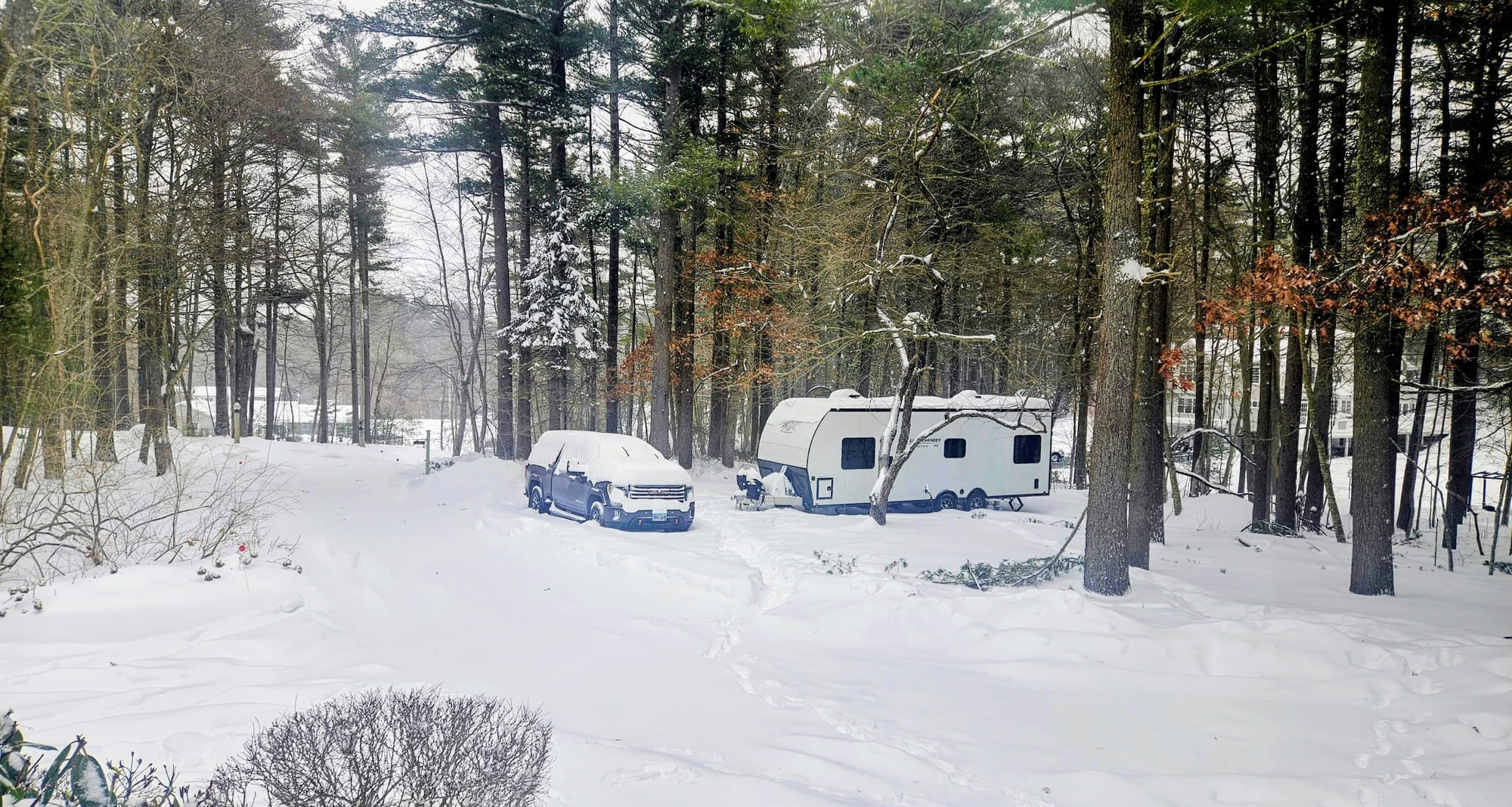
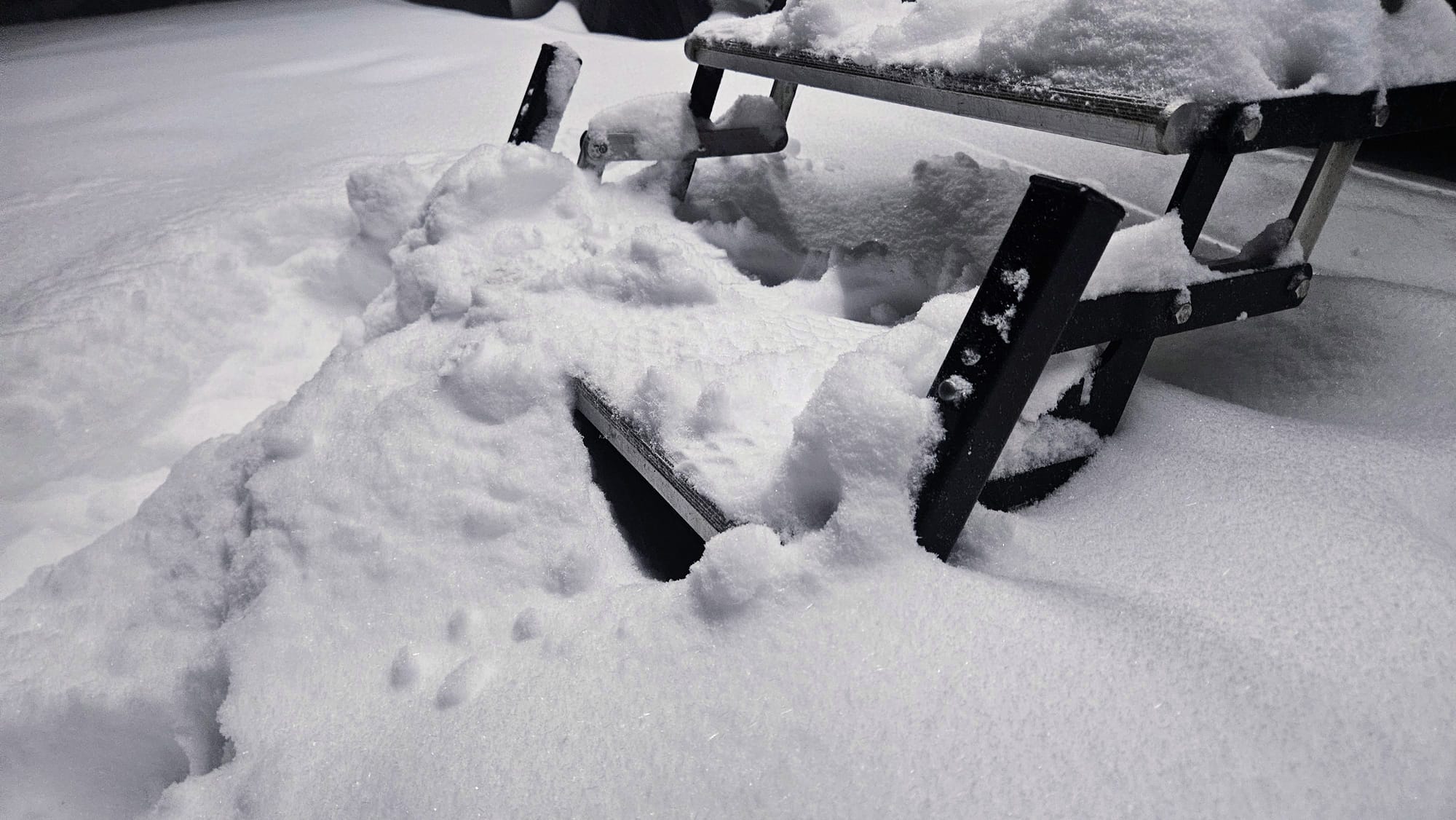
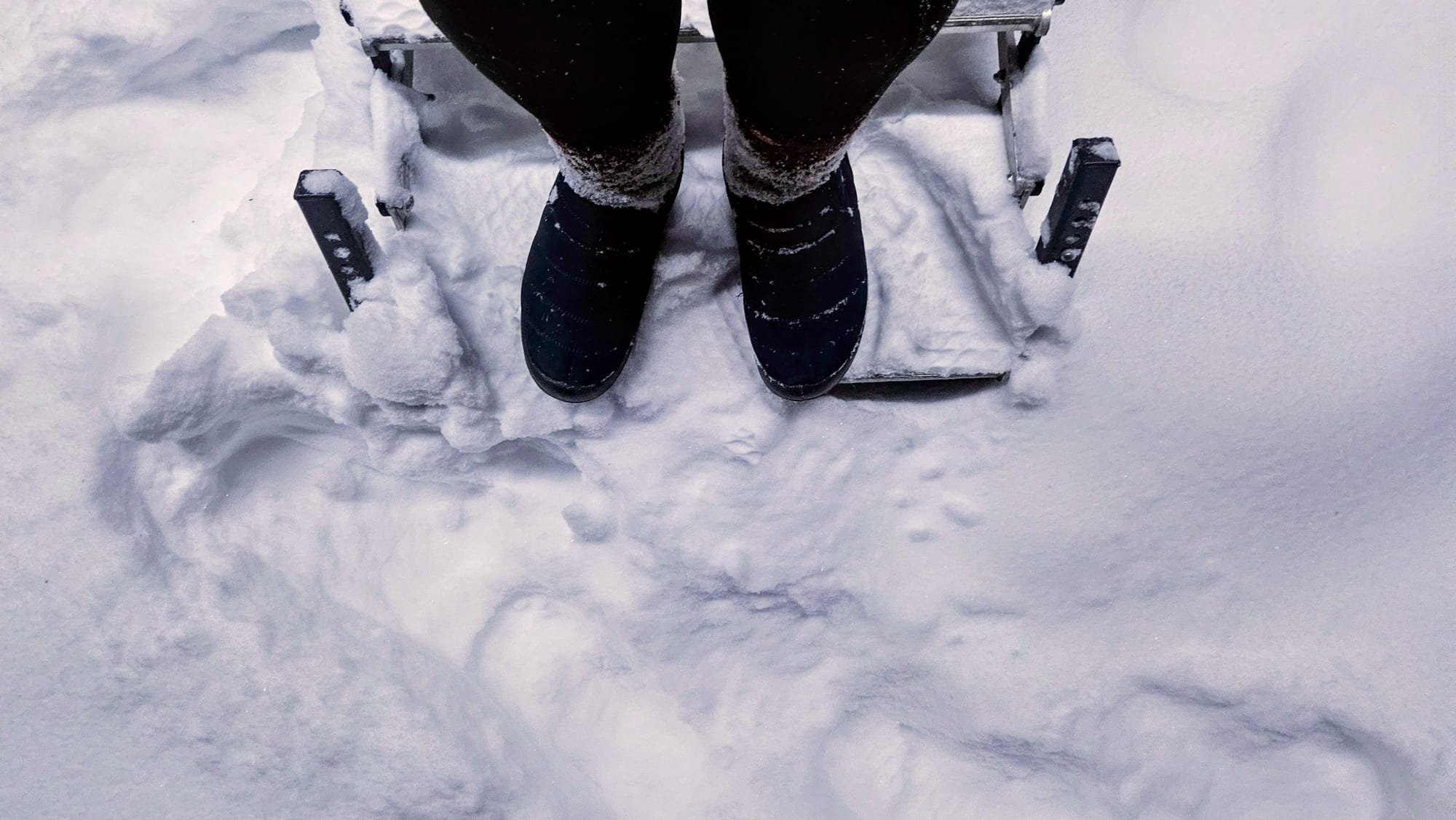
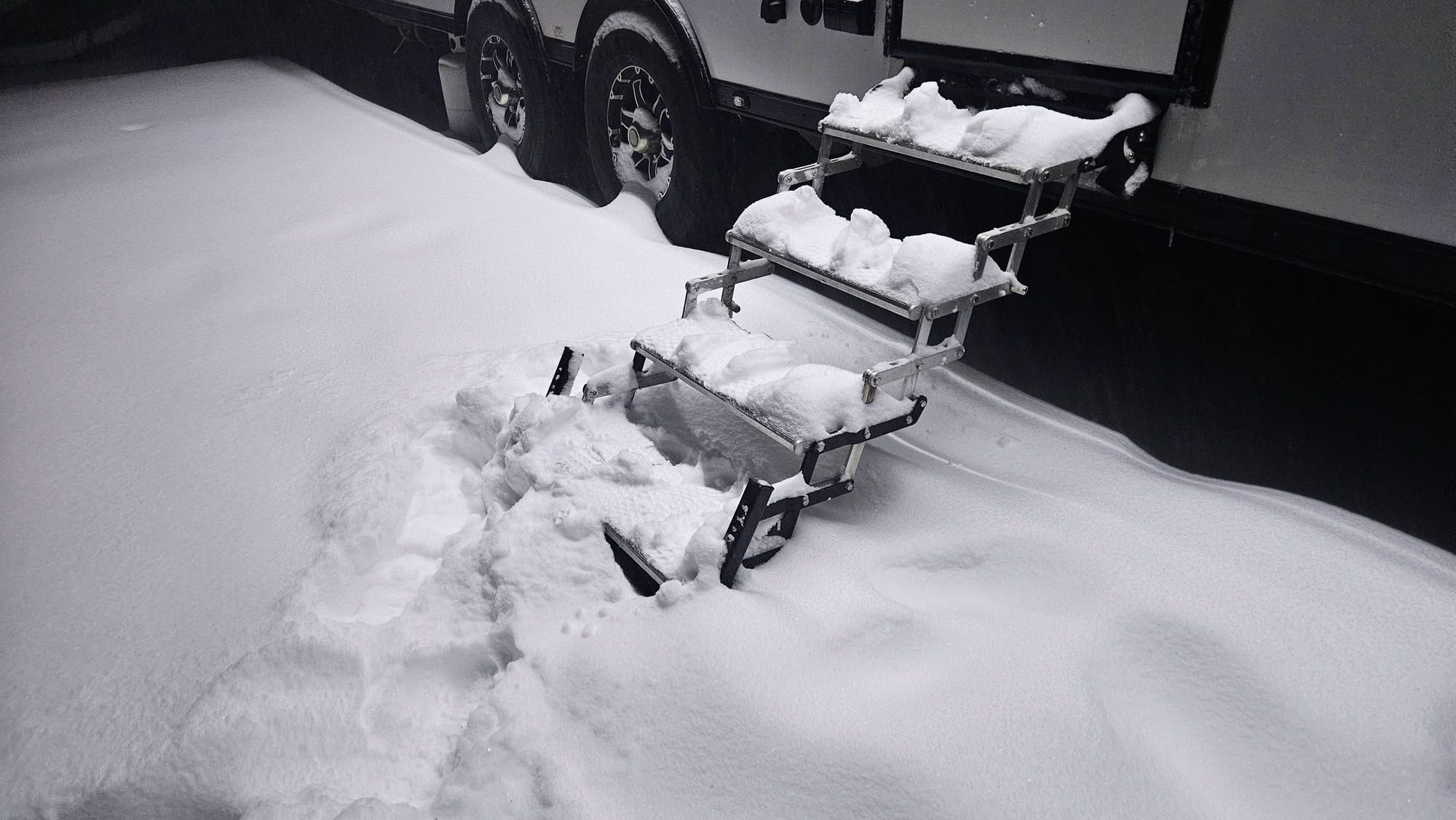
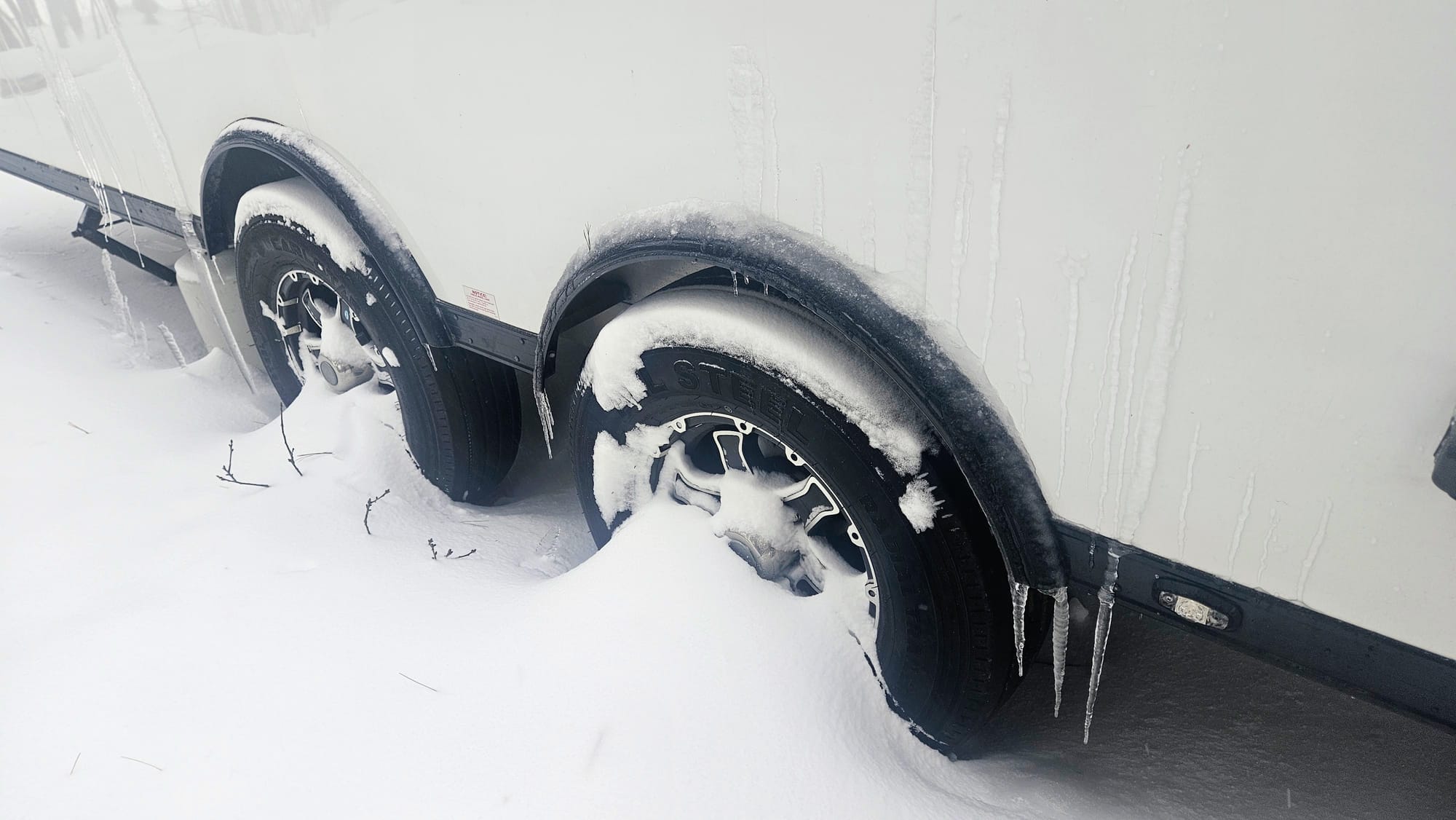
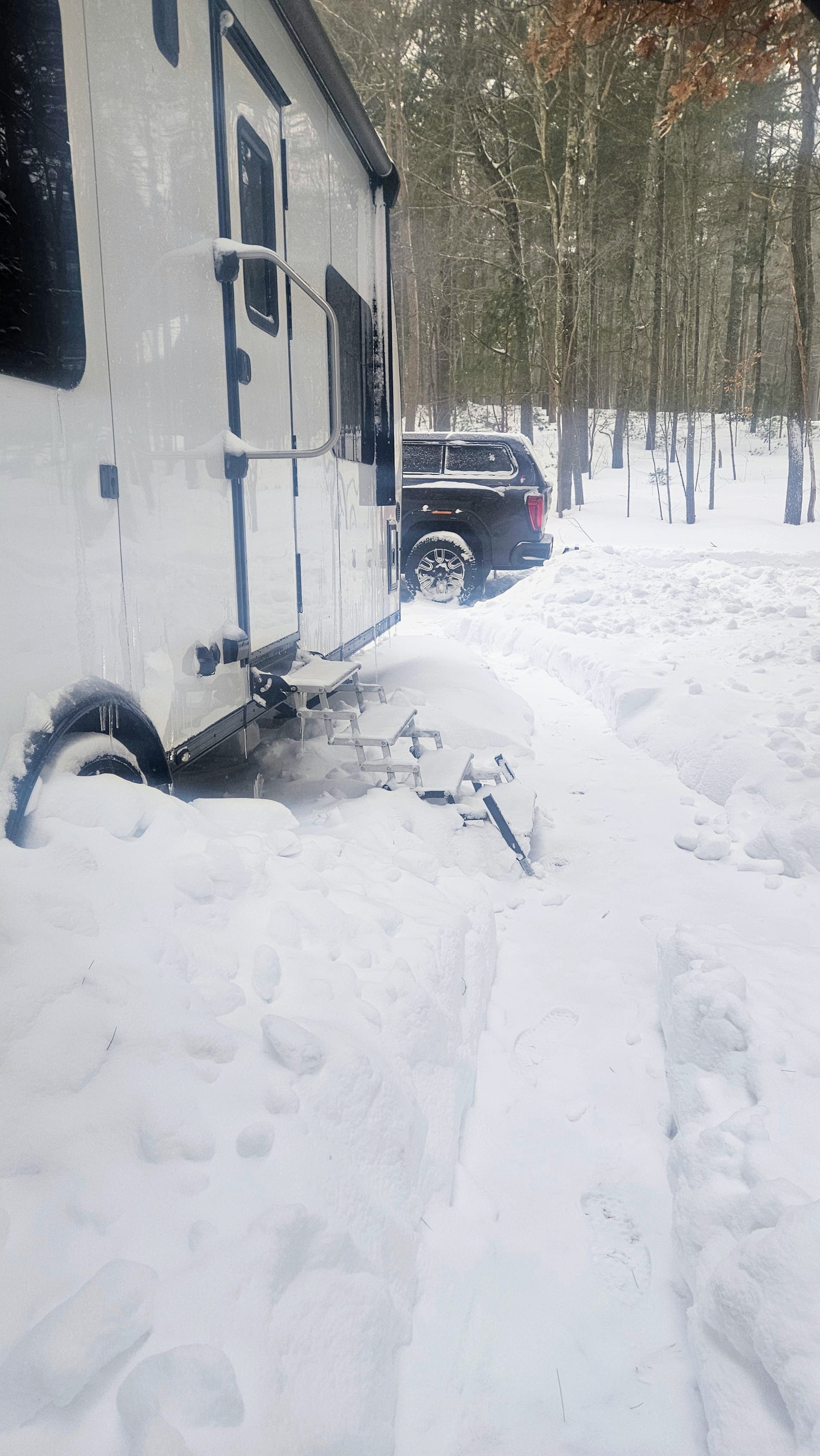
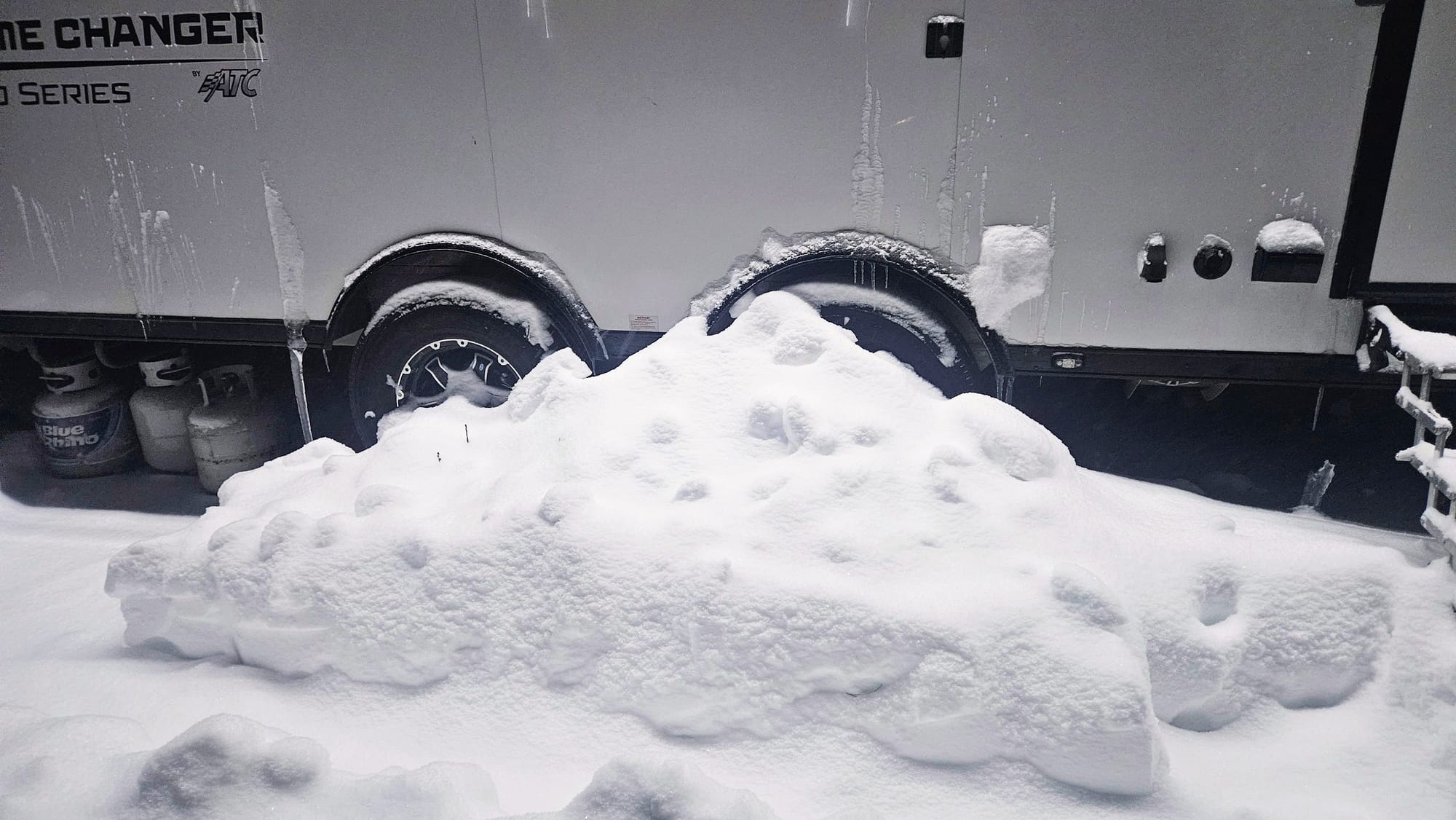
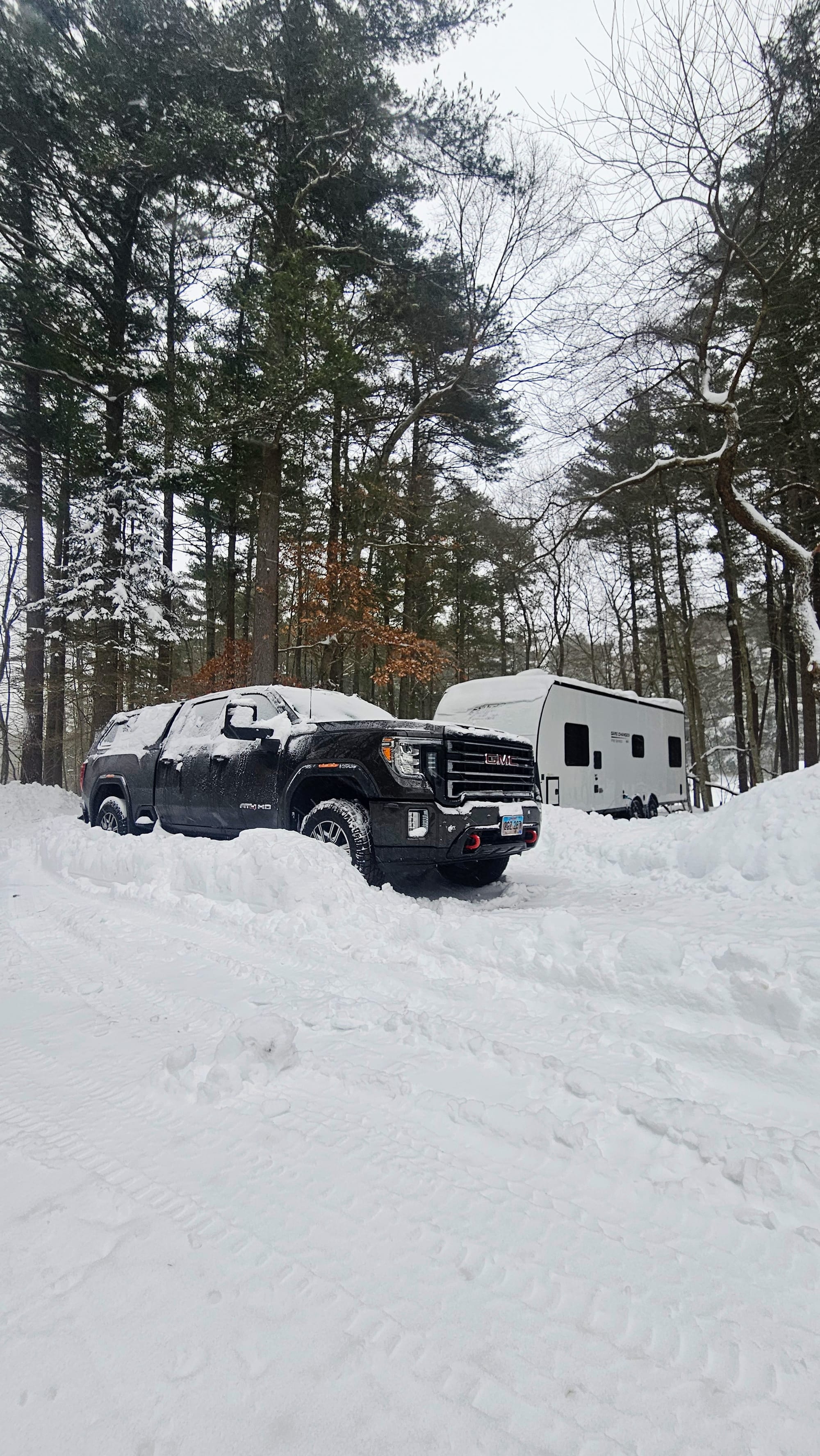
Just as the forecast for the Northeast was accurate, so were the forecasts for further south. The Appalachians got snow, and the Southeast was hit with ice. Most states battled below-normal temperatures, which caused a lot of our RV friends to lament their choice to weather the winter instead of going somewhere warmer. But what could anyone do?! Hardly any state was safe. As for us, we took it all in stride. Buggy and equipment held up great, and we enjoyed the beauty of more snowfall than we'd witnessed in years. What can we say? We do love some winter. We are planning on living the rest of our lives near the 44th parallel, after all. But it's not just the winter. Being New Englanders has taught us to embrace all four seasons, and we wouldn't have it any other way.
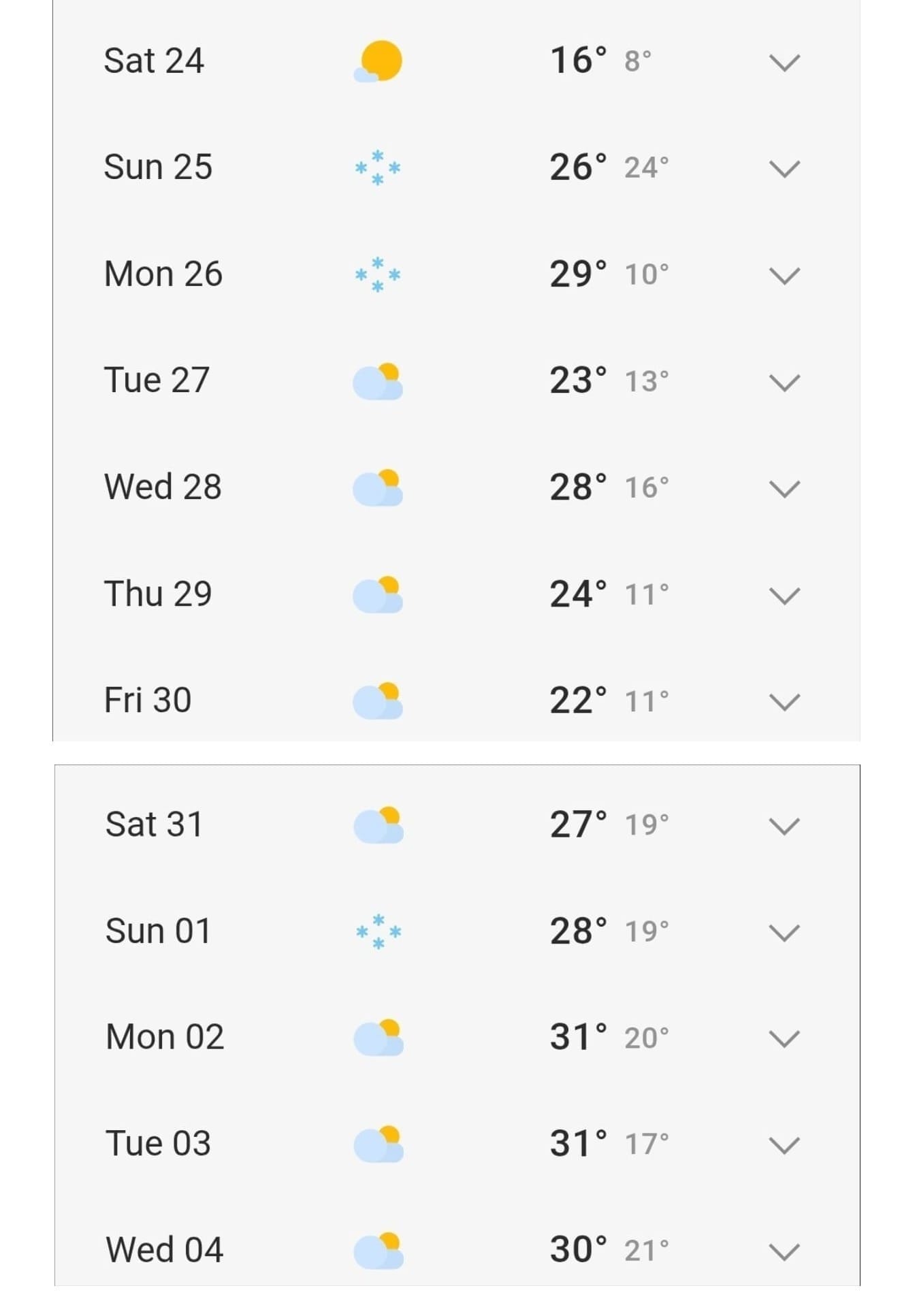
We may have made it through the storm unscathed, but more winter weather was coming fast. We barely had time to breathe a sigh of relief before the next weather system hit the radar. Also, we still had one big question mark remaining: Would we actually be able to successfully get our tanks pumped out? We may have used antifreeze and kept our tank heaters on, but a lot more goes into a successful pump – things we couldn't prepare for ahead of time. We'd be facing that hurdle, and the upcoming storm, the following week.
To be continued.