
We launched right into a severe weather outbreak. Here's how we stayed "weather flexible" and "weather aware."
Continued from One more delay, one more launch.
We delayed our launch one extra day so that we could avoid high winds and finish a few more repairs. It was a good choice, except for one little issue.
"What are you going to do about the severe weather?"
That was my mom's question as soon as we told her we were leaving Sunday, March 15. The forecast was predicting a 2-day severe weather outbreak, first hitting the Southern Plains, and then rolling right into the Mid-Atlantic on March 16. I responded, "We'll do what we always do." Sounds nonchalant, but it's actually just assurance that this won't be anything we haven't dealt with before.
We became "storm chasees" on more than one occasion, most notably during 99% of our Harvest Hosts Challenge in 2024, and last year as we attempted to check Minnesota off our States RVed list. Then there was our June 2024 tornado warning – the first and only time we've ever actually been tornado warned. "What we always do" is remain vigilant, keep our weather apps open and our eyes and ears peeled, and have a plan to take shelter if needed.
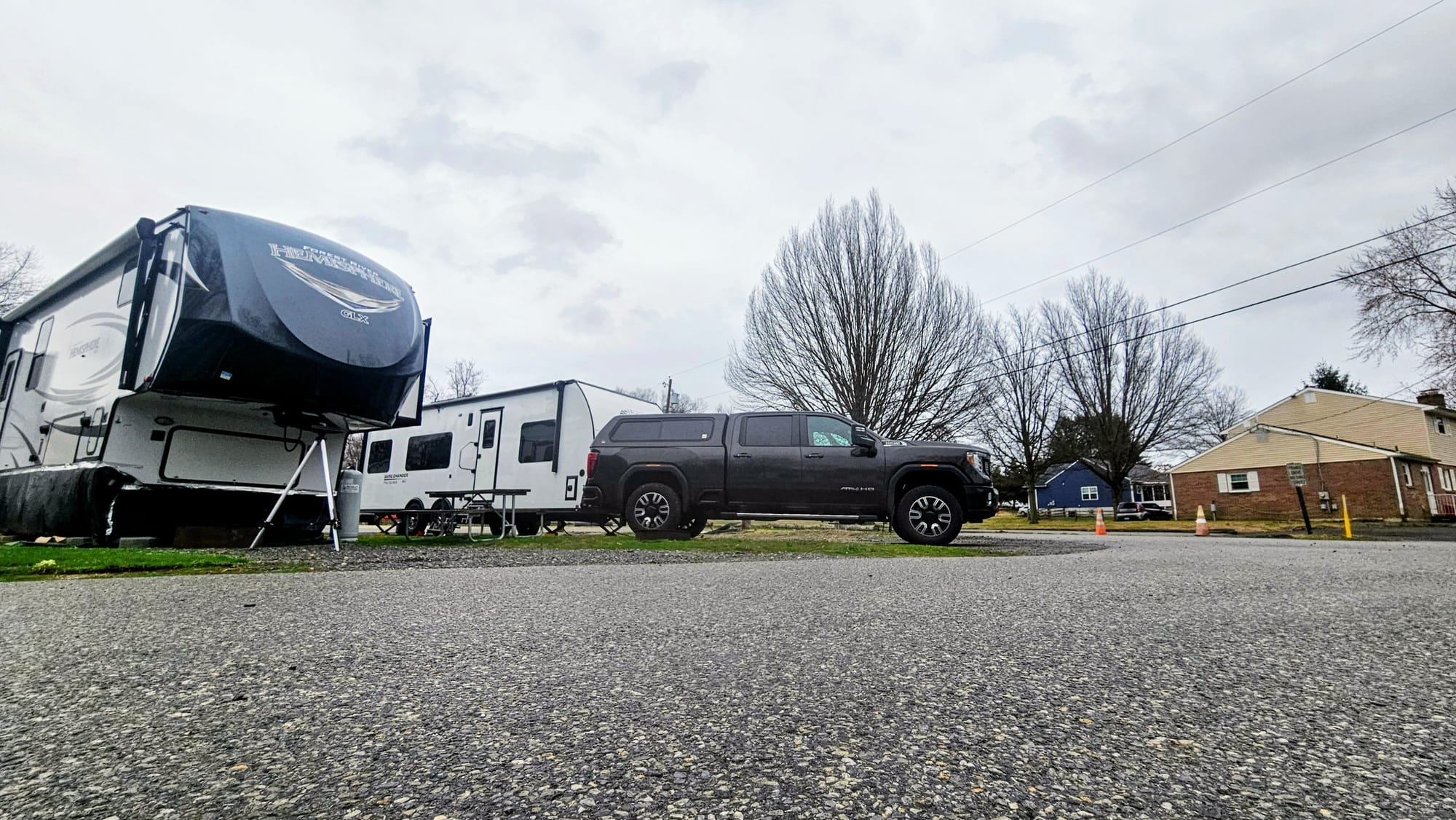
When we delayed our launch, we had already booked 2 nights at the KOA in Clarksboro, NJ, just south of Philadelphia. We also had our next site booked at Lake Fairfax Park in Reston, VA. We called the KOA and asked to shift our reservation one day, so our arrival would be Sunday and departure Tuesday. We did not shift our Lake Fairfax stay, however. This was for 2 reasons: According to the website, a change or cancellation would have resulted in forfeiting the first night's fee and a $25 processing fee. Another campground refunds rule that does more harm than good. We'd be eating the cost of our first night no matter what, so why would we change our reservation and incur a $25 fee? We held onto the reservation as-is. The other reason for doing so, though, was to remain what we call "weather flexible." Storms were coming, and they looked to be more severe in the Carolinas and DC area, but if they shifted north, we would have an alternative location already booked. We fully intended to ride out the storm at the KOA, but options gave us peace of mind.
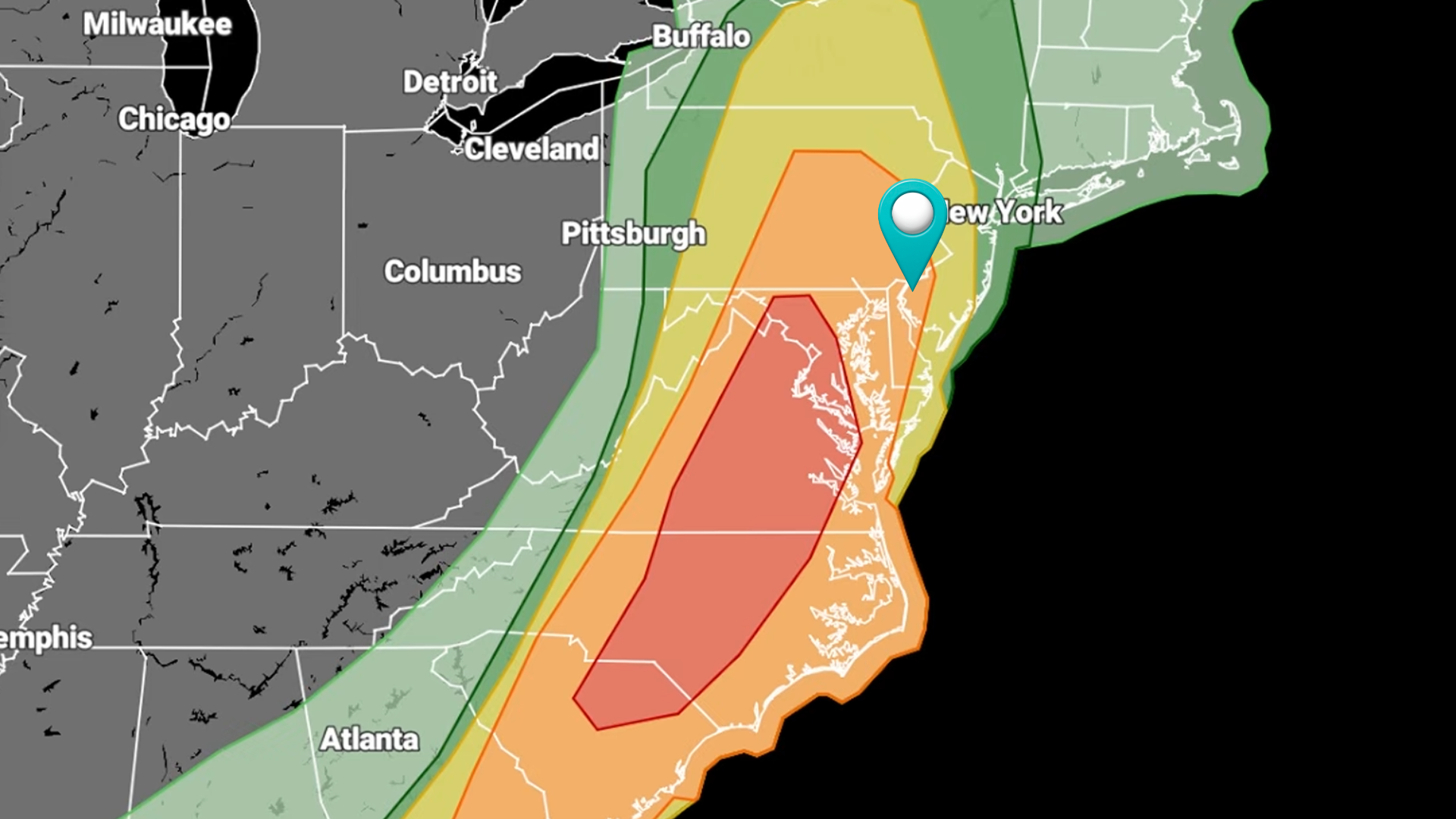
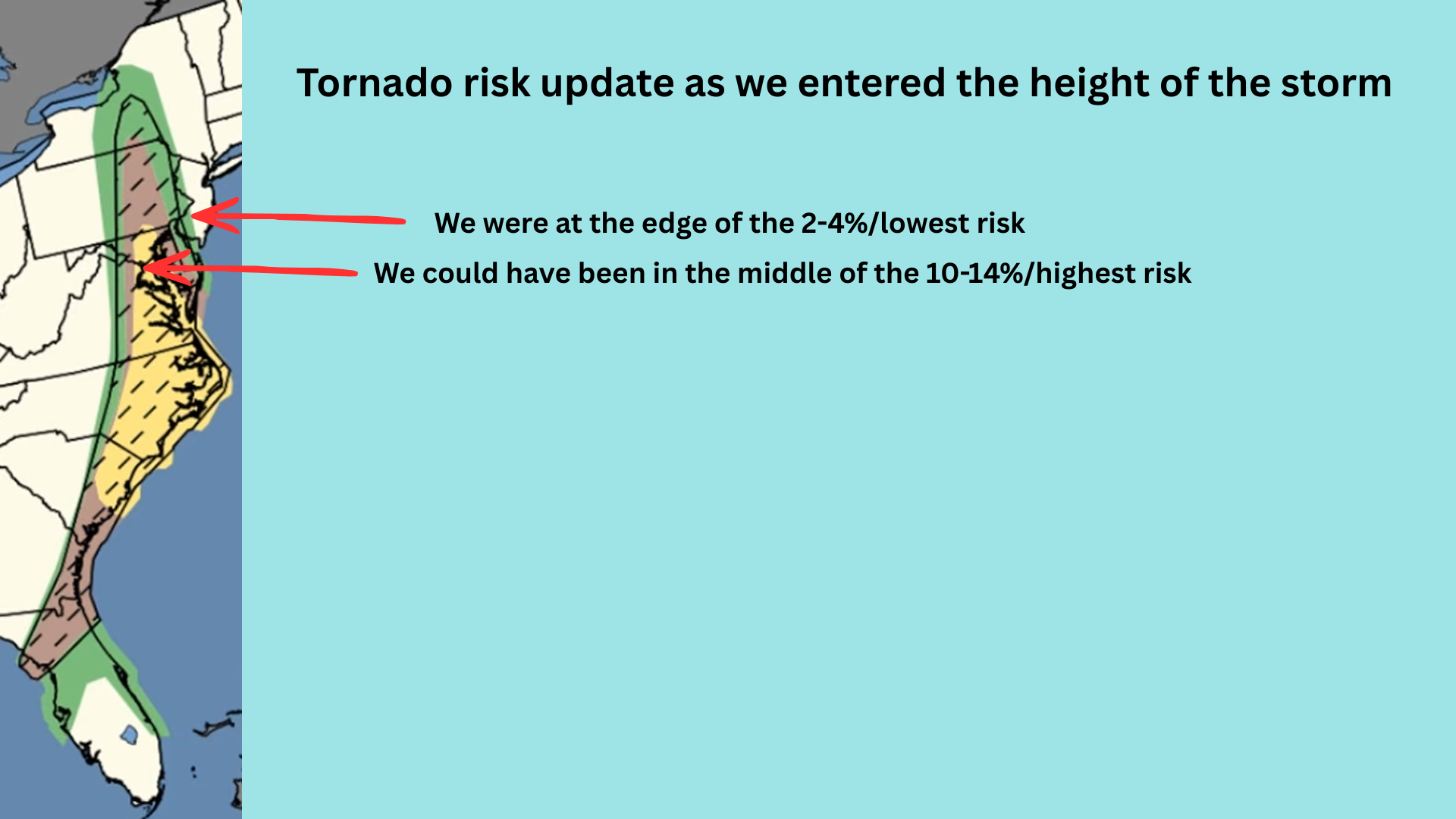
On Monday morning, we received an email from Lake Fairfax alerting campers to the coming storm. They said that, if the bathhouses lost power, they would be closed and locked. We understand this from a "campground rule" standpoint – if the bathrooms are without power, people shouldn't use them because it's not safe, equipment like hand dryers wouldn't work, etc. However, when tornadoes are on the table, this rule stops being safe. Where would people be able to take shelter? We wouldn't be there to find out. Tornado risk was at 15% outside of DC and 5% outside Philly. That cemented our decision to stay put. We called the Lake Fairfax park office to let them know to hold our campsite. We don't know if they were lenient due to the storms or if they just ignore the processing fee over the phone, but they were very nice and told us our site would be waiting for us on Tuesday.
Time to hunker down at the KOA and utilize our apps and our wits. Since our last time on the road, we added a new weather alert system to our arsenal. Our go-to weather YouTuber Max Velocity recently came out with Max Alerts, where customers can connect 2 emails, 2 phone numbers, and 2 SMS numbers to an account and customize what weather alerts we want. If that alert triggers, Max himself – well, his pre-recorded voice – will call you, and you'll receive texts and emails of the warning. This is all well and good, but we wondered, would it work for nomads? Not only does it work, but the interface has two ways to change your location. There is a "Find Me" feature for temporary location changes. You don't even need to know your address! You just activate "Find Me," allow it to access your current location, and it sets a temporary location exactly where you are – down to the campsite, it turns out. This location sets for 5 days by default, but you can extend it or stop it if your stay is longer or shorter.
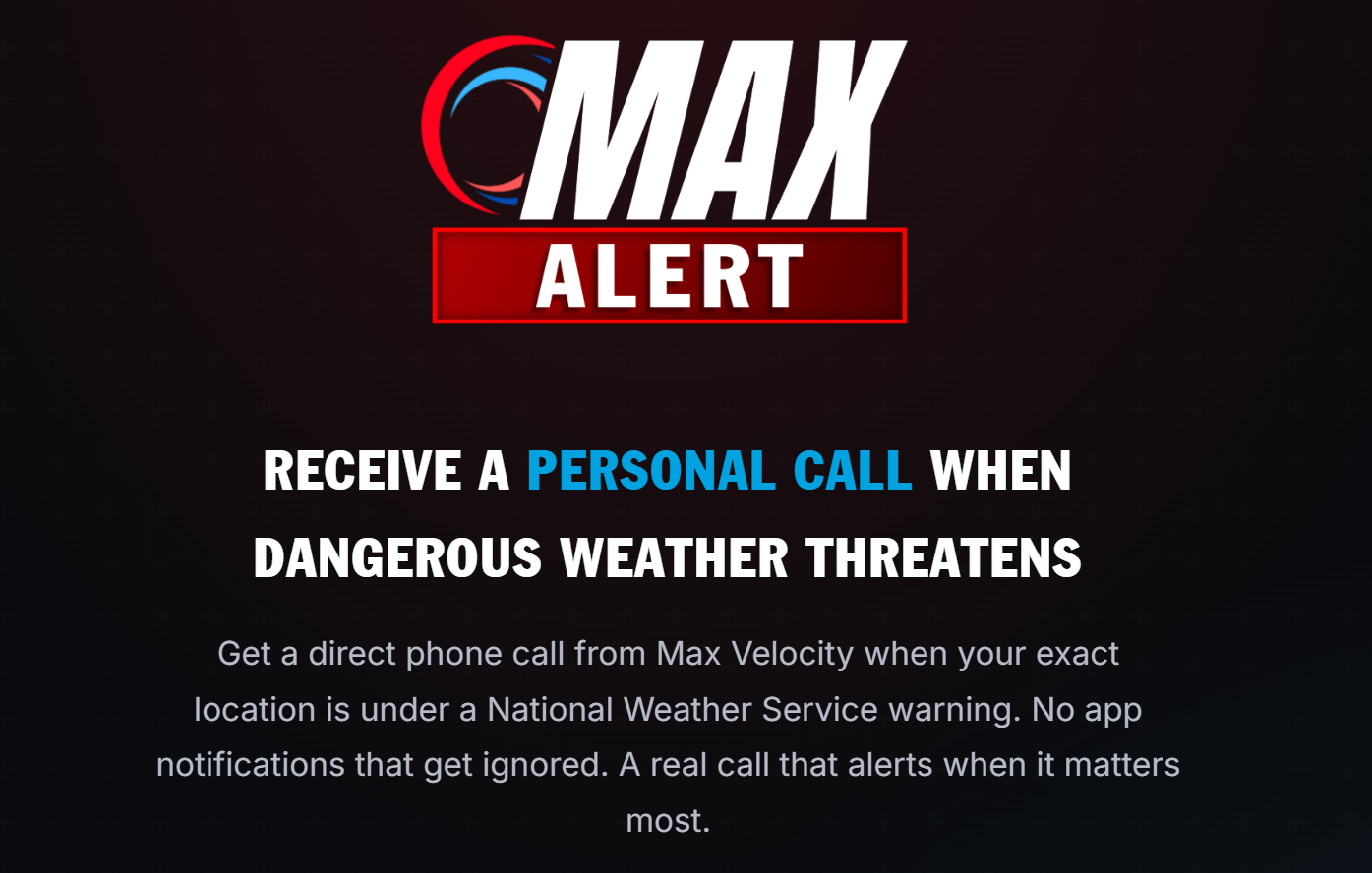
The other option is to go into the main location setting and change it manually. We would use this option if we were staying at a campsite for a few weeks or more. But since we were only staying at the KOA for a couple of days, we used "Find Me." There we are in Site 1 at the Clarksboro KOA!
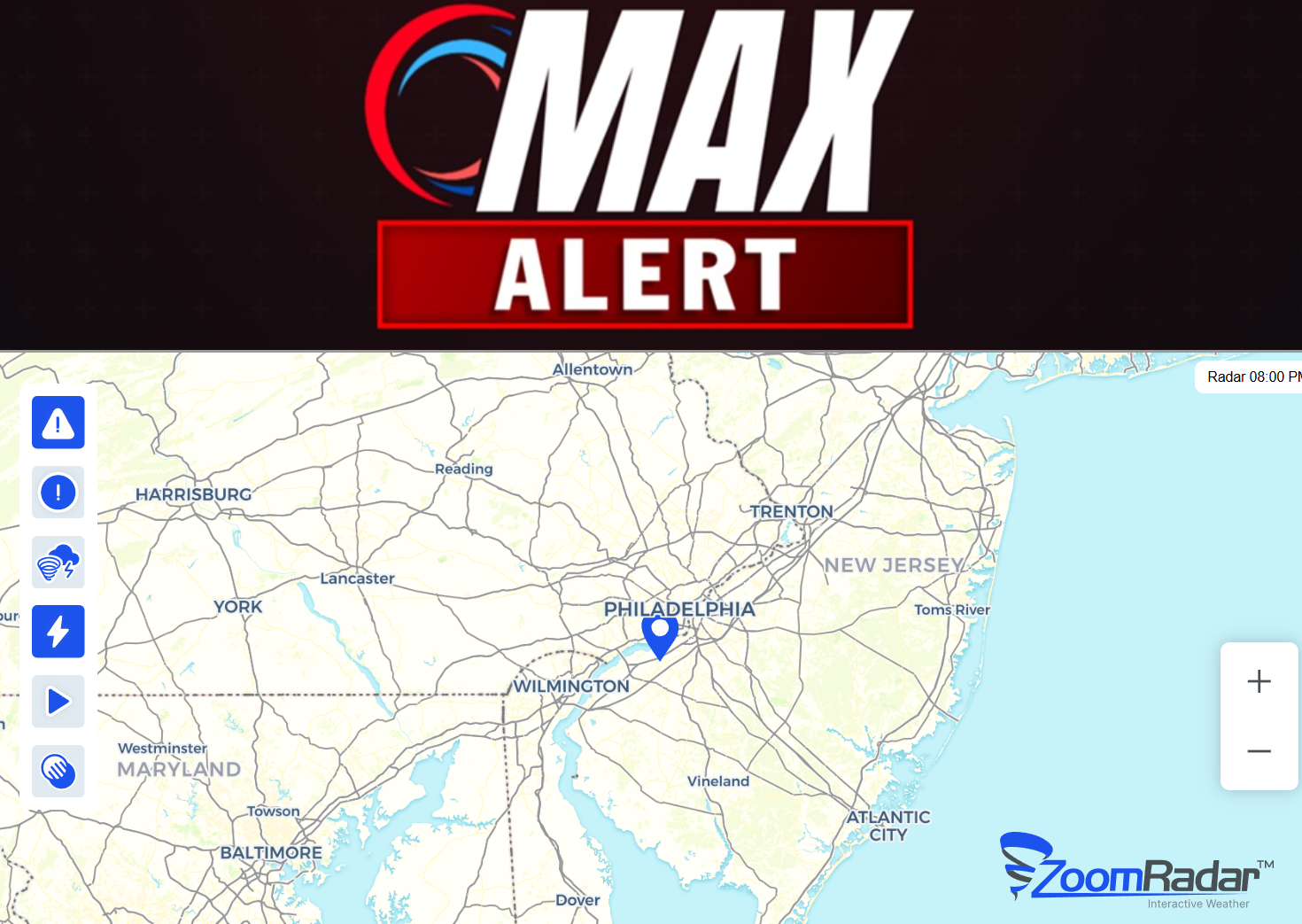
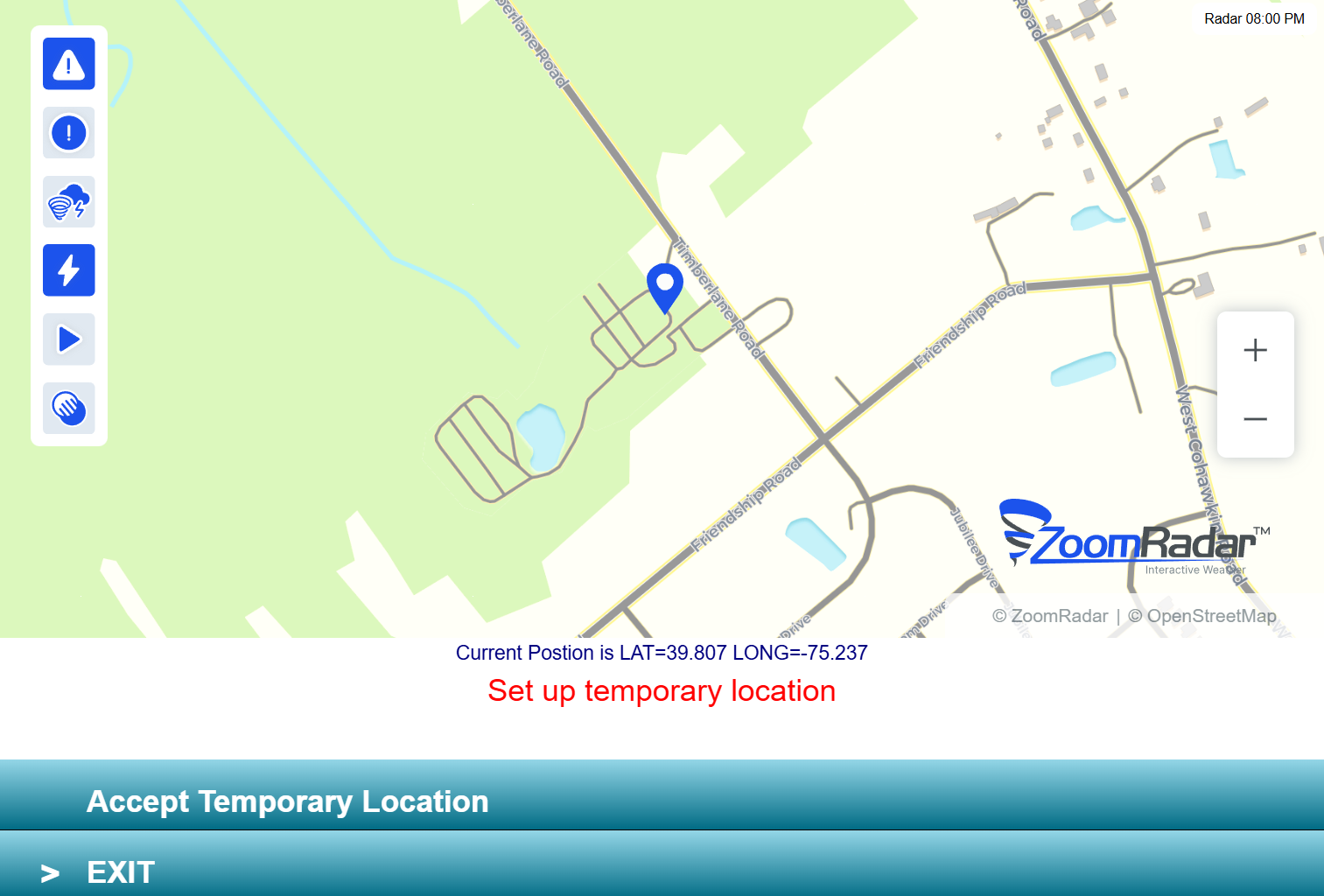
This is not sponsored, but we would be remiss if we didn't share our experience with Max Alerts during this storm, especially with other RVers. In our travels, we've struggled to have foolproof ways to get weather warnings. Even during the Wisconsin tornado warning, despite having notifications set on more than one app, we never got any. Our only indication was the county's tornado siren, and those are not reliable. Sometimes our apps don't catch up to our location when we're traveling, but other times, they just don't trigger warnings. In the case of the WI storm, only half the weather services registered that our county was under tornado warning, which led us to not receive a phone alert. This means, the more ways to get alerts, the better.
We got our first Max Alert just after noon on Monday:
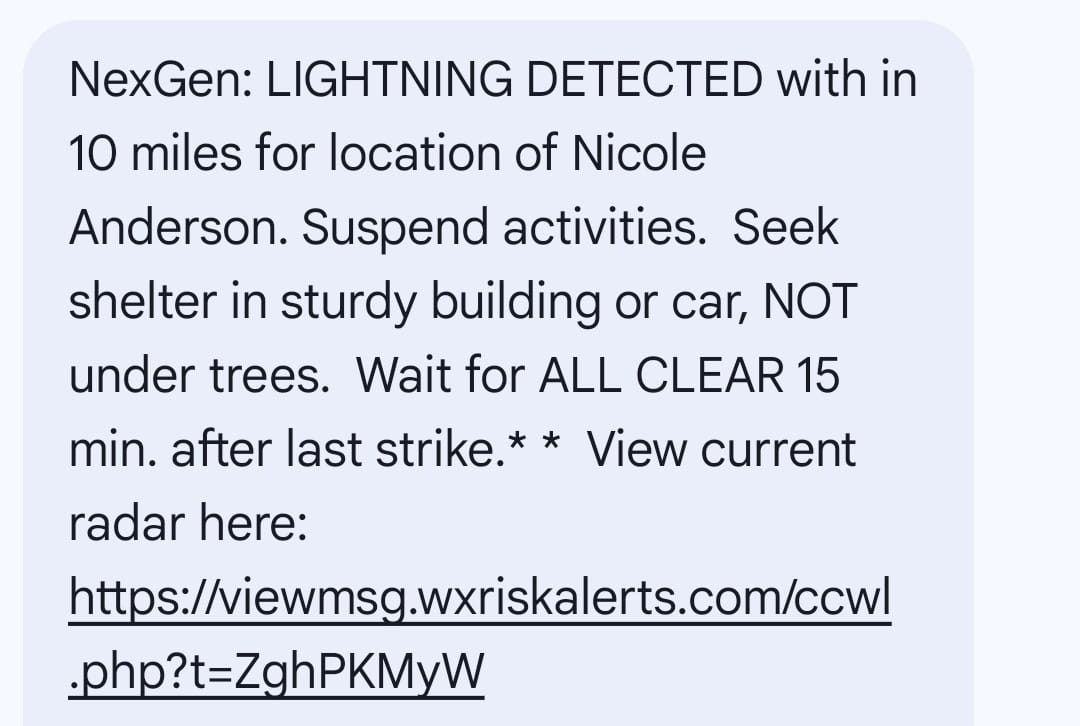
Lightning detection is an optional feature of Max Alerts, which lets you know when lightning has been detected within a 10-mile radius of your location. It then issues an "all clear" alert when no more lightning has been detected for 15 minutes. Not everyone needs lightning alerts, but our past experiences indicate that we do.
Otherwise, the weather in Clarksboro wasn't bad so far. We were under a wind advisory that would go through the night, and a tornado watch until the evening. However, looking at the radar, the threat of a tornado was not imminent. The watch was issued in case the storms organized. We kept comparing our location to Reston, our "what could have been" location. The radar speaks for itself. Look closely at the shape of the two lines of storms. The western line was much more organized, but the eastern one was a mish mash with globs of moisture. Severe weather tends to erupt from more organized lines of storms.
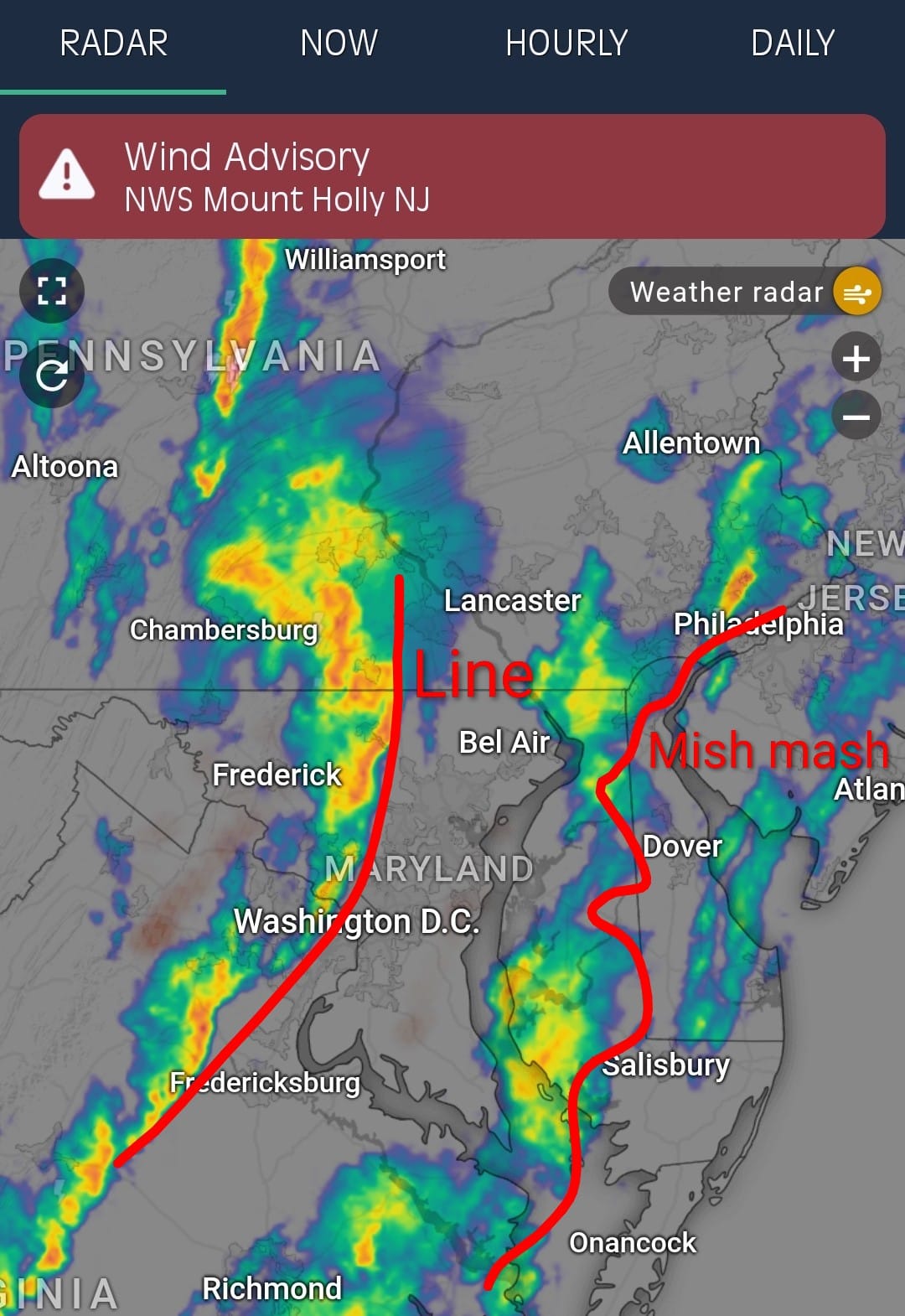
This was why the areas getting tornado warned were mostly around Baltimore – including a few of the towns that we would have driven through, had we kept Monday a travel day. But, all in all, there was no outbreak. A couple of small tornadoes were reported near Charlotte, NC, but none further north.
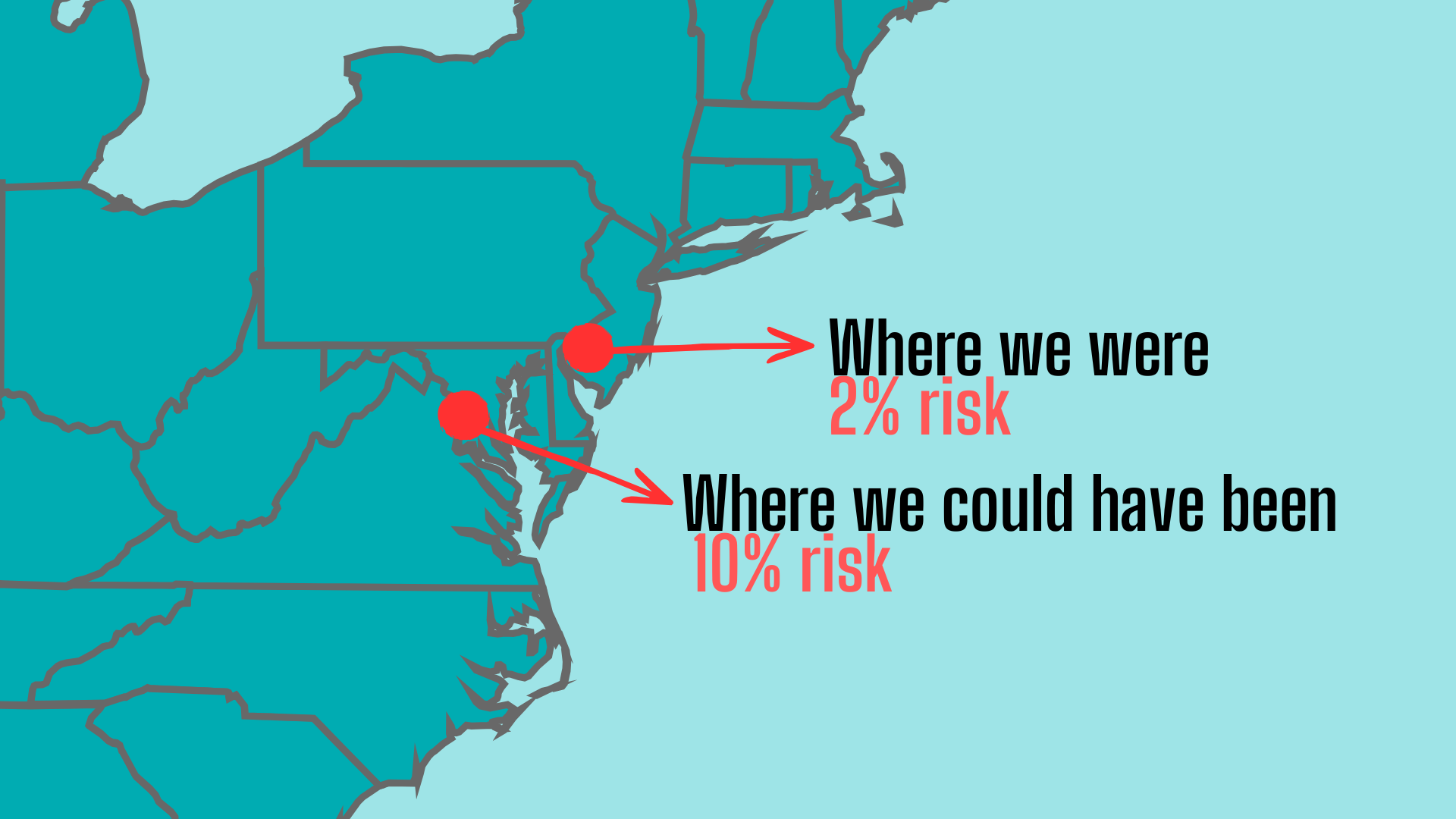
Because of this, the severe weather outlook was downgraded at 4pm. Reston was lowered to a 10% risk category, and our location to a 2%. Our tornado watch expired an hour early, at 6pm, and our hourly forecast showed mostly rain and wind, with no more strong storm tags. These were all good signs, and further evidence that staying in Clarksboro through Monday was the right thing to do. But the daytime events turned out to just be the precursor. Forecasts initially said the nocturnal storm threat would be low, but the big temperature drop brought more instability than expected.
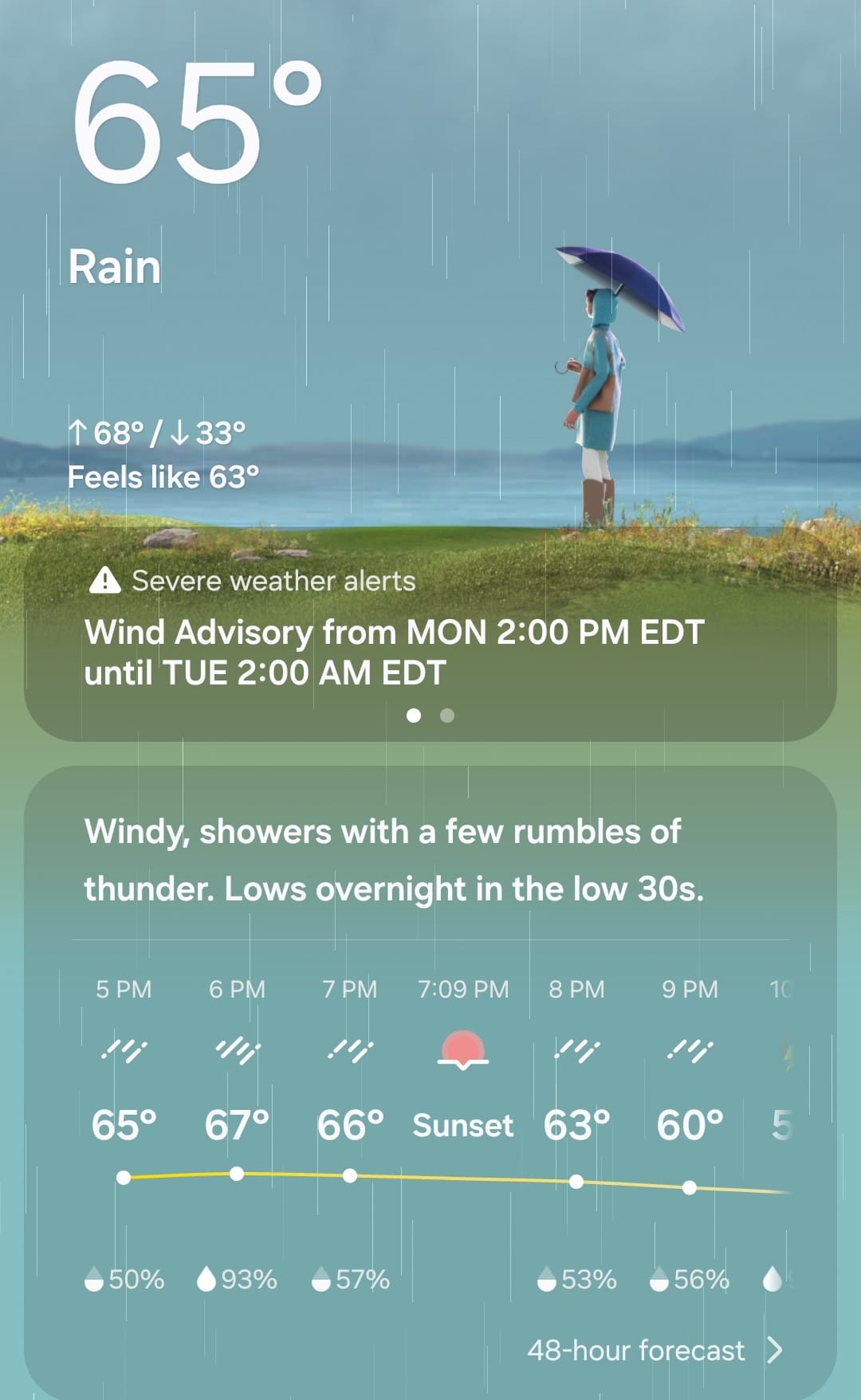
One of the best means of observation we had earlier in the day was daylight. We could see the clouds, the wind, and the rain. After dark, storms become much more dangerous because we can't see what's coming.
Around 11pm, I was watching one of the weather YouTube channels' late night livestreams as I got ready for bed. I had no reason to think the spotlight would turn back on the Mid-Atlantic; the meteorologist was discussing a big blizzard that hit the Northern Plains and said our outbreak was a "bust." But then suddenly, 3 tornado warnings came in, all in Delaware, about a half-hour from us. A line of severe thunderstorms had organized, and the radar was showing little hooks that could be the start of QLCS formations. QLCS stands for quasi-linear convective system and basically means tornadoes embedded in a line of thunderstorms, that spin up usually without much warning. They tend to be on the weak side, but can still be quite dangerous, especially to RVers.
I called Anthony into the bedroom to look at the livestream, and I barely got the sentence out to say "We might get warned" before our phones started ringing and pinging. My adrenaline started pumping. Automated Max Velocity was on the other end, alerting us to a severe thunderstorm warning. No tornado warning. You'd think our reaction would be "Oh, thank God." but it was actually "Oh, crap." We saw on the radar what was happening. That line of storms was growing, tightening, and heading right towards us. We watched as the livestream broadcasted live traffic cams from Delaware, and when that storm hit, it cut power to one of the cameras immediately, and the other one got blasted with windswept rain.
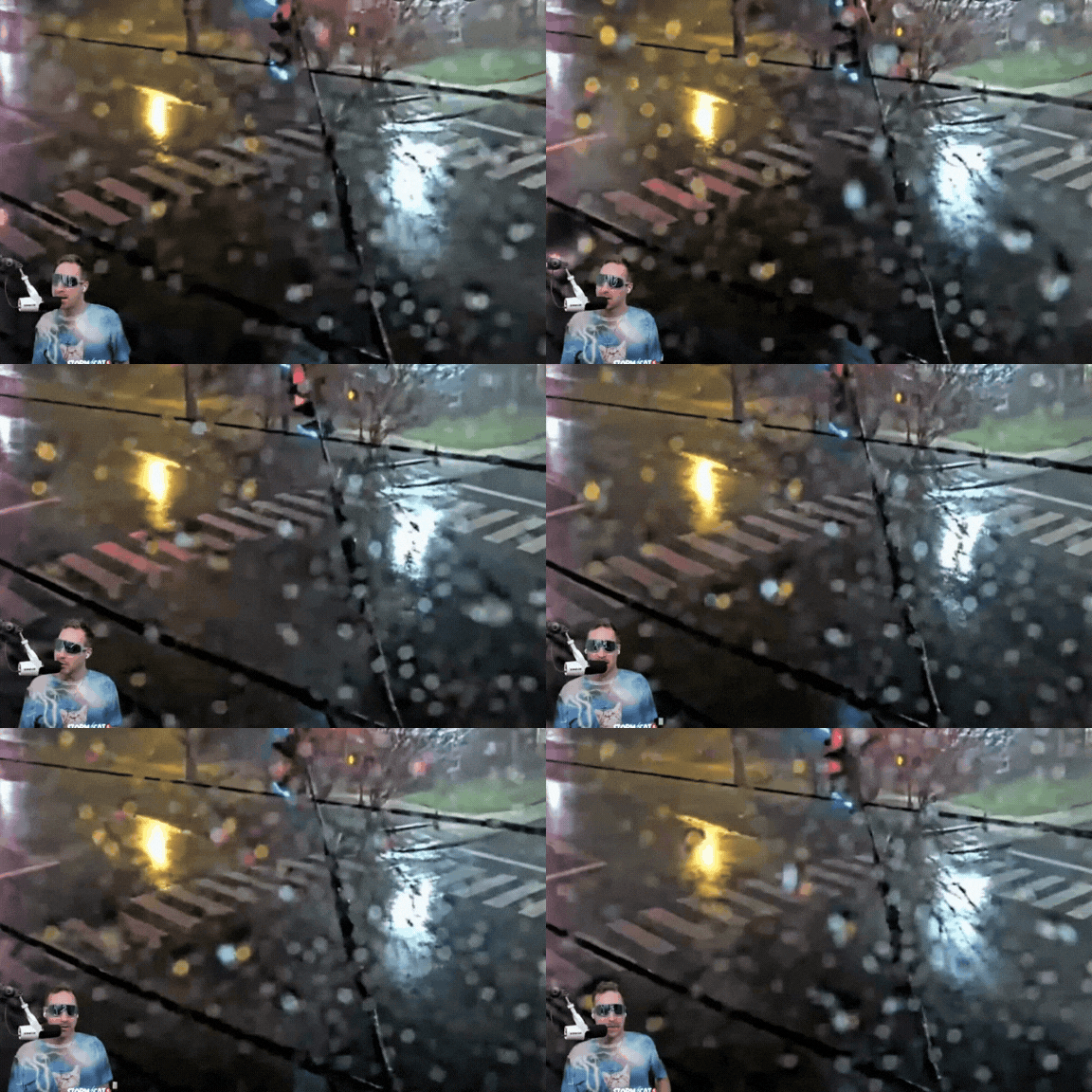
The radar was saying gusts at 55mph, but that camera was showing something much more extreme. And the storm was moving fast. We had about 5 minutes to decide what to do.
We already had our emergency go-bags ready, but we couldn't go anywhere in the truck on such short notice. I had Anthony run over to the campground bathrooms to make sure they were still unlocked. Luckily, we were one of the closest sites to them. They were unlocked, and so if things got really bad, we could make a run for it. But we knew that, as unpleasant as rain and strong winds would be, our rig could handle them. We braced for impact.
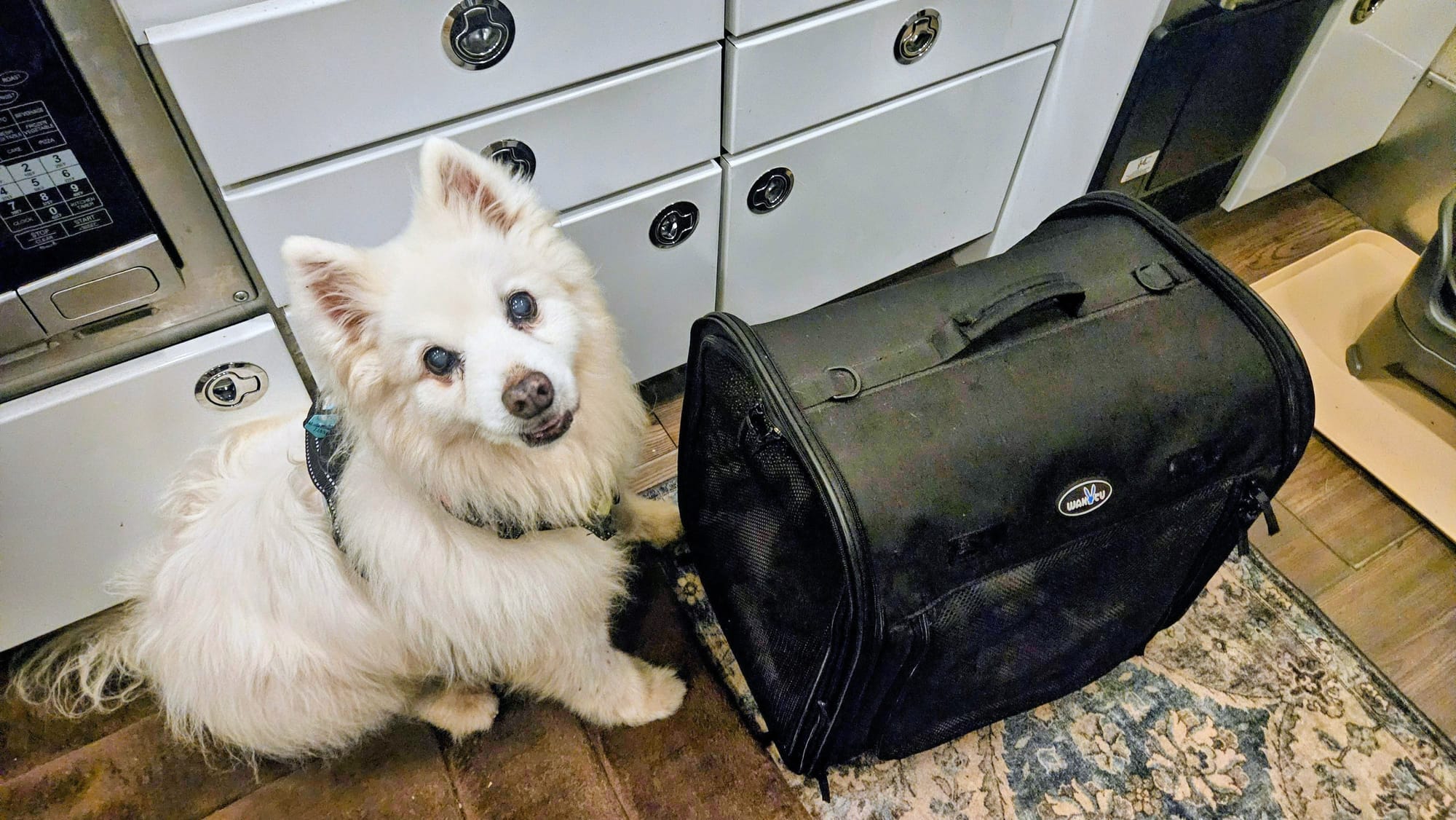
Anthony, Tanner, and I have dealt with storms and high winds in the RV, but aside from a few milder thunderstorms last summer, the cats had yet to experience the noises and shimmying of severe weather. As soon as the wall of the thunderstorm hit, they went running. Macky, smart boy, took cover in the cat carrier. We figured with one cat already in it, we might as well put Piccolo in there too, just in case. We sat on the floor with the pets in the center of the trailer. Nowhere in the trailer is safe, but lower is better.
We couldn't believe that Jersey was pummeling us with one of the worst storms we had ever experienced in the RV. In fact, we can only think of one other storm that was as nerve-wracking, and that was the thunderstorm we got the day after the tornado warning in WI. That day, we still had some remaining daylight, and so I watched the shelf cloud creep closer and closer to our rig. Then, darkness set in, and we got blasted. This storm felt similar, but contained stronger winds and less lightning. Our Starlink cut out, and we could hear objects flying and hitting things outside our RV.
Thank goodness for the speed of that storm, because the worst had already passed over us after about 20 minutes. We'll categorize this one as "short but horrible." When it was safe to go outside and assess the damage, we found that our Starlink dish had flipped over and blew about 5 feet away. Our neighbor had been working on an RV project and had large slabs of wood outside his front door. One of them somehow made its way to the other side of his RV. Another neighbor's tent setup had blown all askew. It wasn't a QLCS tornado, but it was a storm to remember. Based on the shimmying of our rig, we expect that the winds reached close to 70mph. And all that flying debris was indicative of one heck of an updraft.
We thought about our situation. Forced into another year of travels after so much in our lives went awry these past several months. Bouncing out of our home-base to avoid New England weather, only to drive straight into the worst severe weather risk the Mid-Atlantic had seen in a decade. Then, that forecast looking like a bust, but then hitting us with one surprise intense nocturnal storm, topped with inaccurately low wind predictions. The emotional whiplash was real.
We talked about choosing between spending that day at KOA Clarksboro or Lake Fairfax, but what about our 3rd option: back at our home-base? Had we considered staying there longer? The answer was no, because another cold front was predicted. Only that didn't end up happening the way the forecast indicated. Instead, they also got the tail end of this storm, as it shifted north right after reaching the coast. My parents' house experienced 65mph wind gusts and more falling branches. That's the exact weather recipe that would have sent us into the house for refuge.
On the backend of the storm was a cold front, and we got it too. Winds continued through Monday night, and we didn't get good sleep. The next day was cold and breezy, and we almost decided to delay our Lake Fairfax stay again. We were exhausted, coming down from our adrenaline rush, and nervous about the winds. But we couldn't justify another night of overlapping stays. The campground costs add up quickly, and we still weren't in good financial shape after our job transitions. So we packed up and hit the road, battling enough wind to make us anxious, but not enough to actually be unsafe. We traveled through the towns that had all been tornado-warned just the day before, and we finally arrived to Lake Fairfax Park: 34°F, feels-like temp of 25°F, and continued winds that shimmied our RV.
This wasn't how we wanted to start our Season 5 travels, but we took an important reminder away from it: we're resilient. We know how to roll with the punches and make quick decisions. We know how to remain calm and resourced while we assess the situation. But an even more important reminder: not every day will be like this. Surely, the road this year will have many twists and turns, and around one of them will be sun, warmth, and moments that remind us why we love this lifestyle. We're not giving up on Season 5 just yet.