
Our electric was a ticking time bomb for 3 years...and we didn't even know

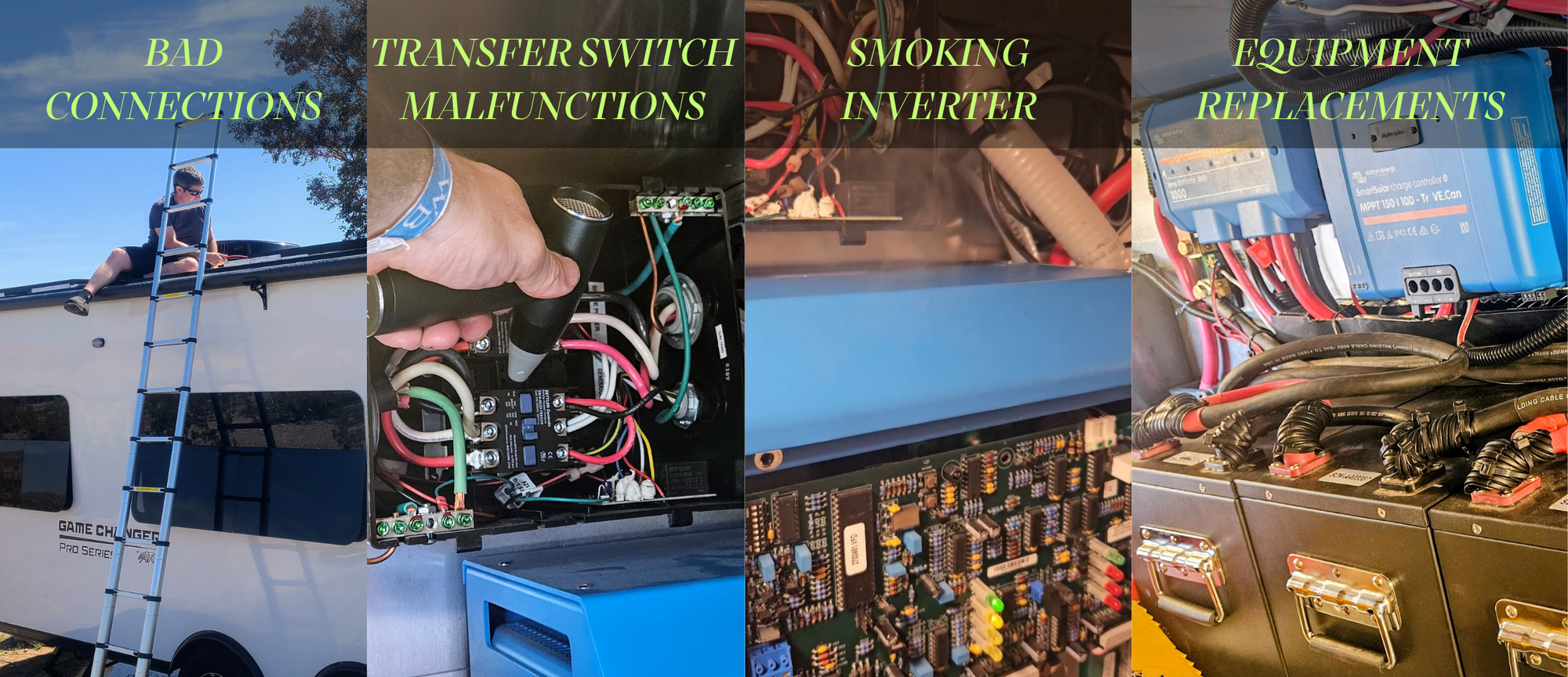
This year, we had many RV problems, but none more memorable than our inverter going up in smoke, leaving us with a barely functional electric system. This was the turning point of our whole year, where we threw up our hands, said "I'm done," and got off the road. But of course, renting a house didn't magically eliminate the problems or our need to get them addressed as soon as possible. Now situated in the Carolinas, we found EcoEthic Solar, a company that specializes in custom solar system builds and has certified Victron specialists who have been trained to install and integrate our type of inverter. We enlisted them to help us replace our inverter. We covered that replacement in the blog and talked about how our "few hours" out of the RV ended up being a full day, but what really happened? In short, the techs found a lot more than just our defunct inverter, noting several haphazardly connected devices that weren't up to their standards.
"Standards," however, is a term that doesn't mean much when it comes to RV solar installments. There's no official standardization, and in the RV community, you'll find the whole spectrum of solar systems, from DIY builds to expert installs, and everything in between. The tides might be shifting, though, as now more techs are becoming certified Victron specialists, meaning that they go through a training offered by Victron on how to install and mange their inverters. Victron is the most popular choice for inverters and other electric system devices in the RV and marine industry. You'll even find their heftier models used in residential and commercial structures. EcoEthic hopes to take this training a step further. Their company is planning to offer workshops that teach the best, safest practices for full solar installations using these inverters. Could this someday lead to the implementation of more official standards for these custom builds? Time will tell.
As a material science consultant who has worked with startups in solar energy and grid technology for years, I had no shortage of discussion topics with the staff at EcoEthic, and it didn't take long for me to trust that they were knowledgeable and diligent with their work. So when they walked us through everything they flagged as problematic with our system, I was all-ears. Only, what would we do with this information? Our new inverter was installed, our electric was functioning, and we weren't on the road full-time anymore. Would we ever spend the time and money to fix the deeper issues with our system, if on the surface, it was working just fine? We left that day with an "I'll think about it" and requested that they put in writing the full list of fixes they'd ideally like to tackle, if we ever face the point where we feel they're necessary.
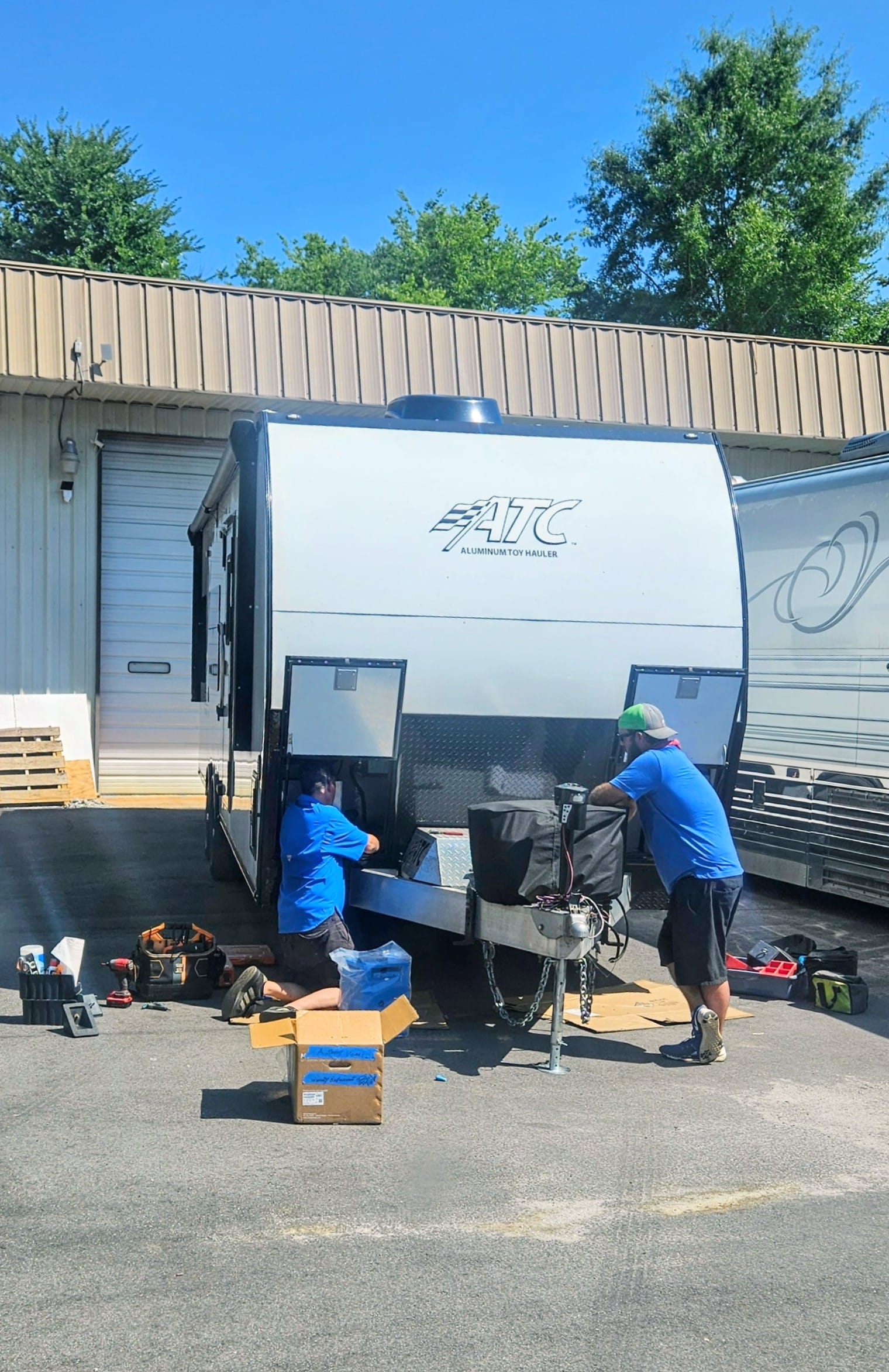
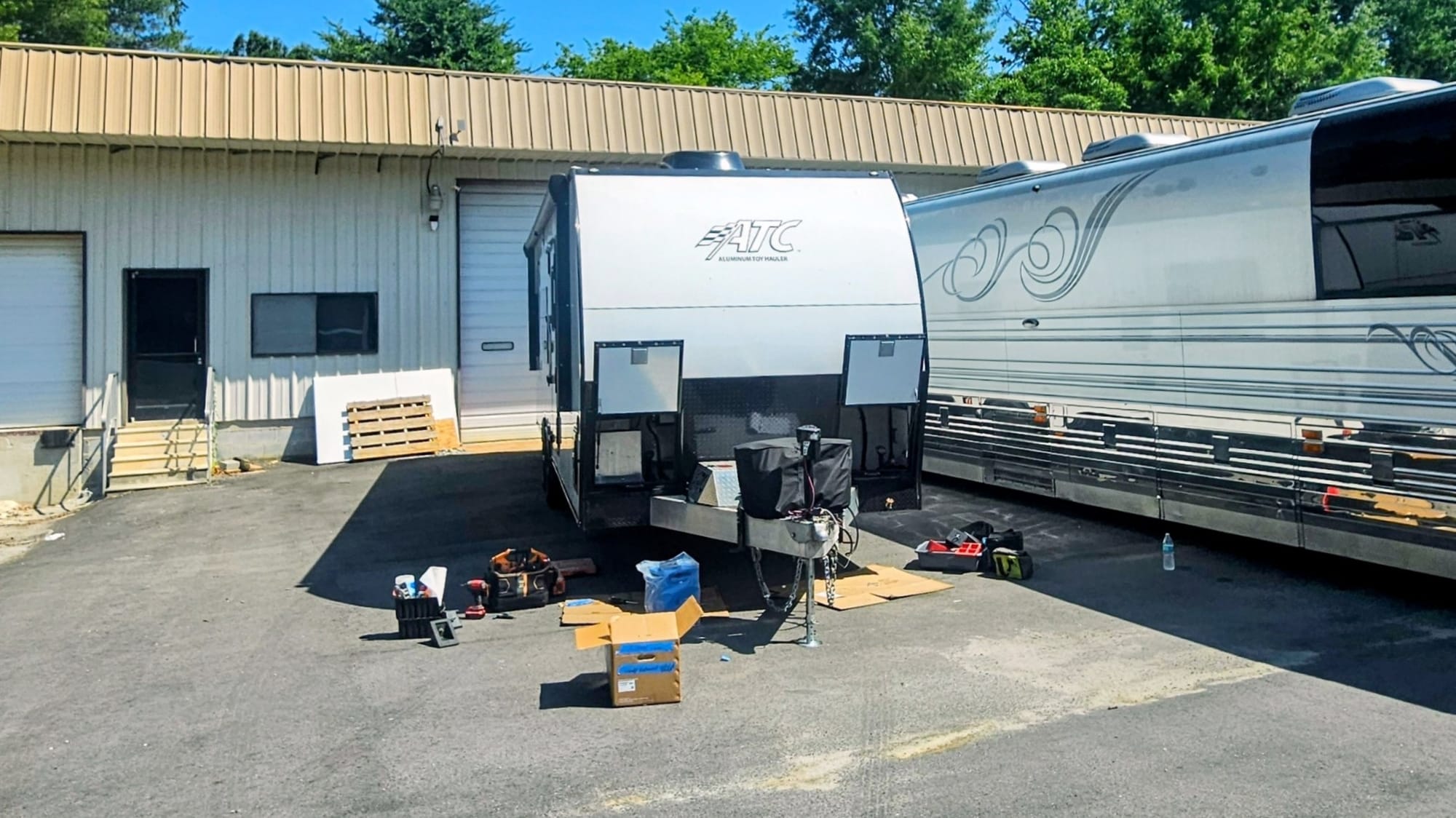
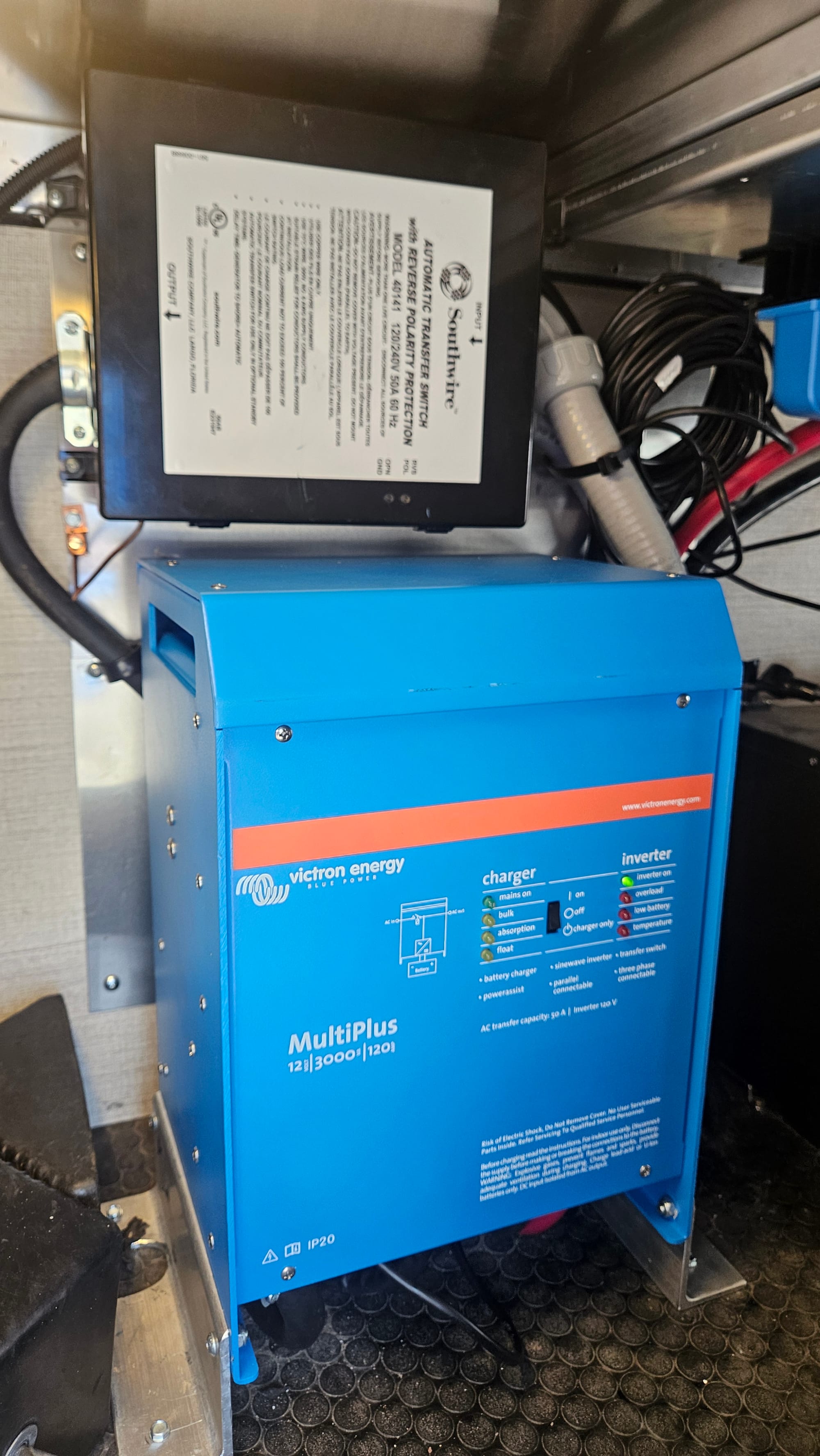
Inverter replacement June 2026
We never expected to reach that point in just a few weeks, but there we were, at the start of a 5-week trip up north, facing more electric issues. After arriving to our campground in Virginia, we had a blackout with our 12V system. Our new inverter wasn't communicating properly with our battery bank, constantly reading voltage fluctuations that engaged its emergency shutoff of the batteries. We were forced to turn our inverter to charger only. After only hours of use, our inverter became virtually useless. We spent the remainder of our trip on limited electric, and while Nicole was scrambling to ensure we had adequate hookups to make the RV livable, I was in touch with EcoEthic to figure out our next steps once we returned to the Carolinas.
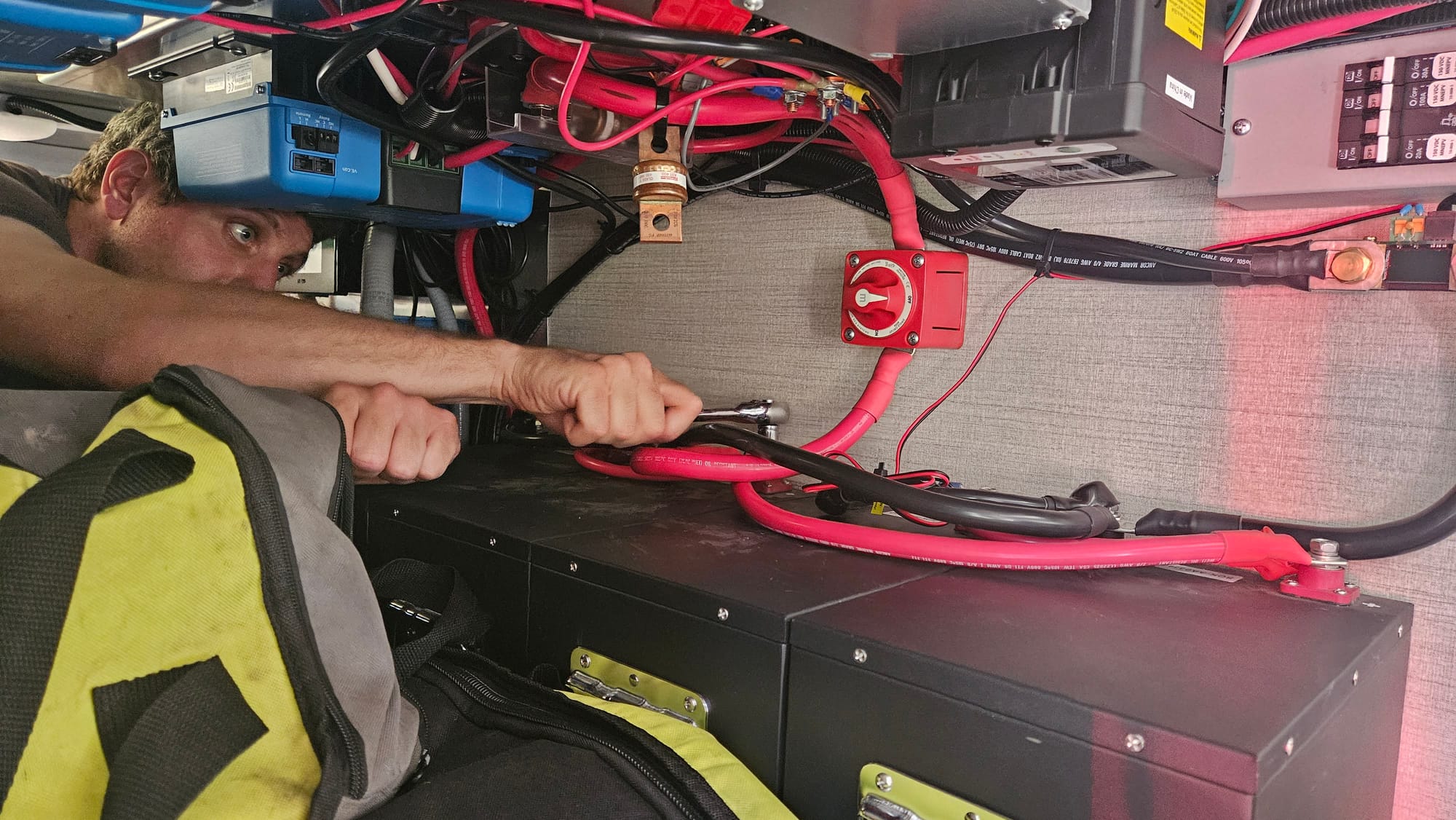
That's how our RV ended up back at EcoEthic in the days before our Blue Ridge Mountains trip. The goal was to peel back the layers of our install, unmask all the issues, and rebuild it one wire and one device at a time. Before the appointment, we had already determined that the communication issue between our battery bank and inverter was due to improper external balancing of each battery. There were inconsistent lengths and gauges of wiring between them, as well as loose crimping and improper end connections. This caused voltage fluctuations that our inverter read as being outside expected bounds, which triggered the emergency shutoff of our batteries, resulting in our blackout.
So why did this happen with our new inverter but not our old one before it fried? Actually, it did. More than once. But with our old inverter, the blackouts were intermittent and inconsistent, due to the fact that there were also poorly crimped connections between the inverter and battery bank. Now that the new inverter was connected properly, it read the fluctuations consistently, triggering the battery shutoff every time there was a spike beyond its expected limit.
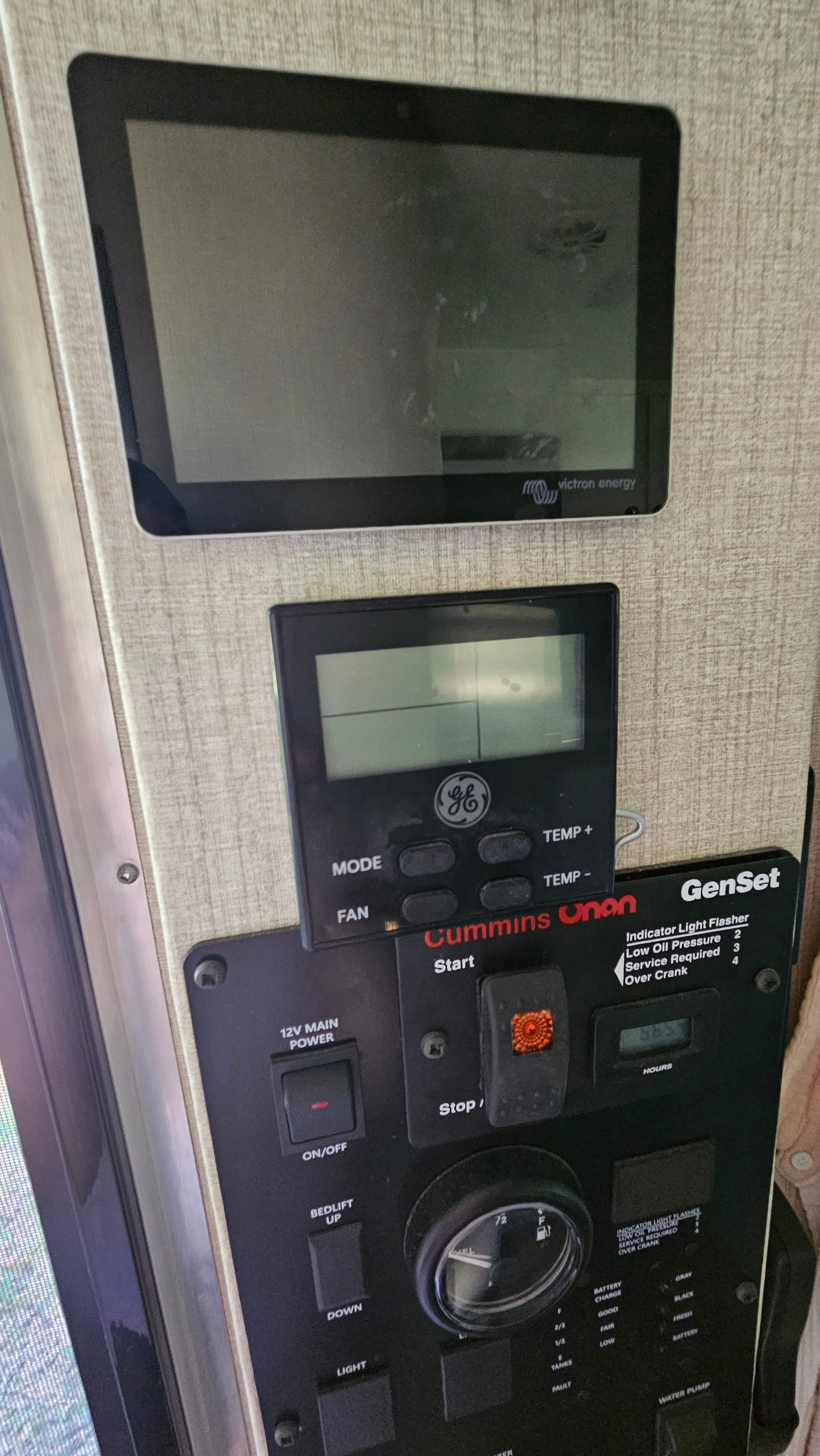
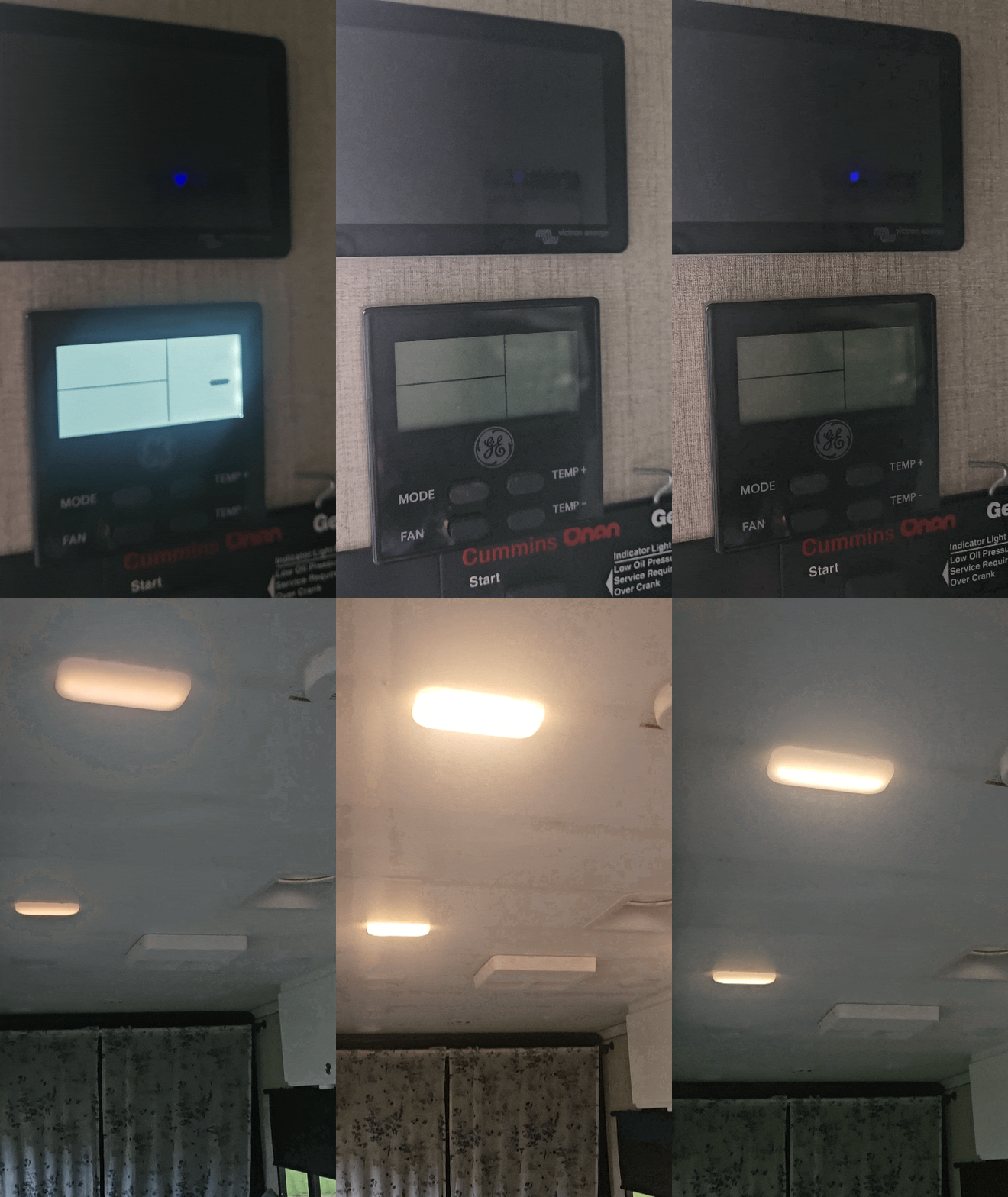
Blackout and troubleshooting, Labor Day Weekend 2023
Because of this, we knew that balancing the batteries was a top priority, but we also knew there were many other issues to be addressed. EcoEthic had their list from the inverter replacement appointment, and that was just from their quick observations that day. Much more might be uncovered once they spent more time with our setup. We left the trailer with them and basically gave them the go-ahead to do what they needed to do. While we waited, we took a trip down Memory Lane.
During our years of full-time travel, our repair appointments often consisted of getting the important fixes so that we could get back on the road. We didn't have a home, so we couldn't displace ourselves indefinitely. If we had a problem with our electric, like the day of our catastrophic battery failure, we needed to find the quickest, most efficient solution that would keep us in our home-on-wheels. We plugged into shore power, which showed that our batteries could still charge, and that was enough for us to continue on our way.
Similarly, in the middle of our Harvest Hosts challenge, we went for a hike and came back to a sweltering RV. We hadn't realized that the AC wasn't kicking on, despite being set. The fan was blowing hot air from the outside into the trailer, leaving our poor senior pets in temperatures far hotter than we'd ever allow. This issue left us perplexed. After some troubleshooting, I discovered that, after charging the batteries to 100%, we'd have varying electric issues. In this case, we had used the generator to make sure we were fully charged before leaving for our hike, and afterwards, the AC didn't kick on. From that point forward, we became aware of other devices functioning the same way, particularly appliances with higher draw, like our Instant Pot. We got in the routine of manually reducing maximum input current when charging up, both on generator and shore power, to "ease" the current as the batteries neared 100%. Otherwise, we'd get 12V faults or interruptions.
Discovering the issue and finding a solution doesn't mean that we knew the root of the problem. But once again, there was only so much we could do while full-time on the road. We got the rig back to functioning capacity, and we continued with our travels.
We got our solar installed at the end of February/beginning of March 2023. Our first big 12V failure happened that Labor Day Weekend. Between those, though, we faced several smaller incidents that were easy to brush off as "quirks" of our new install, but in hindsight, were all connected to a greater issue.
The spring temperatures heated up and gradually unveiled one problem after another. They came to a head at Vegas Bay, a stay that became notorious for us enduring Murphy's Law of RV problems, many to do with our new solar setup. We quickly noticed that one of our panels wasn't pulling the expected power, and I needed to get on the roof to replace a connector. My constant climbs up to the hot roof seemed like a big deal at the time, but we were actually sitting on a bigger issue. At the same time, our inverter kept throwing an error code that it was overheating. Well, our devices were in the storage bay, and we were in a desert campground where the sun faced the bay at the hottest time of day. We thought this was probably par for the course. From that point through the summer, we kept our bay doors cracked open. Later that year, we installed an exhaust fan to help with airflow, but still cracked our storage bay doors whenever it was even moderately hot out.
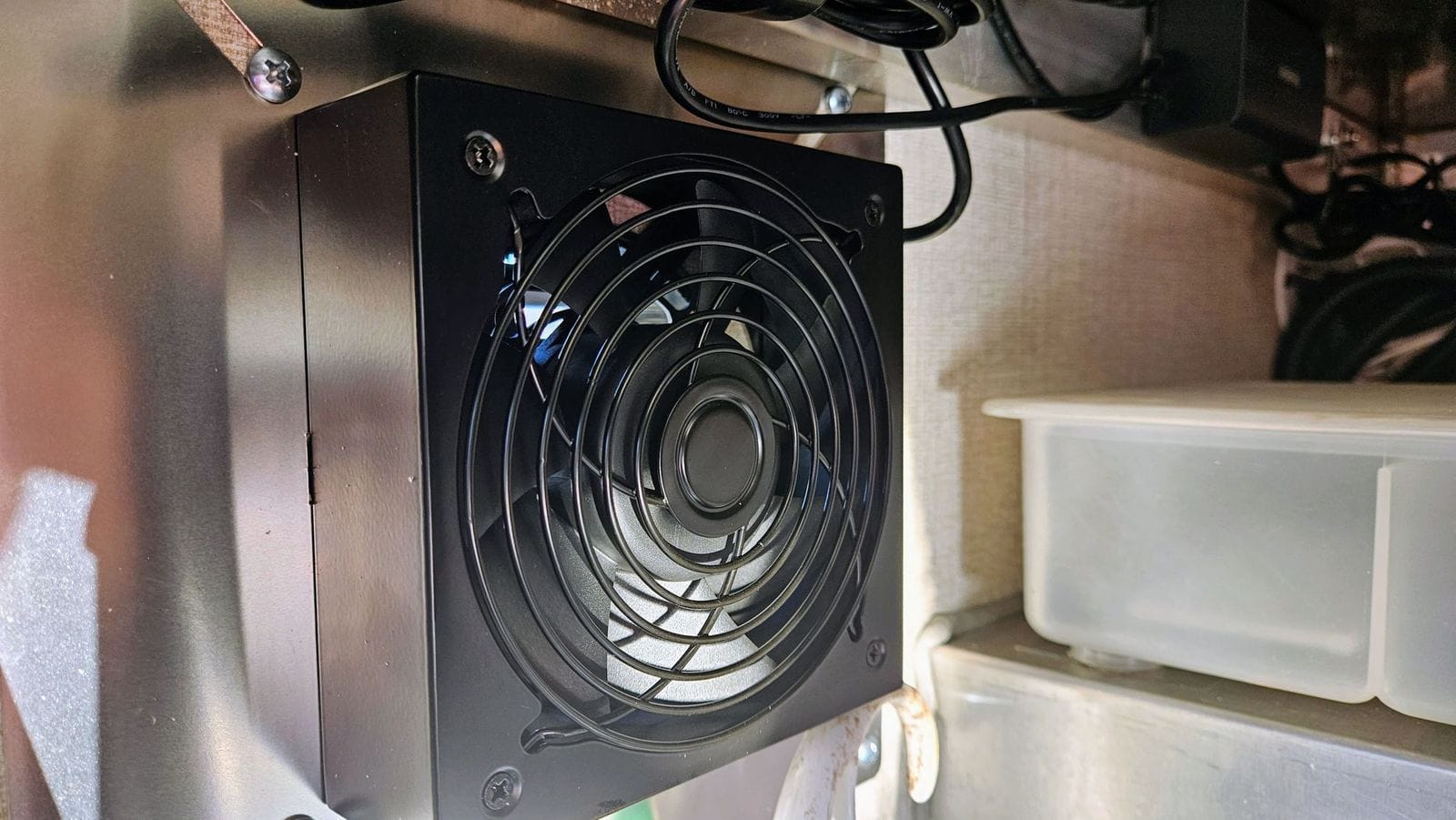
It was easy to excuse this overheating as within normal bounds, especially when professionals corroborated this reasoning. The techs at Complete Trailers, who installed our vent fan, agreed that the storage bay could heat up a lot with all those electrical devices running in tandem. Even after our inverter fried, we asked the guys at EcoEthic about how hot we should expect the devices to get, and they said pretty hot. But hot enough to literally smoke? EcoEthic only knew what they knew at the time.
But Memory Lane doesn't start in Spring 2023. It starts at the install itself. After getting everything set up, we noticed that whenever we dimmed the LED lights in our trailer, we got flickering. Our solar installer added 2 DC-DC converters that evened out the voltage. Problem solved! Except now we know that when another component is added as a fix to an electric problem, that it can act as a Band-Aid to a much larger, deeper issue. These converters were a kludge to reduce flickering, aka the problem we could see with our own eyes. We shouldn't have needed these extra components if the voltage wasn't fluctuating in the first place.
Last year, we mentioned more flickering lights as part of a larger list of RV issues we had been experiencing as we rounded the autumn season, boondocking on our land in NH. We had ATC check our wiring during an appointment that summer, and they found a loose ground wire that we thought was the culprit. It wasn't. We had multiple instances where we'd notice our lights flicker, sometimes when we turned on another light or appliance, but also sometimes when we ran nothing extra. It didn't even matter if we were on electric hookups or not. We never figured out the cause, but that's because we never connected all the dots from the install onward. That's what this appointment at EcoEthic became.
It was easy to run quick troubleshooting and patch jobs as we continued full-timing. Our focus was on making sure our RV continued to function. But once we removed ourselves from the rig, we got a clearer perspective on the whole setup. The continued functioning of our RV was important, but we couldn't ignore that when electricity is involved, so is our safety. We faced obvious danger the day our AC didn't kick on and our pets were in the hot RV. We faced obvious danger when our inverter started smoking and we caught it before it A, filled our rig with smoke, or B, started a fire. But what does this mean for the dangers that potentially lurked beneath the surface? The more perspective we got, the more nagging this concern became.
We picked up the trailer from EcoEthic on our drive up to the Blue Ridge Mountains, and they walked us through every adjustment and replacement they made. Just looking at the new setup in our storage bay, we saw a massive difference. Everything was connected and accessible so that, as users, we could see at-a-glance all components of our system and how each functioned alongside the other devices.
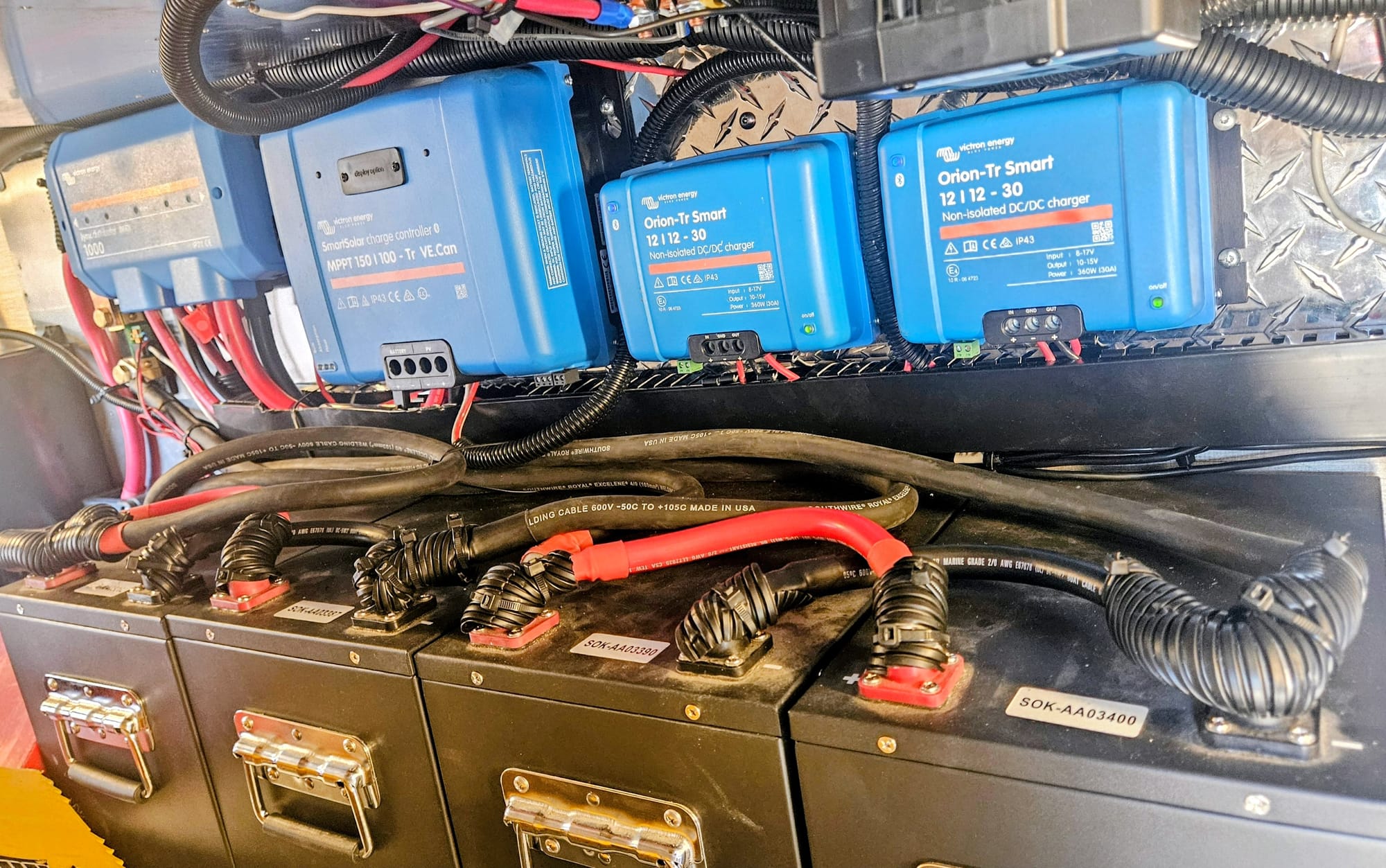
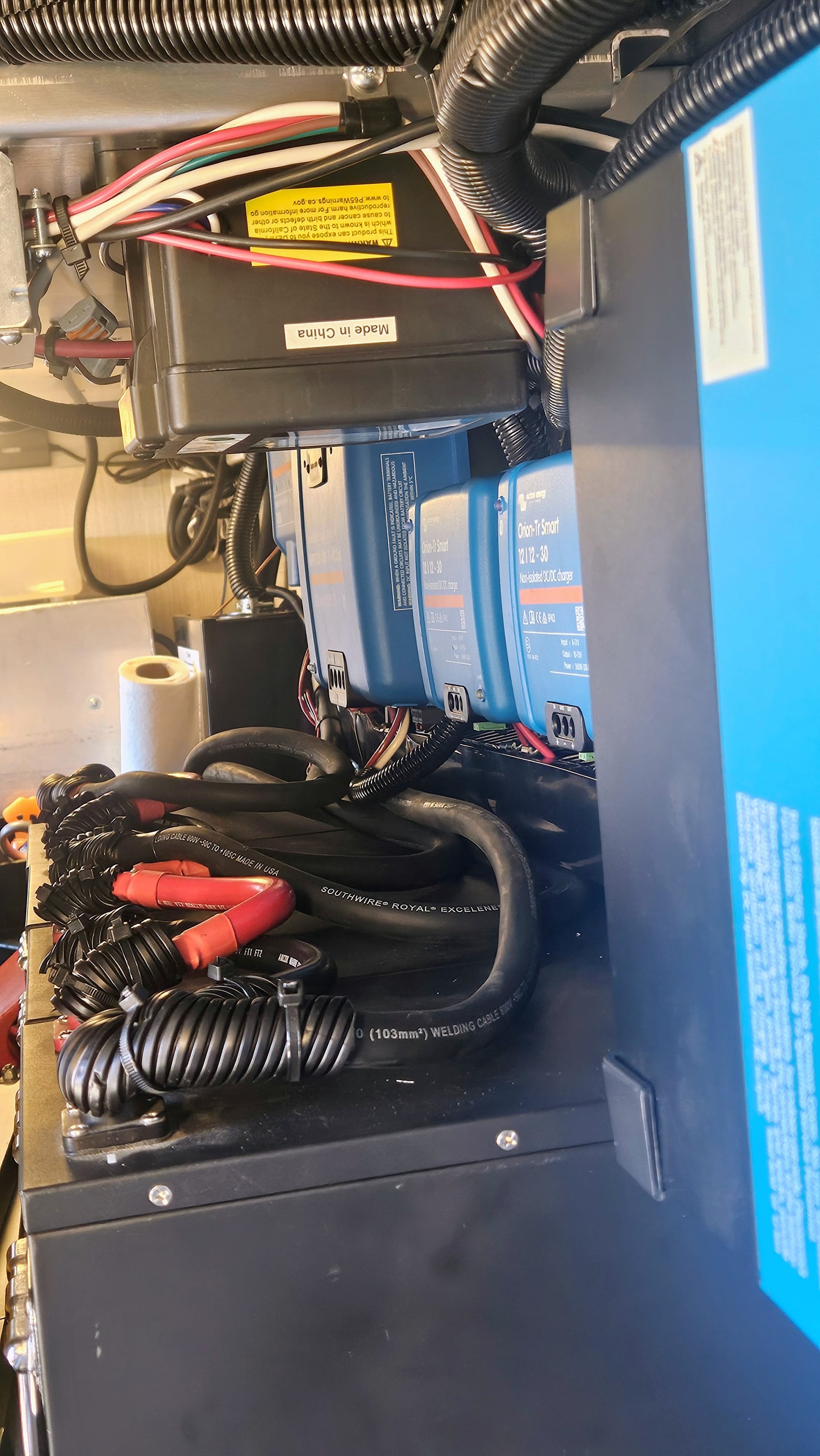
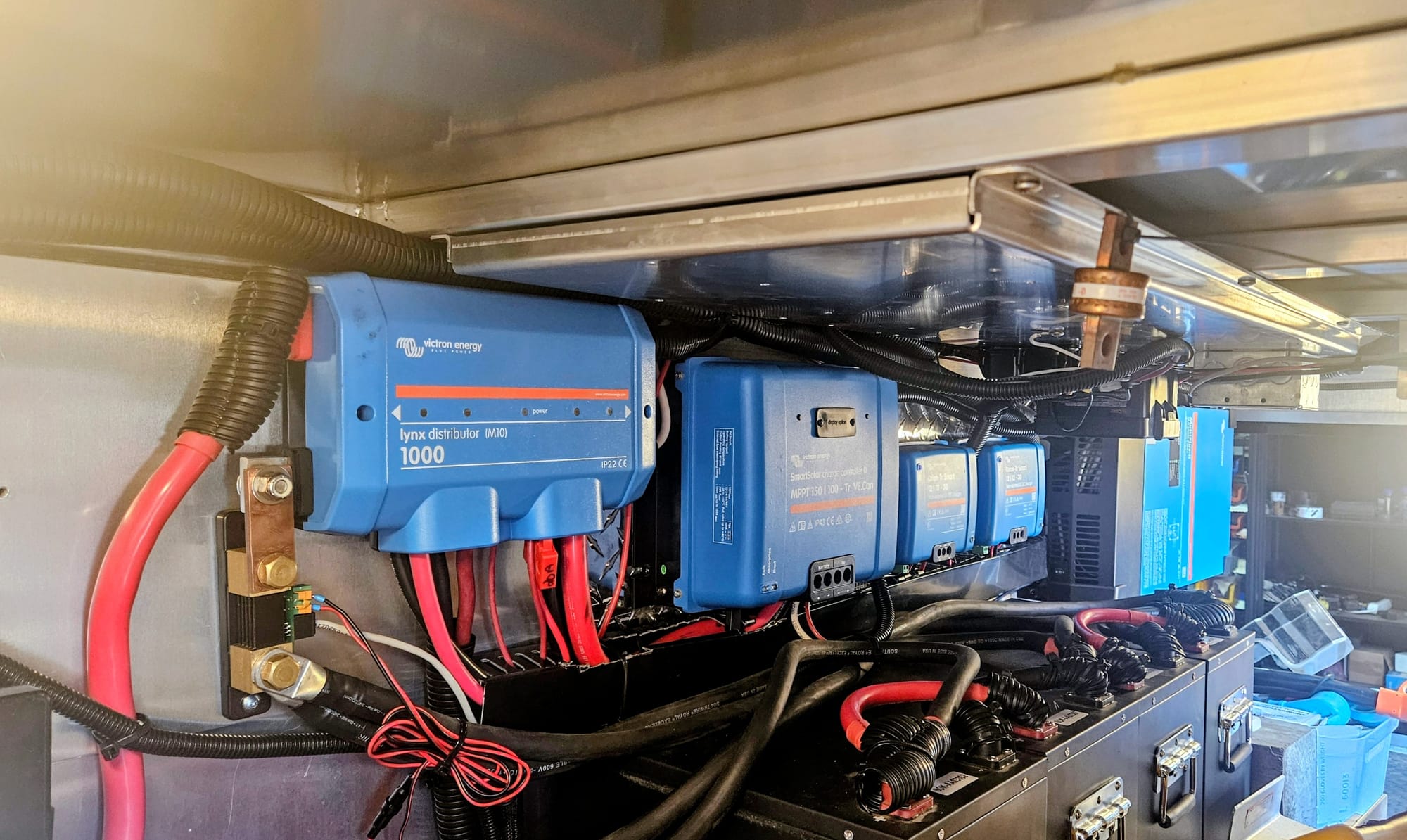
As they listed all the changes, we kept a mental count of how many explained the continuous issues we had over 3 years. Moreso, we noted how many of them were underlying disasters waiting to happen.
- The battery disconnect switch wasn't rated for a high enough current based on the battery bank size. This could cause the disconnect to fail, or worse, overheat to the point of causing equipment degradation or even a fire.
- The class T fuse for battery output had different gauges on either side (4 vs 4/0), so that it wouldn't blow even under sustained overcurrent. There were no other fuses protecting anything in the system.
- The 12V current to the rig was running through junction boxes meant for automotive speakers, not rated for continuous current.
- The solar panels and solar charge controller were connected through a breaker box in such a way that, if the wrong breaker accidentally got flipped, it could have resulted in uncontrolled current flowing from the panels into the 12V system.
- Our old factory converter wasn't properly disconnected, and we were actually told that we could occasionally use it in parallel with the Victron, which isn't true.
When we picked up our trailer after the inverter replacement, the techs asked us why we ordered a single-leg inverter when our trailer was built for a two-leg. We answered that we simply got the same model that had fried and guessed that maybe it was cheaper, to which they replied that it wasn't. Since we already had that inverter, they installed it, but when we brought the trailer back, we had a decision to make. Did we want a new inverter that operated on 2 50amp legs? This would mean purchasing a brand new inverter at extra cost, but we did it for good reason.
We knew that after our solar install, we were more limited in how much power we could pull from a 50amp pedestal. Before, our system was wired on two legs so we could pull 100amps, but afterwards, we were able to only use about 3 appliances on the grid before the remaining power would pull from the batteries. This limit meant that, even when running normal amounts of electric on grid, our inverter was at maximum capacity most of the time. The way our solar system was installed, a neutral wire in our transfer switch had been carrying 50amps instead of the near-zero average that a neutral is supposed to carry. EcoEthic noticed significant degradation, including evidence of burning, on that wire.
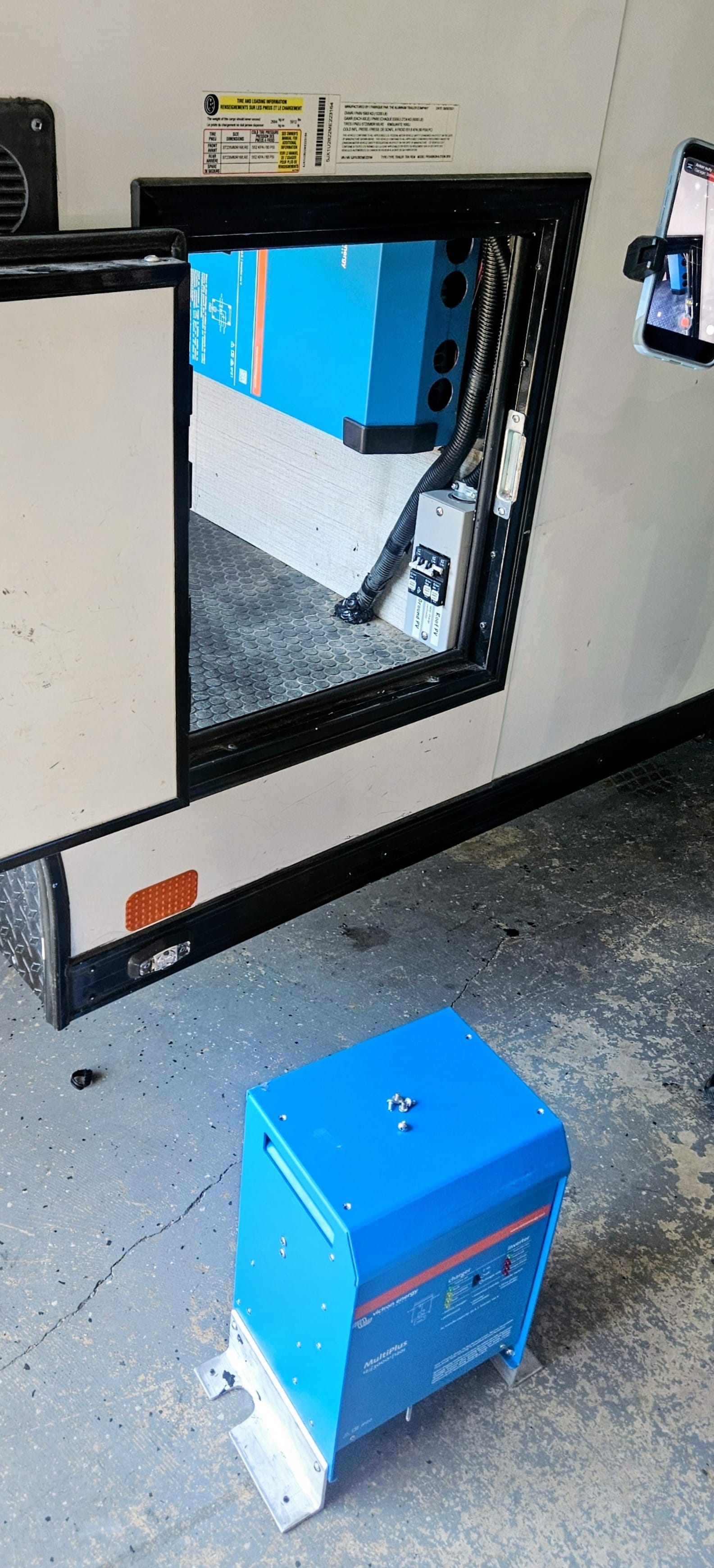
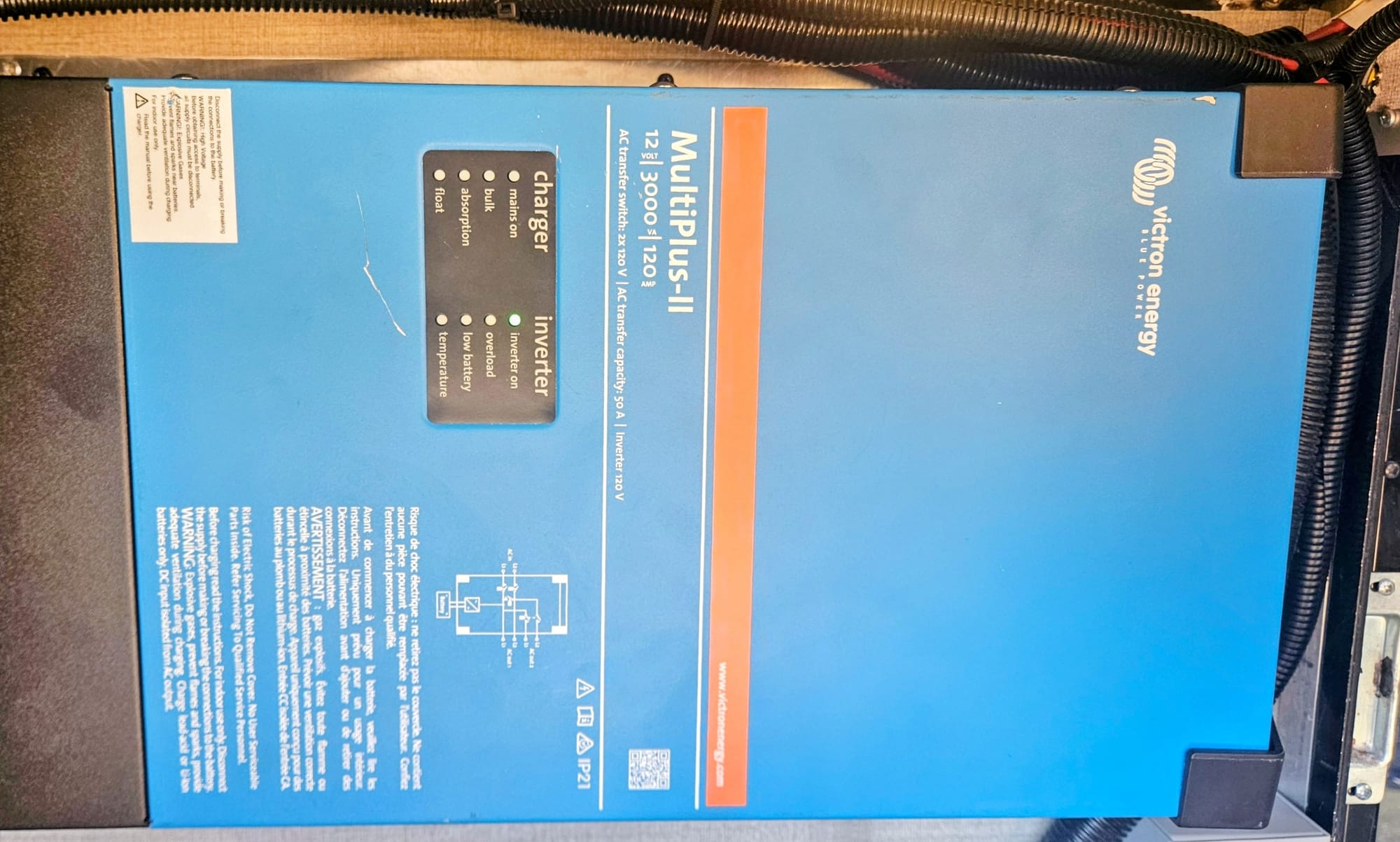
Left: Our barely-used inverter isn't going back in the trailer. Left: The new two-leg inverter, installed sideways for space-saving and custom vented to keep heat flowing out of it.
These were all observations from inside the storage bay, but what about the panels themselves? We were told that they were new panels, typically meant for residential installs. Instead, we were sold commercial panels that had been discontinued in 2015 and were likely resold. The silver lining was that, even at that age, the panels still have enough life to outlive the rest of our solar setup, and so we didn't need to replace them.
It was a lot to digest, but we found comfort in 2 takeaways. First, we now had answers to why we suffered so many electric issues that seemed to be separate instances, but were in fact, all connected. Second, knowing what we know now, our issues could have caused far worse problems that, at worst, could have destroyed our RV and put our safety in jeopardy.
The reality, however, was a tough pill to swallow. For 3 years, we faced constant malfunctions that turned out to be downstream problems of our initial install. We could finally connect the dots on all the big failures we had over 3 years:
- We only ever got about 2/3 usable capacity from our batteries. The batteries never all fully charged because they were imbalanced, and as soon as the higher volt cells would reach full charge, the battery management system would shut down charging. When discharging, the inverter would stop running around 40% state of charge because it would read a lower battery voltage than we actually had. This gave us many insights into our sporadic blackouts and need to reduce maximum input current as we reached "full" charge (we'll now put "full" in quotations).
- And, the root of everything from our initial overheating error code to the smoking inverter, is that all of these poor connections, added devices, and lack of protective components caused accelerated degradation of our system. If components aren't installed properly, they need to expend more energy to function. Energy = heat. Our batteries cycled unevenly, which produced more heat. Our inverter was running at full capacity and was connected on poorly crimped wires. This produced more heat. So while a typical system can and will heat up a storage bay that isn't climate-controlled, and this can be worse in high temperatures, we had a 3rd heat-producing element: the overworking of our entire system.
We had only been RVing for a year when we got our solar installation, and we turned to a professional who was reputable in our community. We learned the hard way that a "professional" installation doesn't mean following professional standards, because there are none. We've learned a lot from EcoEthic as they advocate for better training for those working with high tech electrical components. It doesn't mean we necessarily think a license or credential is required for everyone doing an install, but we believe there should be proper baseline processes to ensure that the rig, its components, and its users are safe. If you want to try your hand at a DIY install, more power to you (see what I did there?), but do your homework and enlist guidance from trusted resources. If you use a professional for your install, get a full walkthrough of your system, so if something goes wrong, you have a better idea of what components do what. If you experience a problem and the professional utilizes a "cover-up" fix as opposed to investigating for an underlying cause, question this. It took us 3 years and multiple consults with professionals to get to where we are now, but now that we're here, we're moving forward with peace of mind that our RV is safer, and with hopes that its electric system will function much better from here.
This, however, isn't the end of our electric repairs. In addition to our batteries not being balanced externally, EcoEthic found that they're also not internally balanced. This further contributed to our voltage fluctuations and overheating. We're waiting on the best path forward, as EcoEthic is now in touch with our battery manufacturer. This means that another repair appointment at EcoEthic is in our near future. In the meantime, we still took our trailer to the Blue Ridge Mountains, but even with 50amp hookups, we were told to be gentle and limit our power draw.
It was sure to be a much more volatile trip than the leisurely one we hoped for when we started planning it. We had this new system from EcoEthic that wasn't entirely complete, plus we had repairs from our dealer, Trailers of the East Coast, that we hadn't even seen yet. We know very well how quickly RV issues can turn travels from leisurely to "Get me out of here now." How would the roads twist and turn as we tested the functionality of our new repairs? Time to hitch up the trailer and find out.