
All-day displacement while our trailer gets repairs

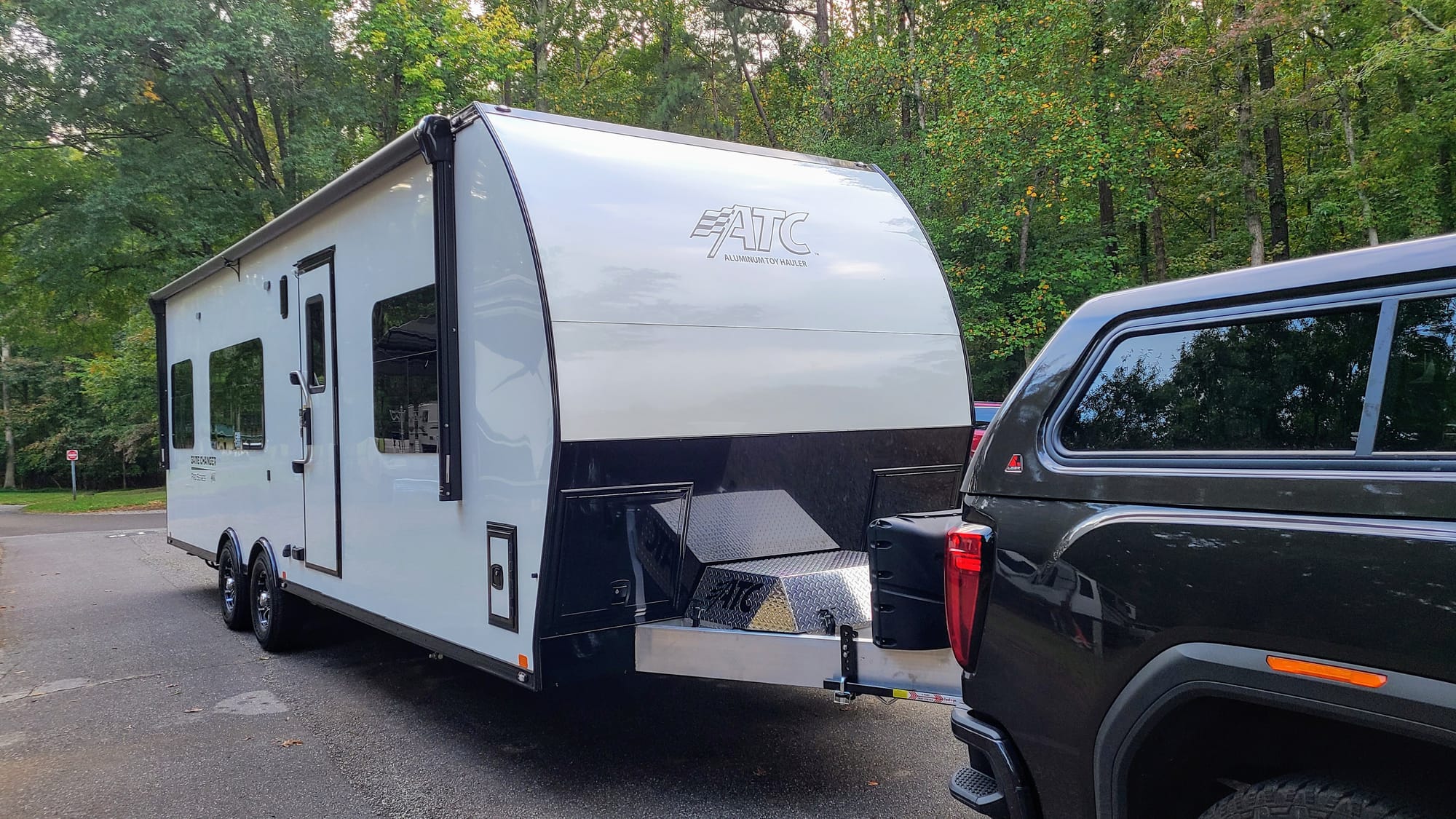
In the RV life, it's a known fact that, at any given time, something will need repairs. We barrel down the road, and things shake loose and break. We take our homes through all different climates and terrains. And let's face it – most RV components are not hefty enough to withstand this rugged life, even though that's what they're built for. As long as it's not something catastrophic that will take us off the road, we just roll along.
This year, we started down on the count. We ended up spending winter in our RV in MA, which was tough on us, but even tougher on the trailer. We did what we could to repair things before launching back on the road, but everything else needed to wait until we could enlist the help of professionals.
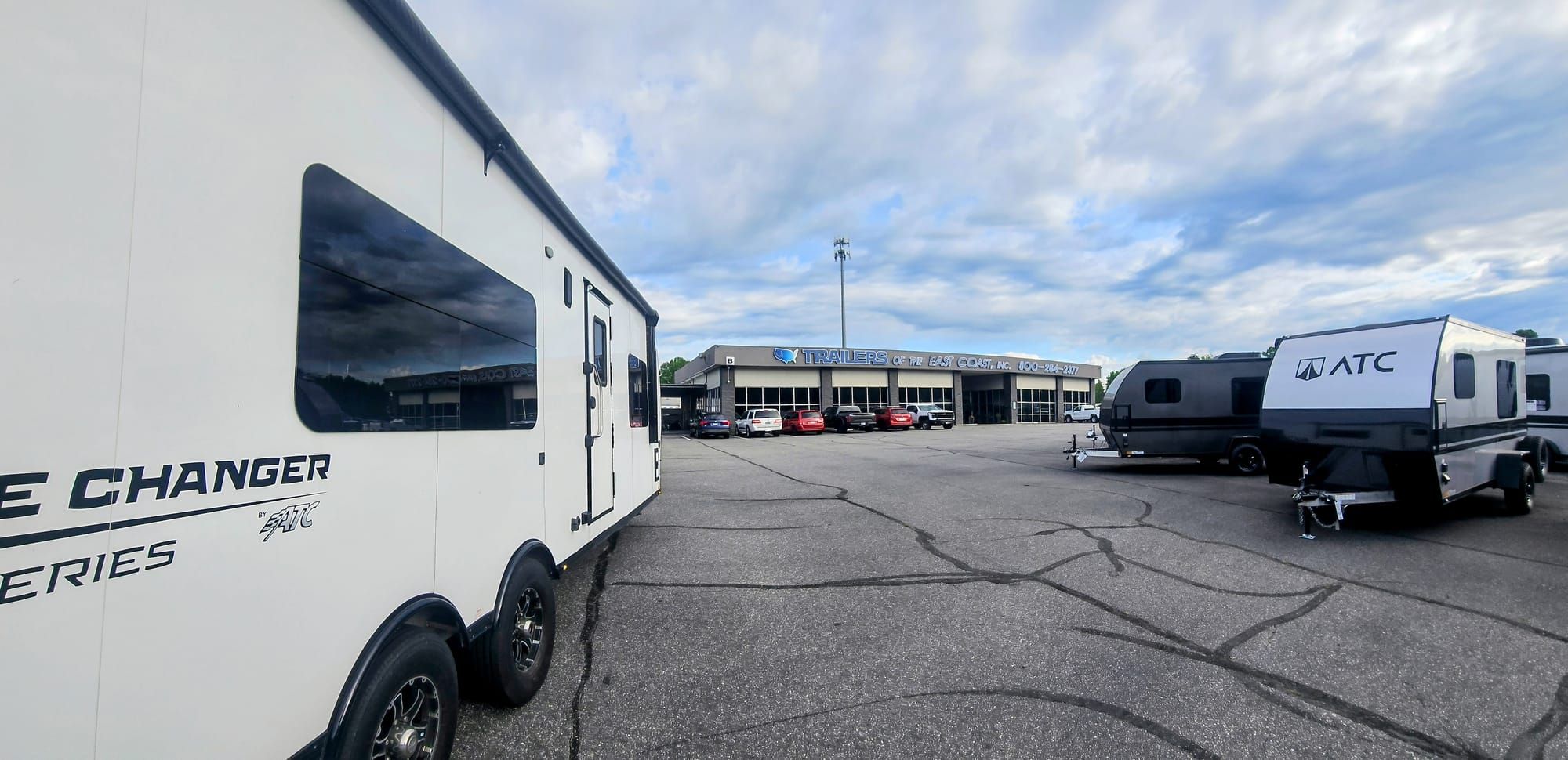
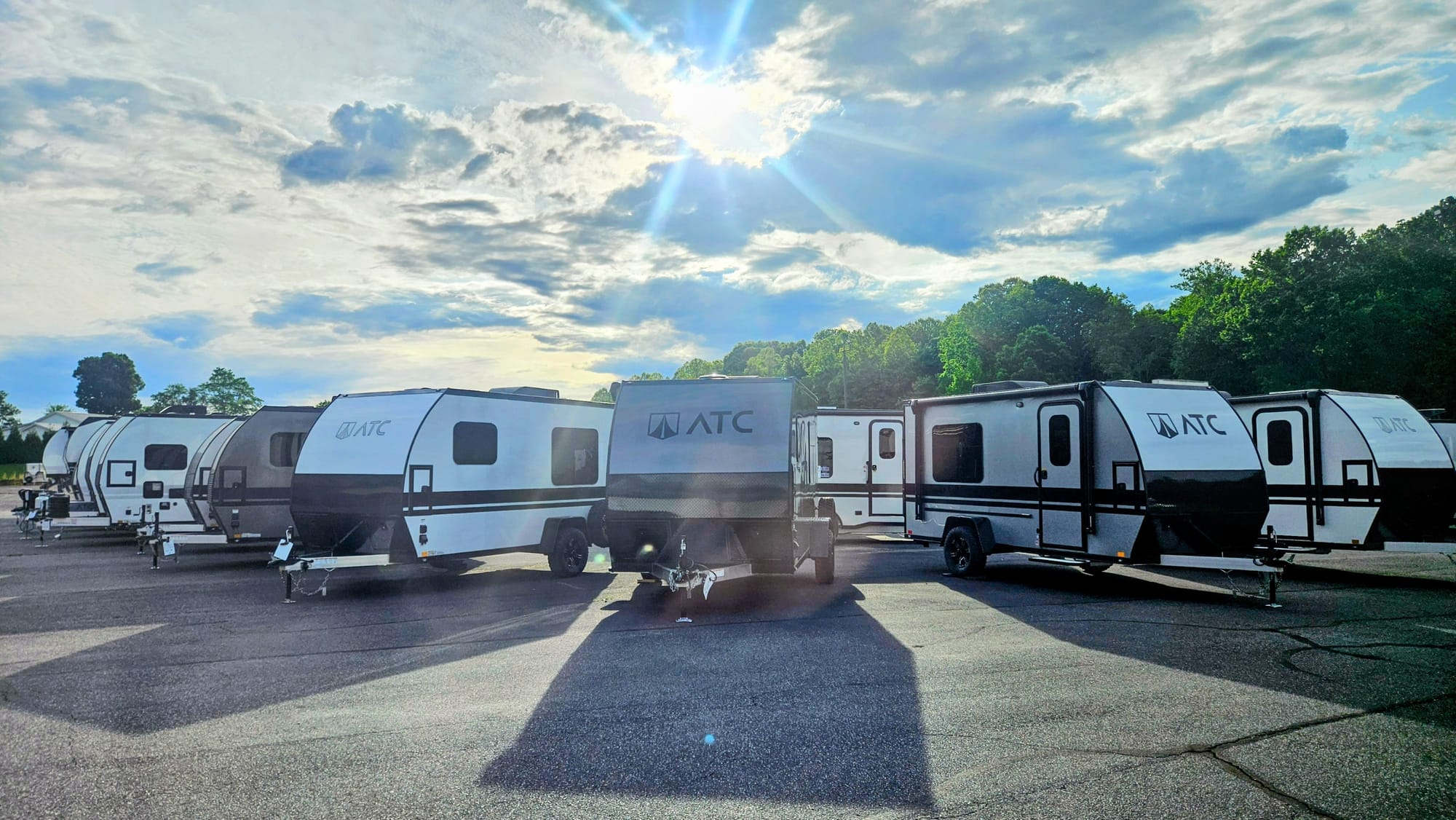
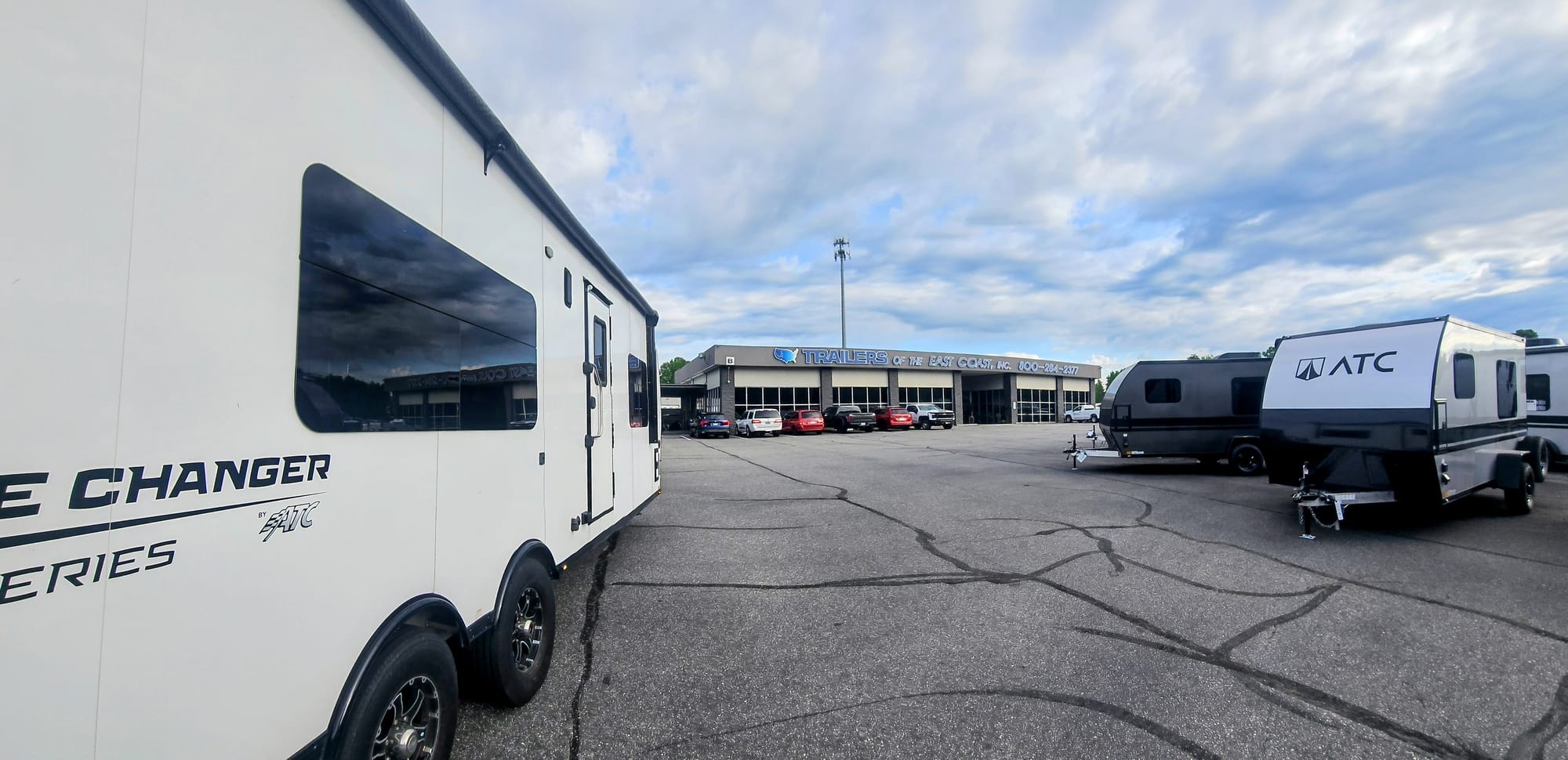
We didn't plan much of our travels ahead of time, but we did contact our dealer, Trailers of the East Coast, shortly before we launched. We wanted to schedule an appointment to take care of some of the winter-induced damage, plus a few other repairs. Our only campground reservation at the time was in Fort Myers, FL, so we knew we'd be passing through NC and could stop at Trailers of the East Coast either on our way down, or on our return north. They had an opening on May 1, which meant we could time our travels to be back in the area after FL. Because most of these repairs were small, they said they could have the trailer back to us by the end of the day, so we wouldn't need to find other accommodations. We put the appointment in our calendar and made it a "big dot" on our itinerary.
Then we launched, and our travels became nothing short of a game of RV life Whack-a-Mole. An issue would pop up, and we'd knock it back down. Severe weather! Excavation site! Flat tire! Flat tire! Surprisingly, though, none of our issues needed to be added to our repairs list for TOEC. This was good because our time there was limited.
Then our final issue "spontaneously combusted" shortly before our service appointment. Our inverter fried, leaving us with limited electricity. We needed a Victron specialist to install a replacement, so this again was nothing to add to the TOEC to-do list. However, we found an installer the next town over, and we tried to time our inverter install with our service appointment, so we could do both in one visit to the area.
Unfortunately, our inverter replacement got held up in a bureaucratic orbit, so we went ahead with our TOEC appointment, which would at least get us on better footing than we were. And so we booked a couple nights near Mocksville, NC – on electric hookups, of course – and made plans to drop the trailer off bright and early on May 1, and then proceed to have a long day of displacement.
We chose a campsite at Tanglewood Park Campground, at a county park in Clemmons, 15 minutes east of Mocksville. This booking was trippy because Tanglewood was the very first campground we ever stayed, the day we picked up Buggy and our lives changed forever. We must say, driving in, we became impressed with our past selves. We always remember how unfamiliar we were with towing, and how this got us into some pickles. But these park roads could have caused newbies some issues; there were narrow sections and tight curves. Props to us for navigating them safely back then! We also purposely chose the only pull-thru in the entire campground that day, which was wise...but this time, we realized we were even smarter than we thought. The pull-thru is also easily the most level campsite in the whole park! We didn't have a choice of campsite this time; we booked the last available. It was one of the most sloped sites front-to-back that we've ever had. The only other time we needed to retract our tongue jack this much was outside Capitol Reef, but that was a spot we chose, not a designated spot like this. But, looking at the other back-ins, they were all along the same hills, and so most of them sat at just as steep a grade. Now in year 5 of RVing, we can handle unlevel sites, so that wasn't the issue. The issue with our site came later.
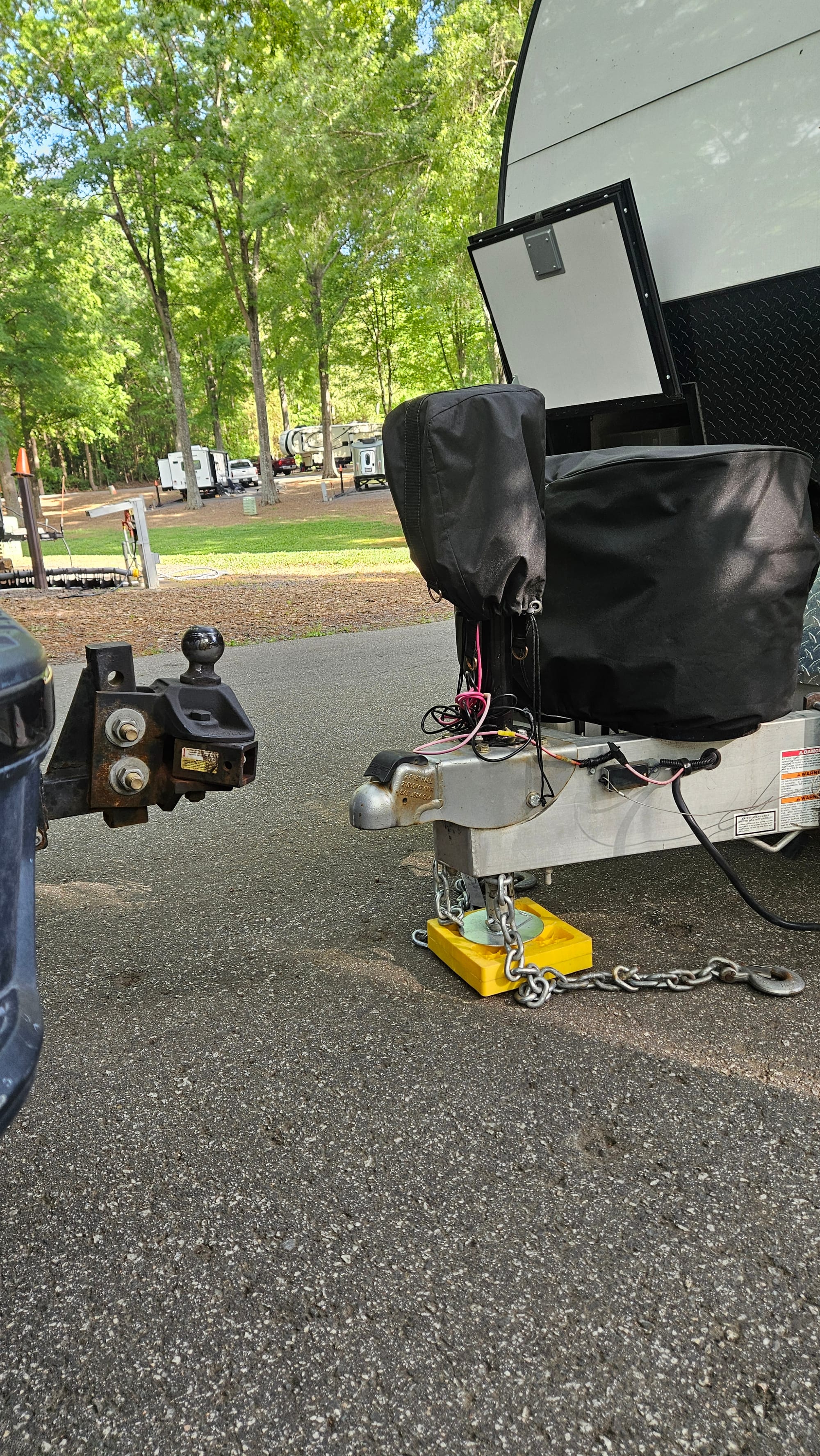
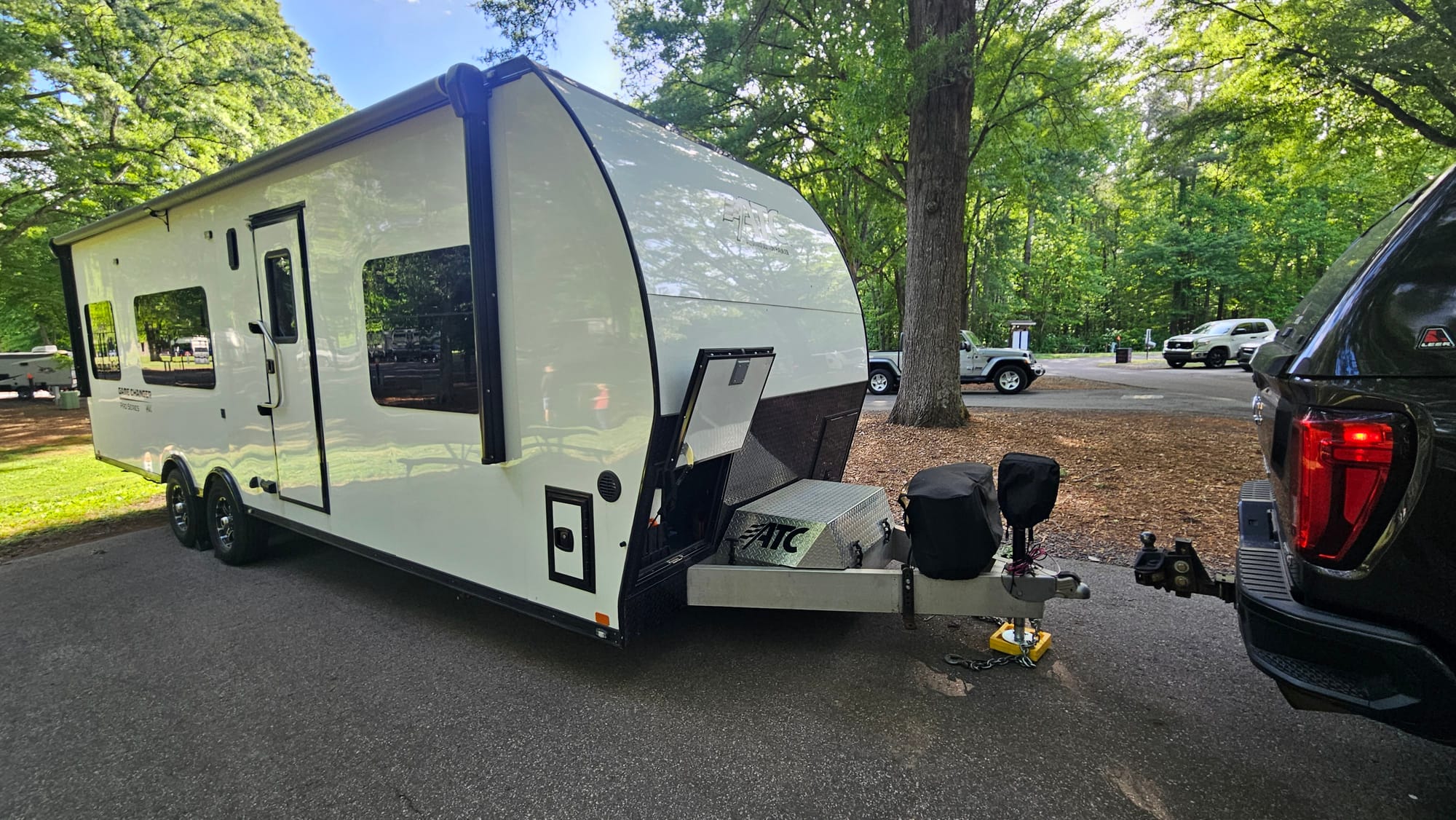
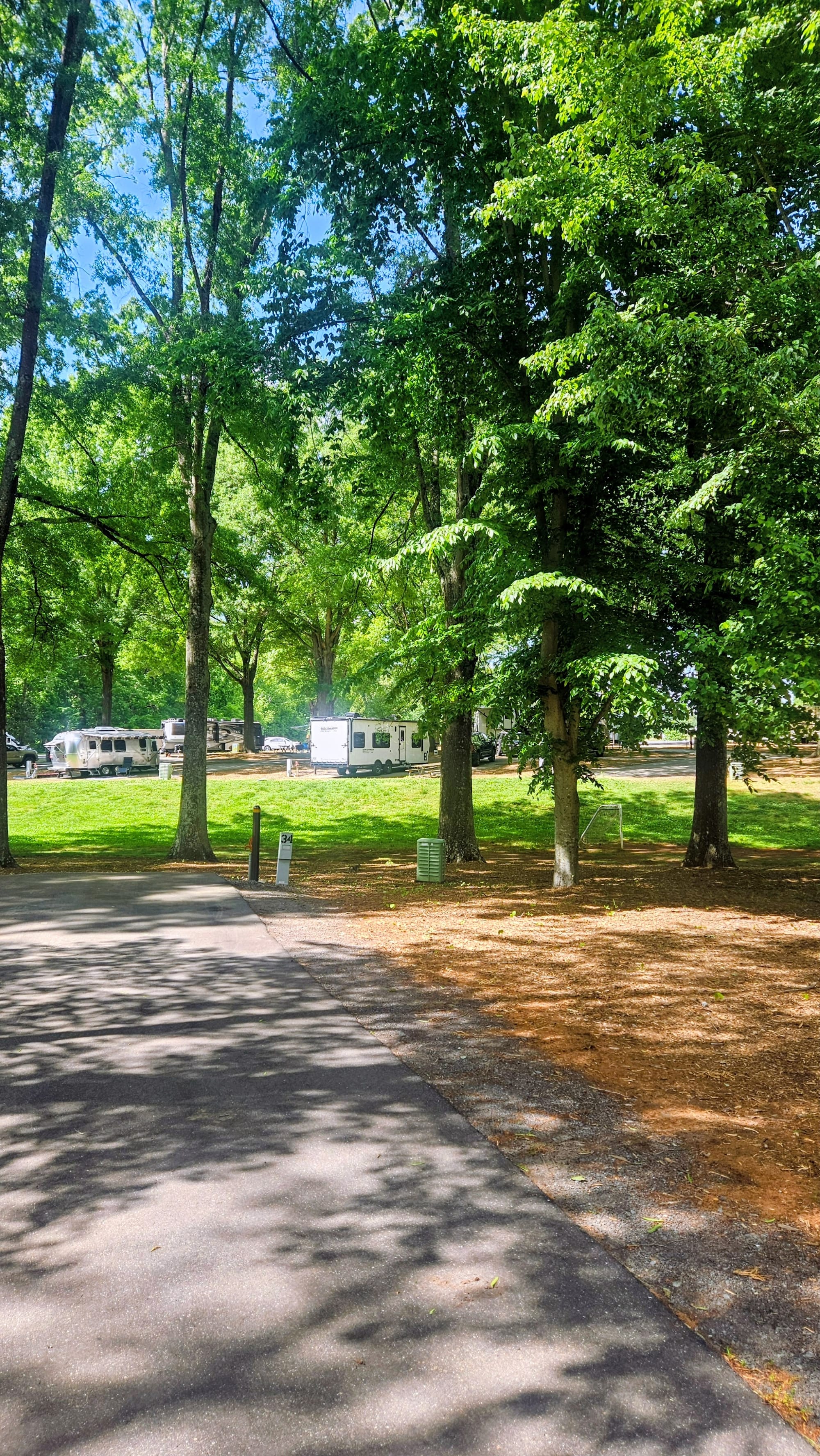
We booked 2 nights at Tanglewood so we could be close to TOEC for the early drop-off, and then have a nearby spot to go back to after picking the trailer back up. Had we known about the sloped sites, we might have chosen somewhere else. We were so overwhelmed with getting our trailer last time, there was no way we would have noticed the other campsites...nor would we have known what to look for anyway. We remembered so little about this campground, we might as well have never been there before! Being sloped down in the back meant we had no choice but to unhitch our trailer. We would have loved to stay hitched to save us time getting in and out. Then, once displaced, another problem arose – one we hadn't even thought of. We planned to use our site throughout the day to park in the shade, use the WIFI, and get some work done, but the site was too sloped to even feel comfortable sitting in the truck!
This might come as a surprise, but in a lot of ways, we actually prefer multi-day displacements over day-long ones. When we need to be out of the trailer for several days, we book a hotel or Airbnb, so we have a comfortable place to stay while we get repairs. For day-long displacements, we don't rent anywhere, which means we just hang out in the truck for hours on end. If we didn't have pets, we'd have tons of activities at our disposal. Even when we just had Tanner and Lily, we could at least pop into pet-friendly stores and walk around with them. But now that Tanner's older and we're joined by 2 feline displacement newbs, we have fewer options than ever.
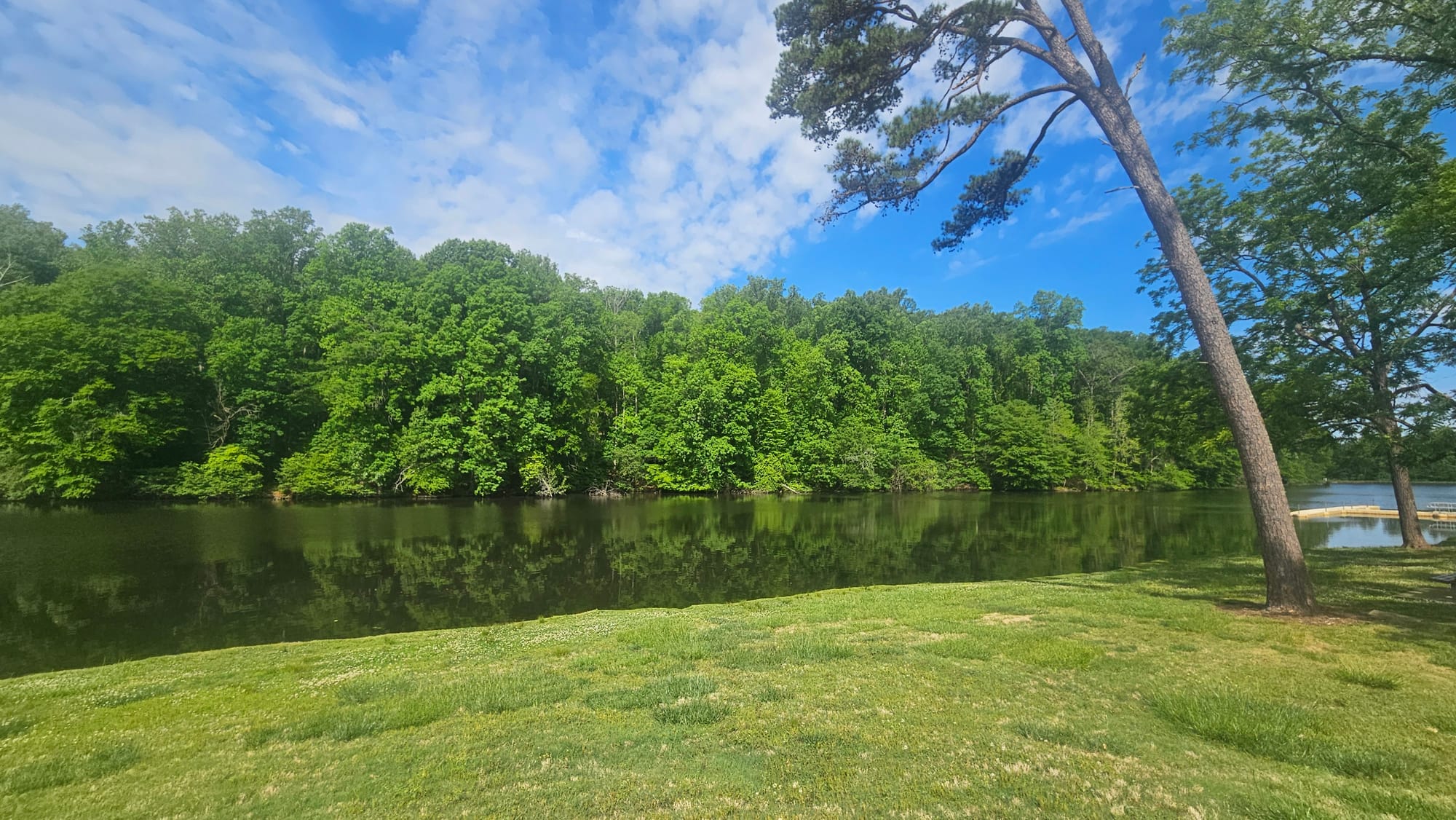
The nice thing about Tanglewood is, we had a whole county park to explore. We spent most of the day driving around all the recreational areas, and there are quite a few. The park has several picnic pavilions and walking trails, playgrounds, a lake for fishing, a golf course, an equestrian stable, and more. Because the weather was beautiful, most places were crowded, but we found some quiet near Mallard Lake.
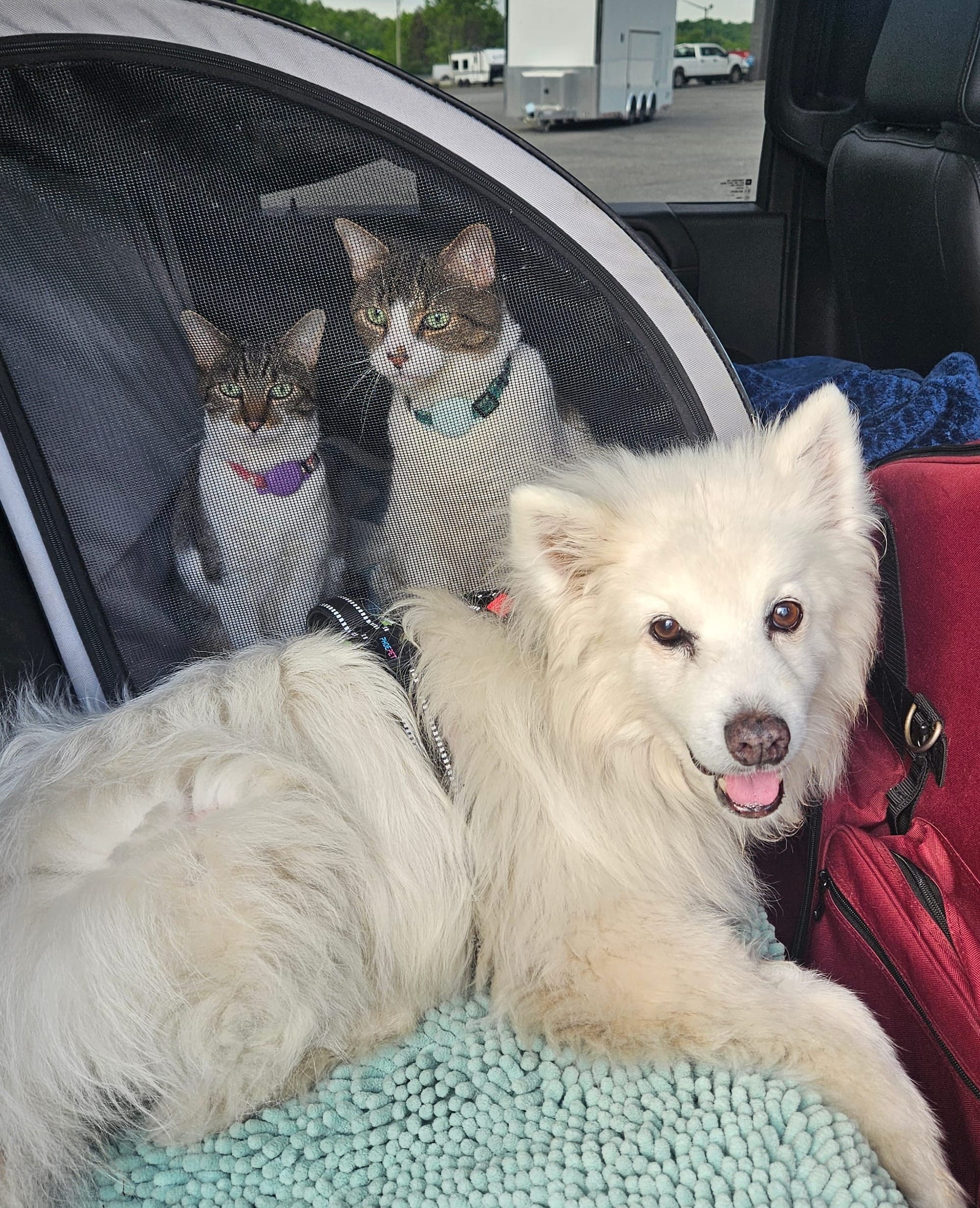
We haven't yet figured out what enclosures to get for the cats on displacement days. They have the big car seat, but we keep this in the backseat of the truck. Then they each have a smaller carrier. We initially got them each one so they could have their individual space, but the 2 carriers zip together to make one larger enclosure.
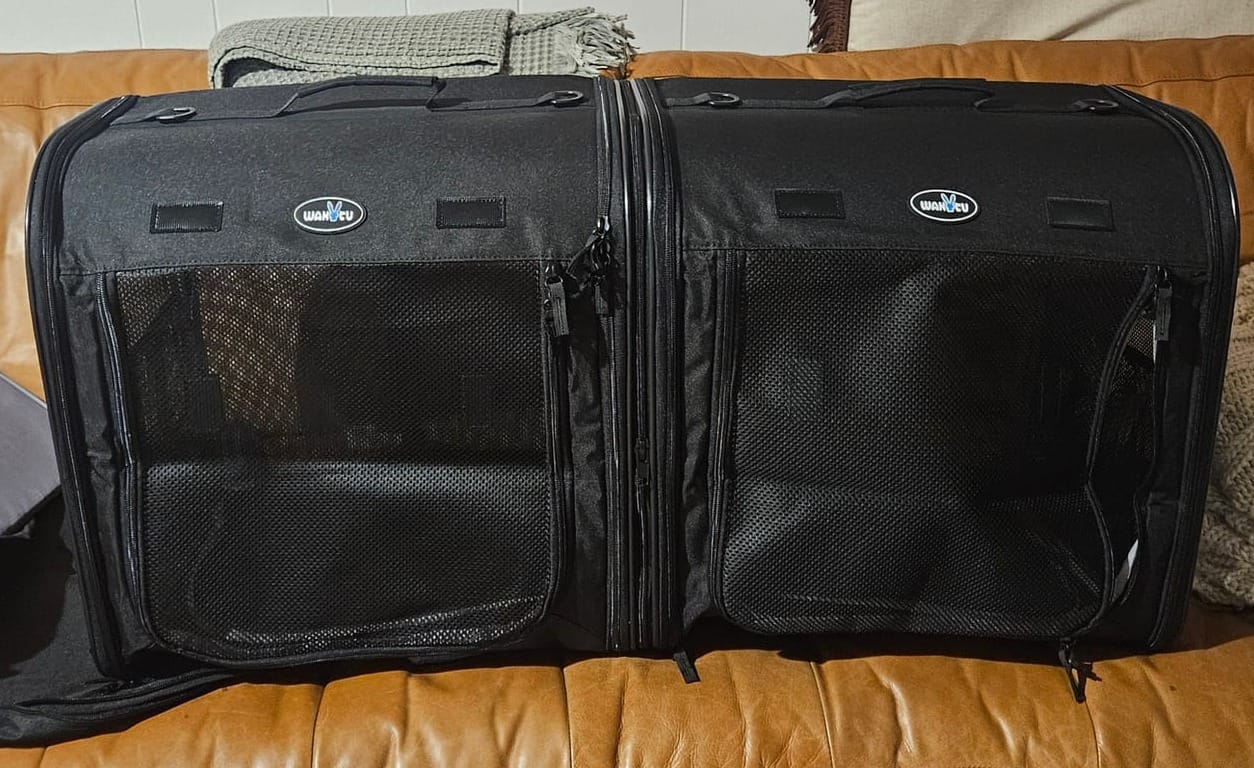
Only problem was, we completely forgot about the 2nd carrier. When we bring the cats in and out of the truck on drive days, they don't need both, so the 2nd one is folded up inside the trailer. We'll need to try the double carrier setup next time.
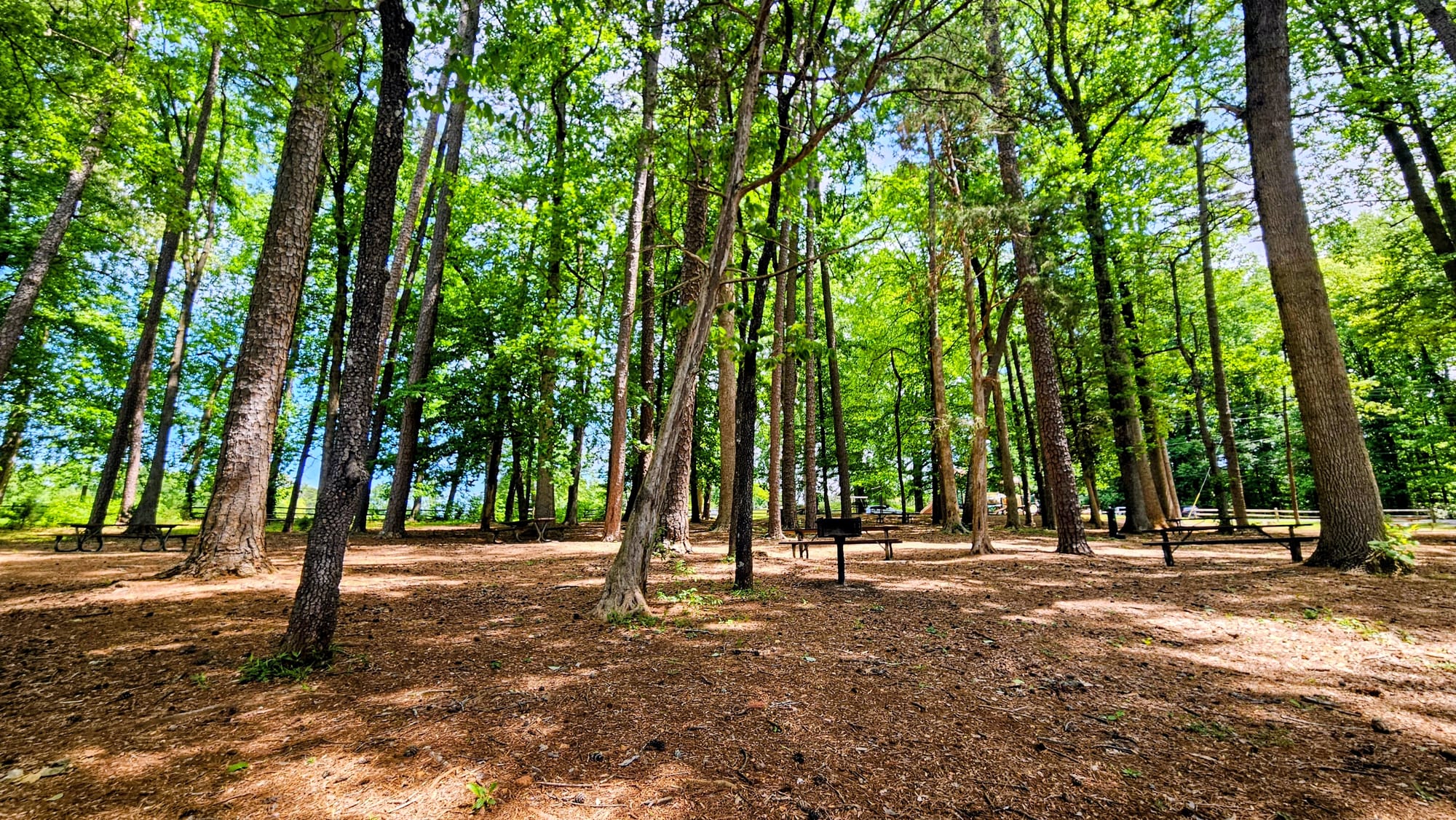
The cats aren't used to sitting outside to begin with, so we only took them out for a short while. Mallard Lake had a large picnic area on the other side of the parking lot, and it was one of the only places in the park that wasn't crowded. This meant we had enough quiet so the cats wouldn't be scared. As they get used to their outdoor time, they're starting to notice the benefits, like the birds and fresh air.
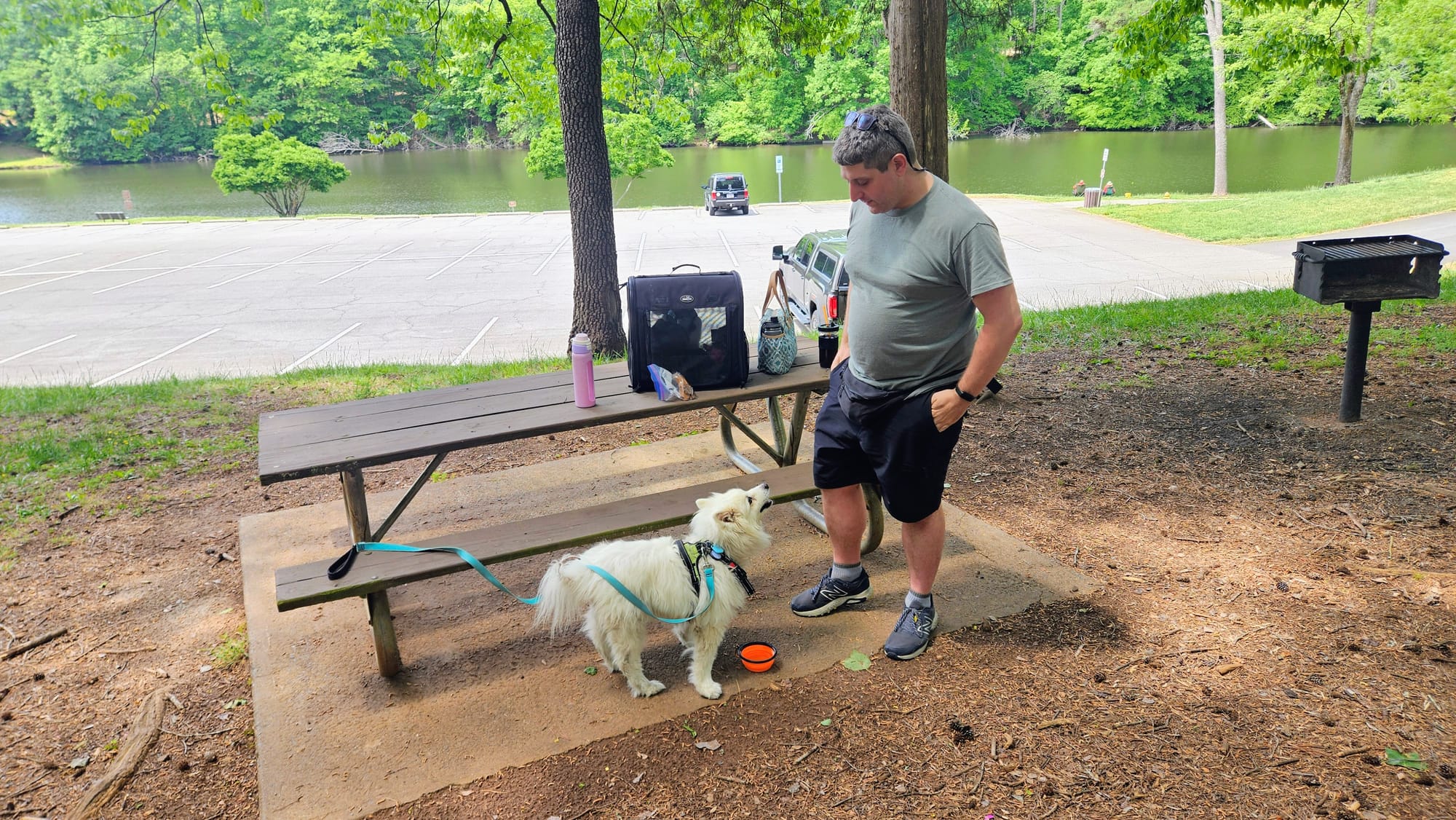
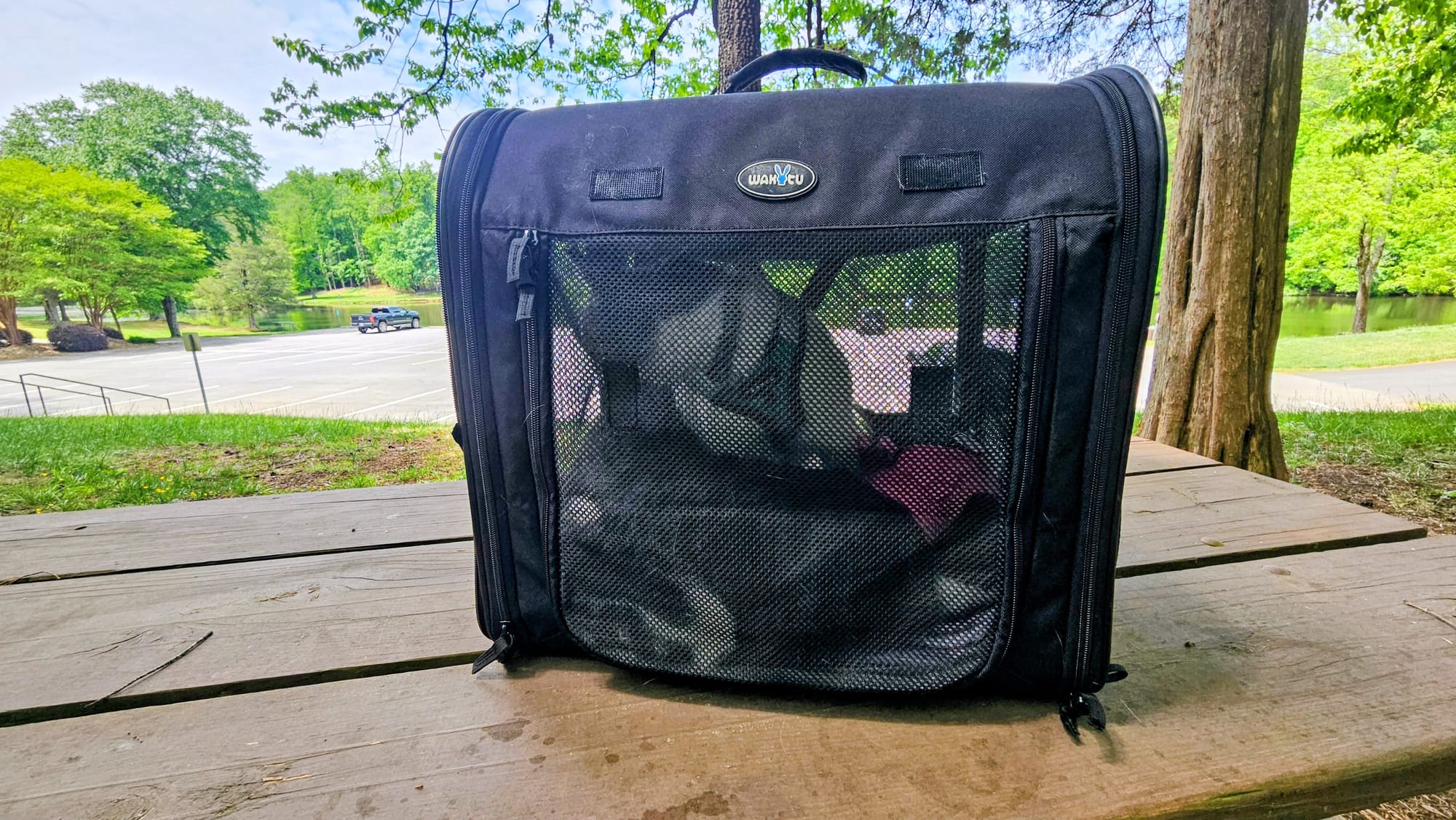
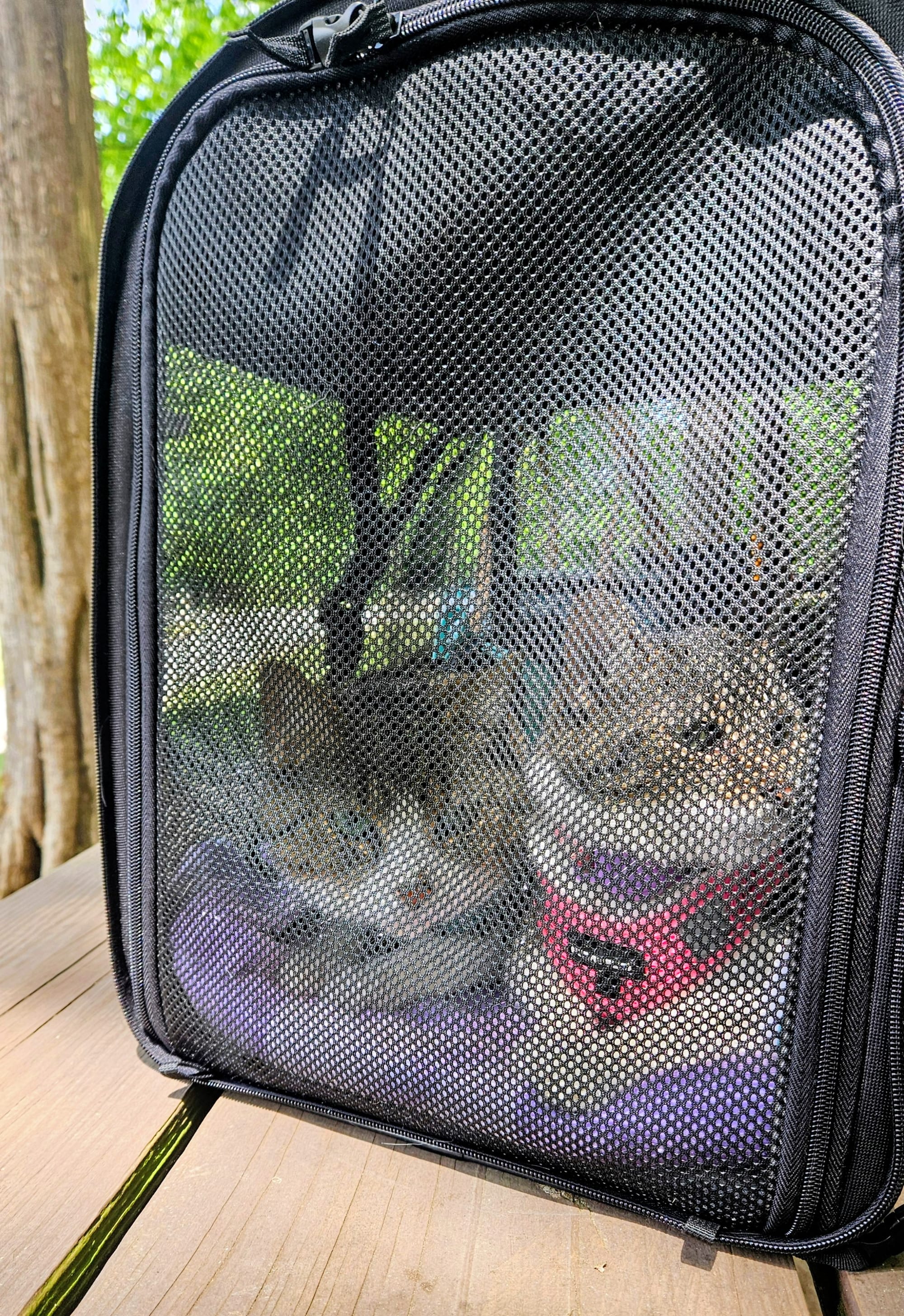
The rest of the time, we stayed in the truck.
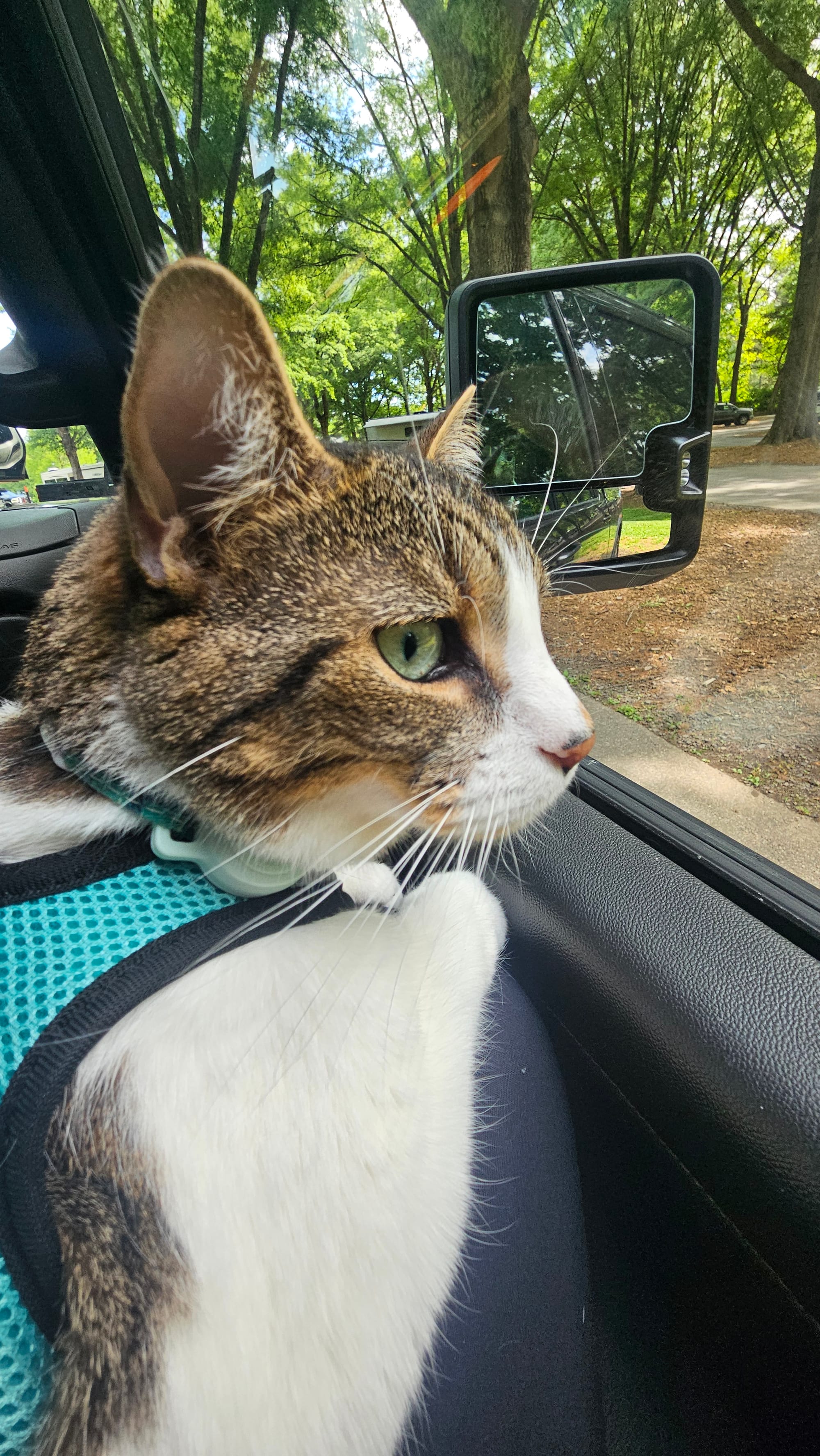
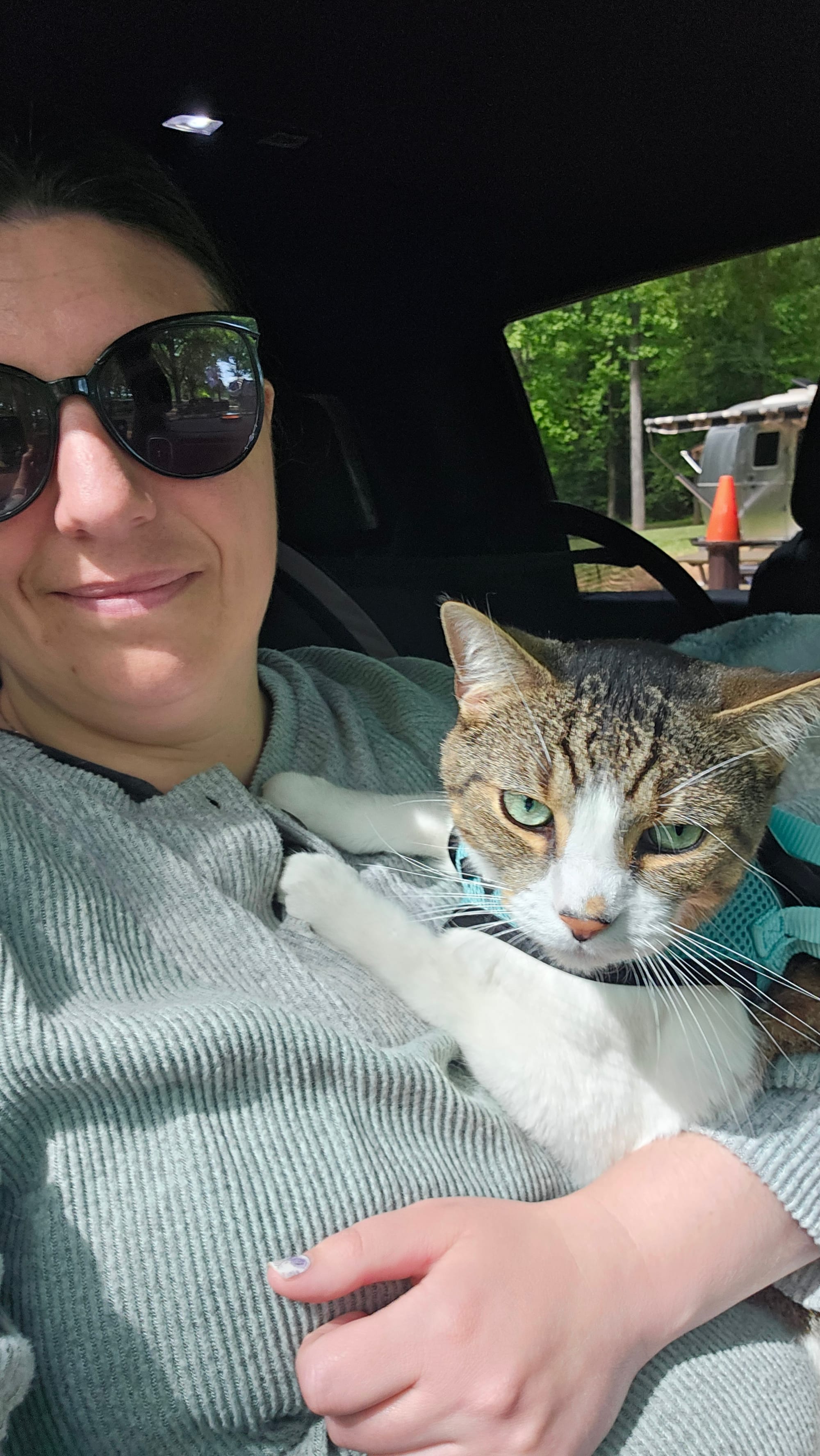
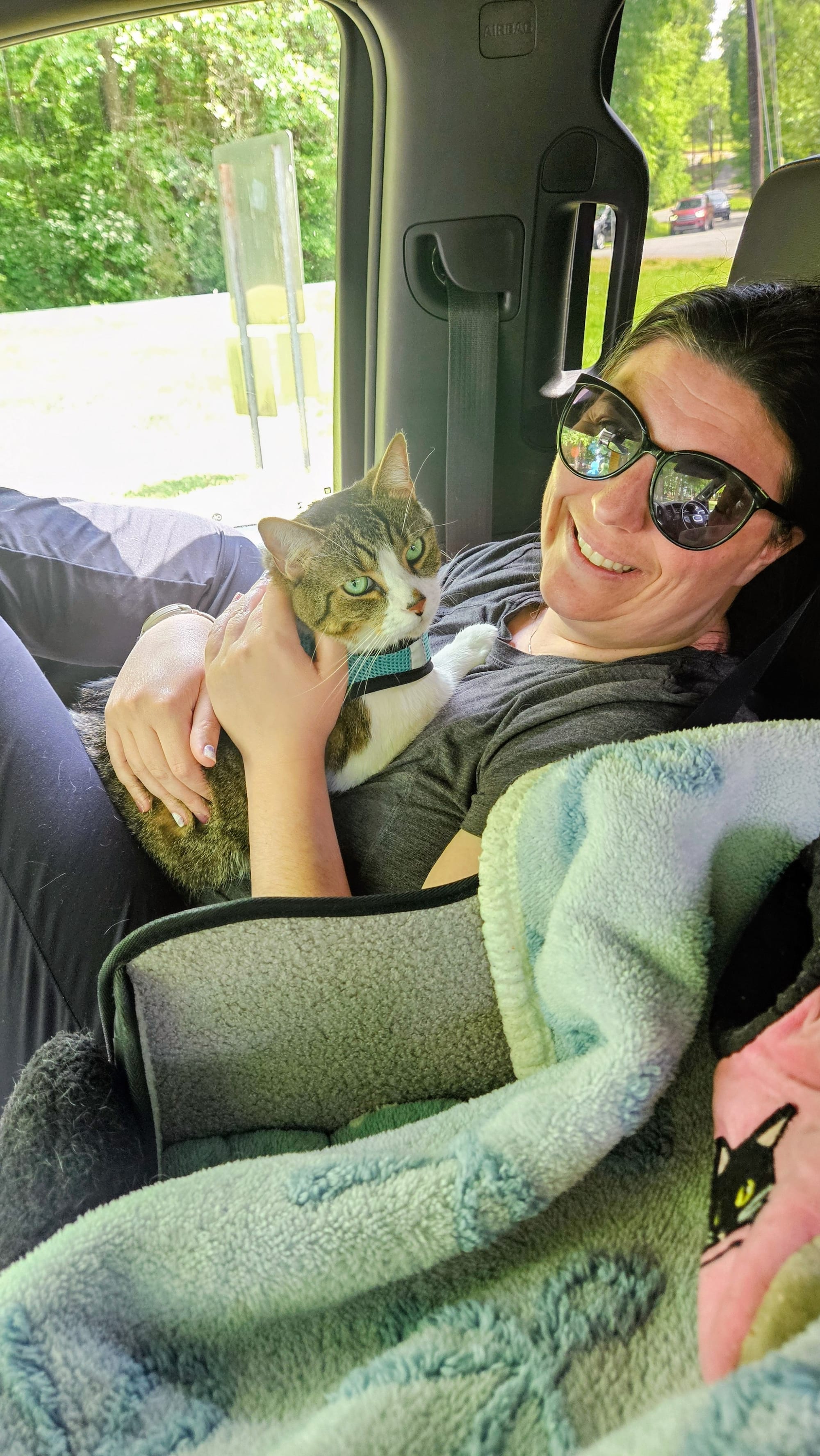
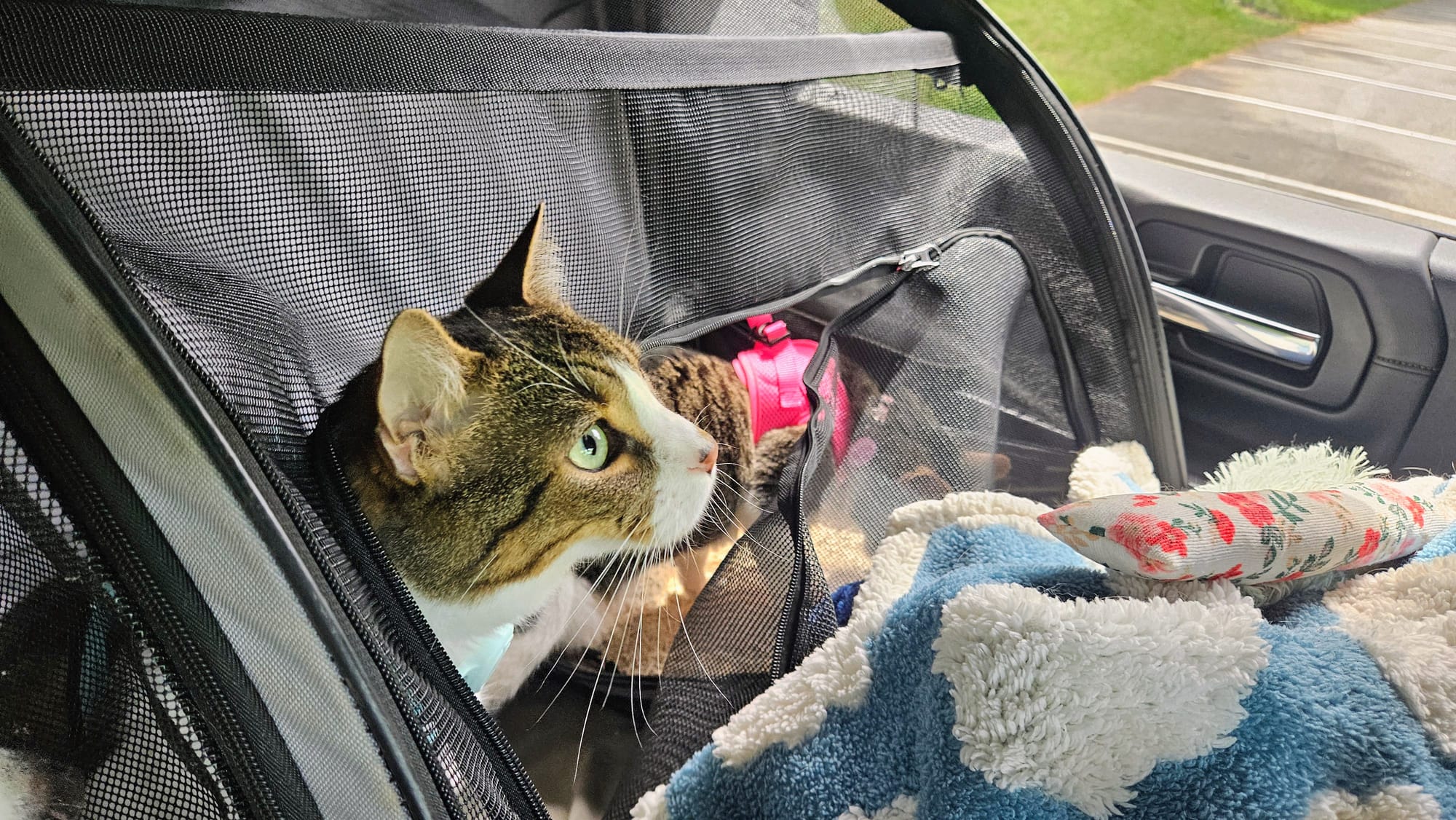
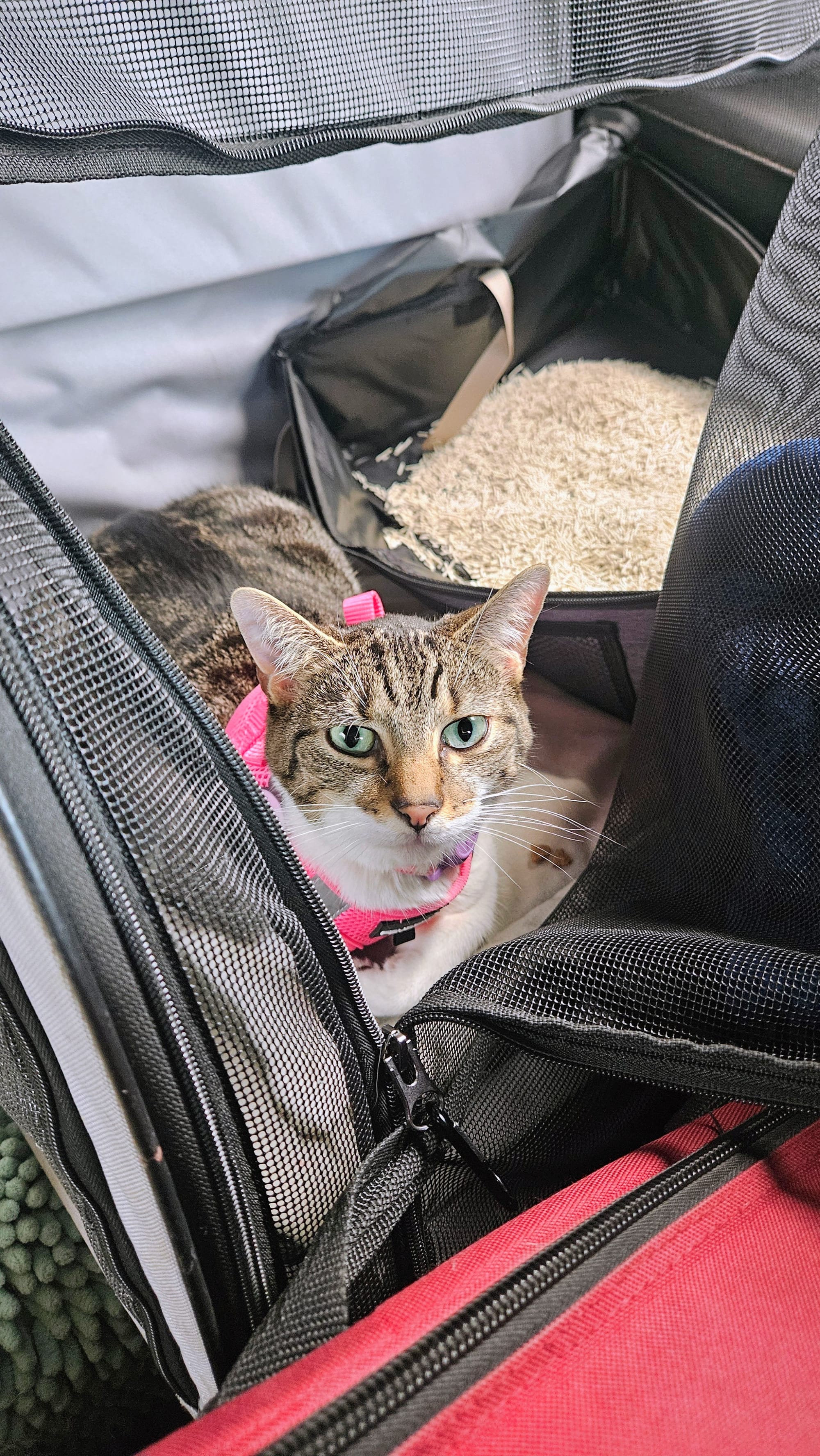
You'll see that we added a portable litter box to the car seat. This was something we needed to figure out because Lily didn't need a litter box on displacement days. She wore diapers due to incontinence, so while she was litter box trained, she also had adjusted to not having one around. Mac and Piccolo are some of the best litter-trained cats we've ever seen, so we assumed they would be fine using a litter box in the truck if we made it accessible to them. Piccolo understood the assignment. As soon as we opened the box and showed it to her, she went in it and peed. Macky knew it was there but never used it. We think he would have if he had to. One of our concerns during long displacements like this is that the cats won't drink water. A top priority is to keep them hydrated, especially because the truck makes us all very thirsty, even when we have the AC on the whole time. Lily never drank from bowls in the truck either, but she was so used to getting medicine that I could squirt water into her mouth with a syringe. I haven't tried this yet with the cats.
As you can see, displacement with 3 pets means there are a lot of moving parts. We always think we'll be able to get work done or at least listen to lots of podcasts, but we're always tending to someone's needs. Plus, after parking somewhere for a while, we all get antsy and want a change of pace. We parked at several spots around the park, returned to the campground a few times to use the bath house, and also drove to a few places in town, including Five Guys for lunch.
The displacement wasn't difficult, but it was unpleasant. We never felt like we found a comfortable place to settle for a while, mostly due to the crowds and our unlevel site. The next time we have a day-long displacement, we'll need to reconsider a few things, especially giving the cats a larger space to hang out outside the truck. And, if we ever feel it's necessary, we could always grab a hotel room for a couple nights, but this ends up being a whole other headache of packing everyone's things and helping the pets adjust to a new space. There are plusses and minuses to every choice.
The best news though, was that Buggy's day at the shop was productive and successful. While there, the list of repairs grew, but the service techs got everything done by end-of-day.
Our list going in was focused mostly on helping Buggy heal from the winter havoc:
- Reinstall the bathroom LED light
- Check for and fix any leaks in and around the mechanical cabinet
- Check for and fix leaky connectors behind the shower
- Replace the black tank flush
- Fill and seal the giant mystery hole in our floor
Reinstall the bathroom LED light
During our unexpected winter stationary time in MA, we battled a major blizzard. A bunch of branches fell on our roof, puncturing holes in the aluminum. We ended up with leaking through our bathroom ceiling light and our bedroom AC. We successfully patched the bathroom leak. The bedroom one has given us more issues, and that is warranting a major repair down the road. However, since the bathroom ceiling has been leak-free since the storm, we asked TOEC to reconnect the light. We tried to before we launched, but the wires were too tight for us to crimp them. It wasn't a huge deal because we still had a light over our sink, so we used that one until the techs could rewire the ceiling LED.
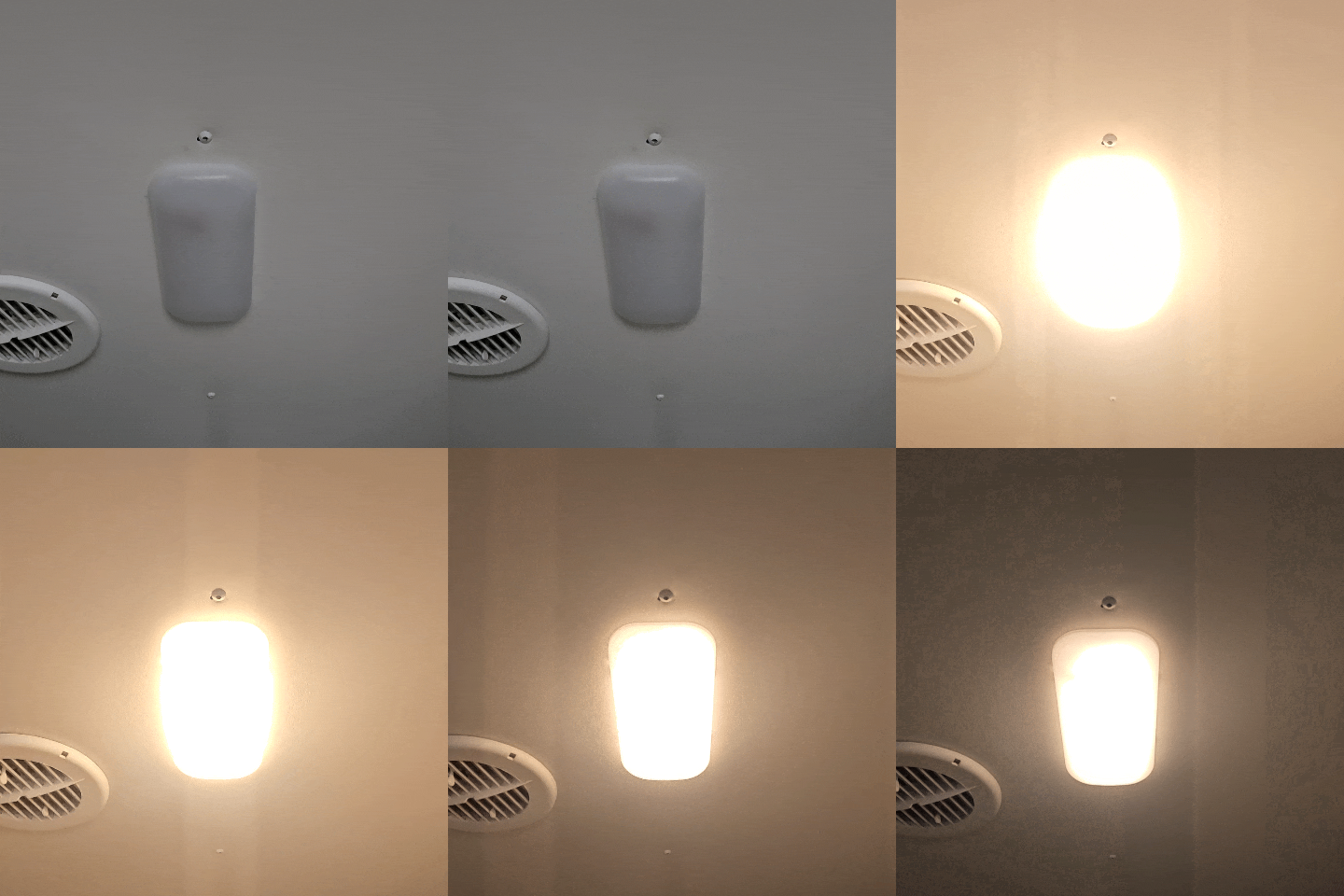
Leaks upon leaks
In fall of 2024, we had a lot of issues with our furnace. After way too many attempts at repairs, we eventually replaced the whole core, and it works great...sometimes too great. When we winter camp, typically we're spending a few cold weeks in New England to celebrate the holidays. This year, we put our trailer to the test because we got stuck in MA for 4 months, straight through the coldest days. We've talked before about why we run our propane furnace as opposed to relying on electric space heaters. The furnace helps to keep the trailer's internal systems warm because the heat is ducted through many of our cabinets. This is good. What isn't good is that a lot of the heat also radiates out of the furnace's case, and the mechanical cabinet gets very hot. This happened a little bit with our first furnace, but it happens more with this one. Most winters, this causes some issues with leaks because the connectors expand and crack. This winter, though, we put those connectors through the ringer. The more we ran our furnace, the more issues we had, to the point where we actually used a thermometer to make sure the furnace wasn't heating to dangerous temperatures. We fixed the leaks as best we could, but they just kept happening. We had constant leaks in our mechanical cabinet and also found one in the panel behind our shower, which we access from the bedroom closet. Then, shortly after launching, we noticed our black tank flush connectors were leaking, too. We safely assumed this was a residual effect of the heat.
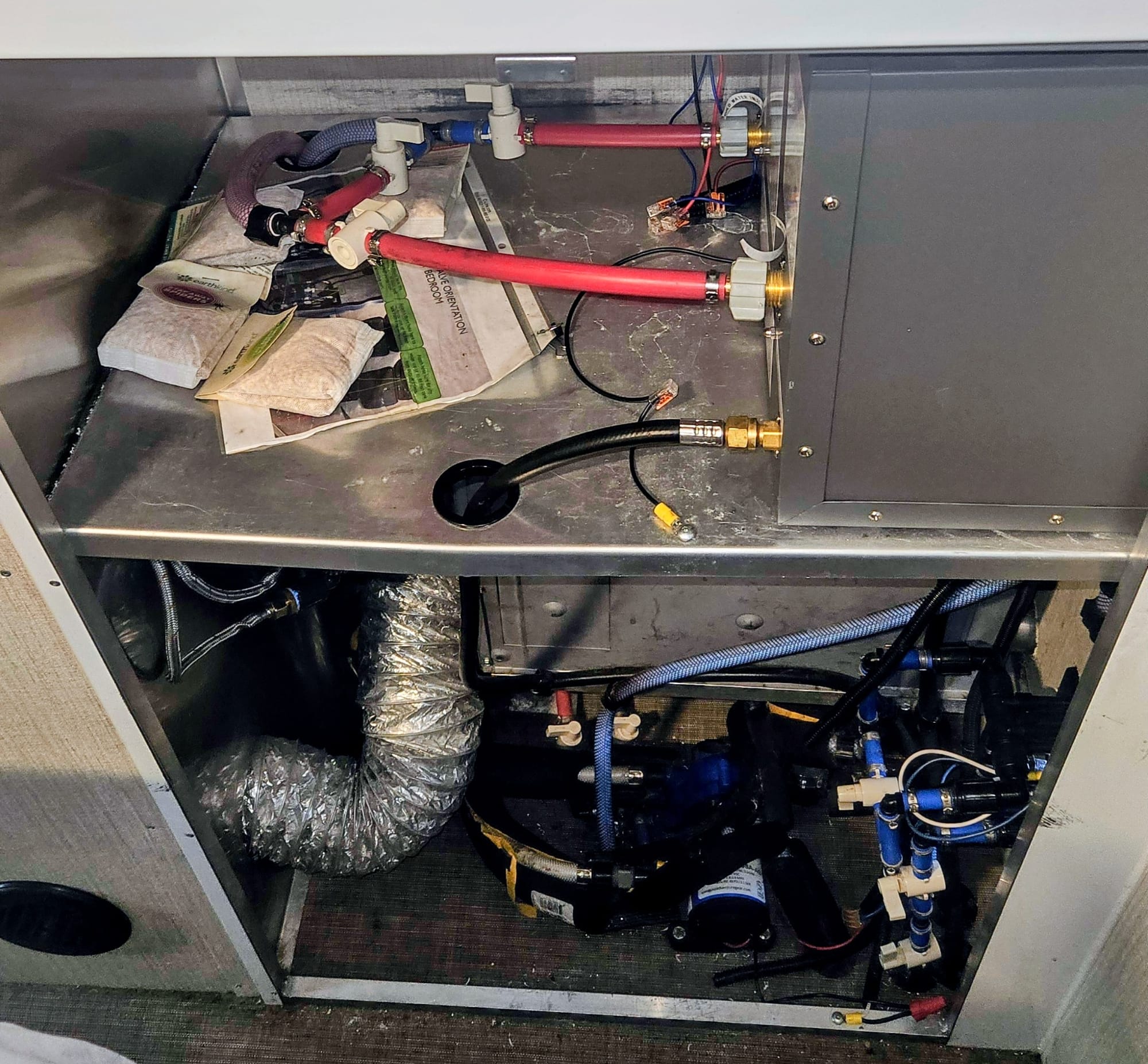
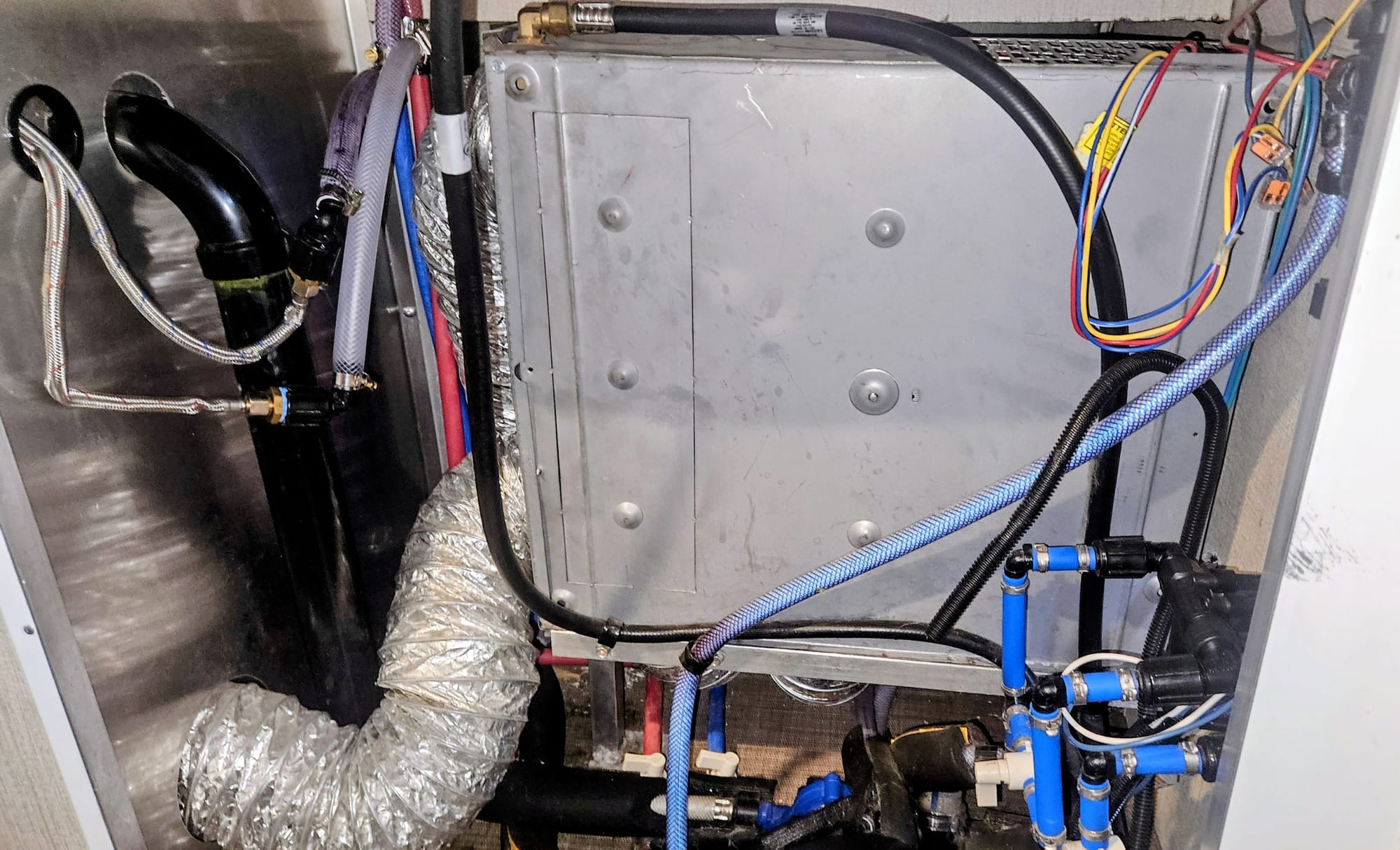
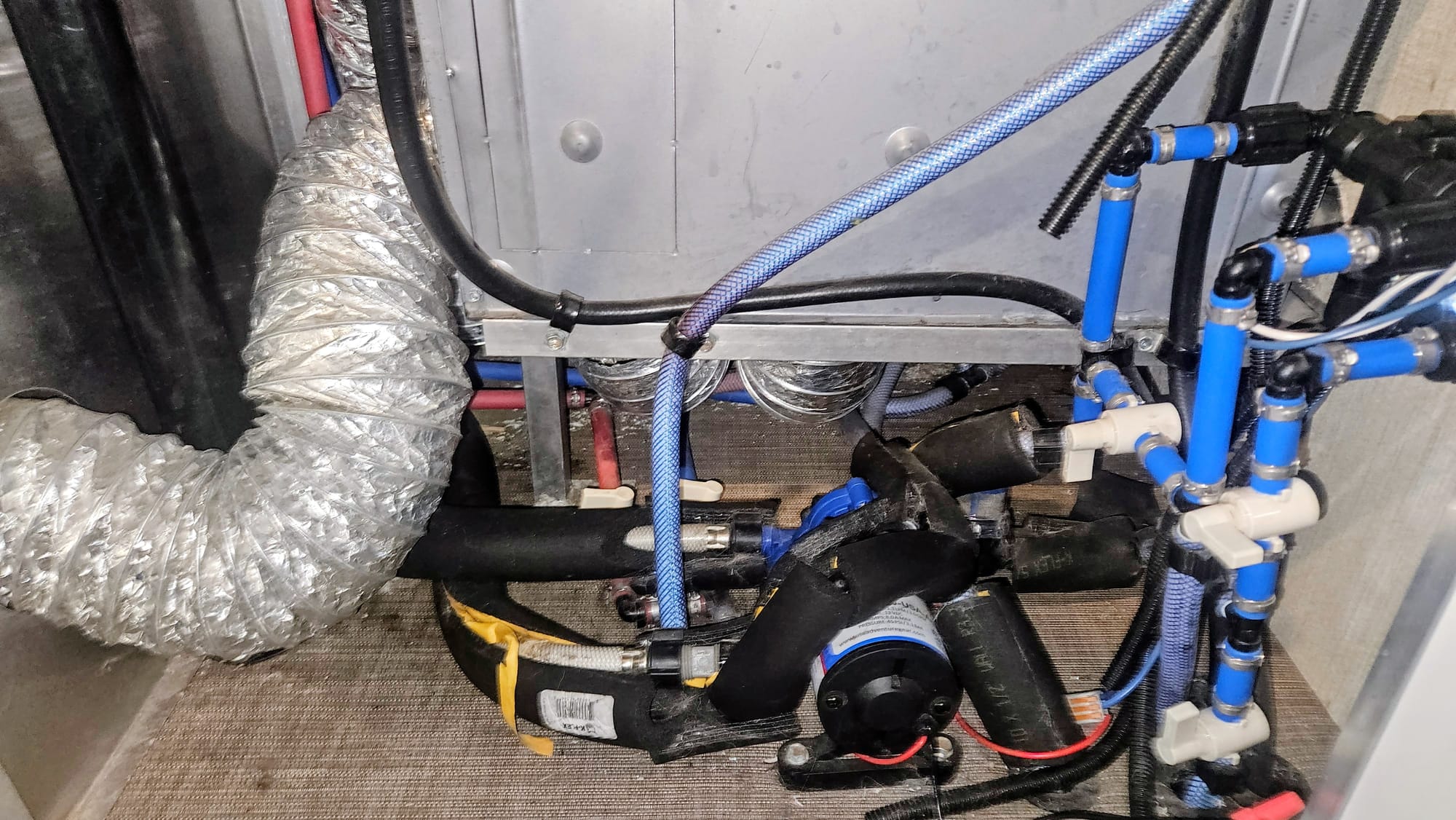
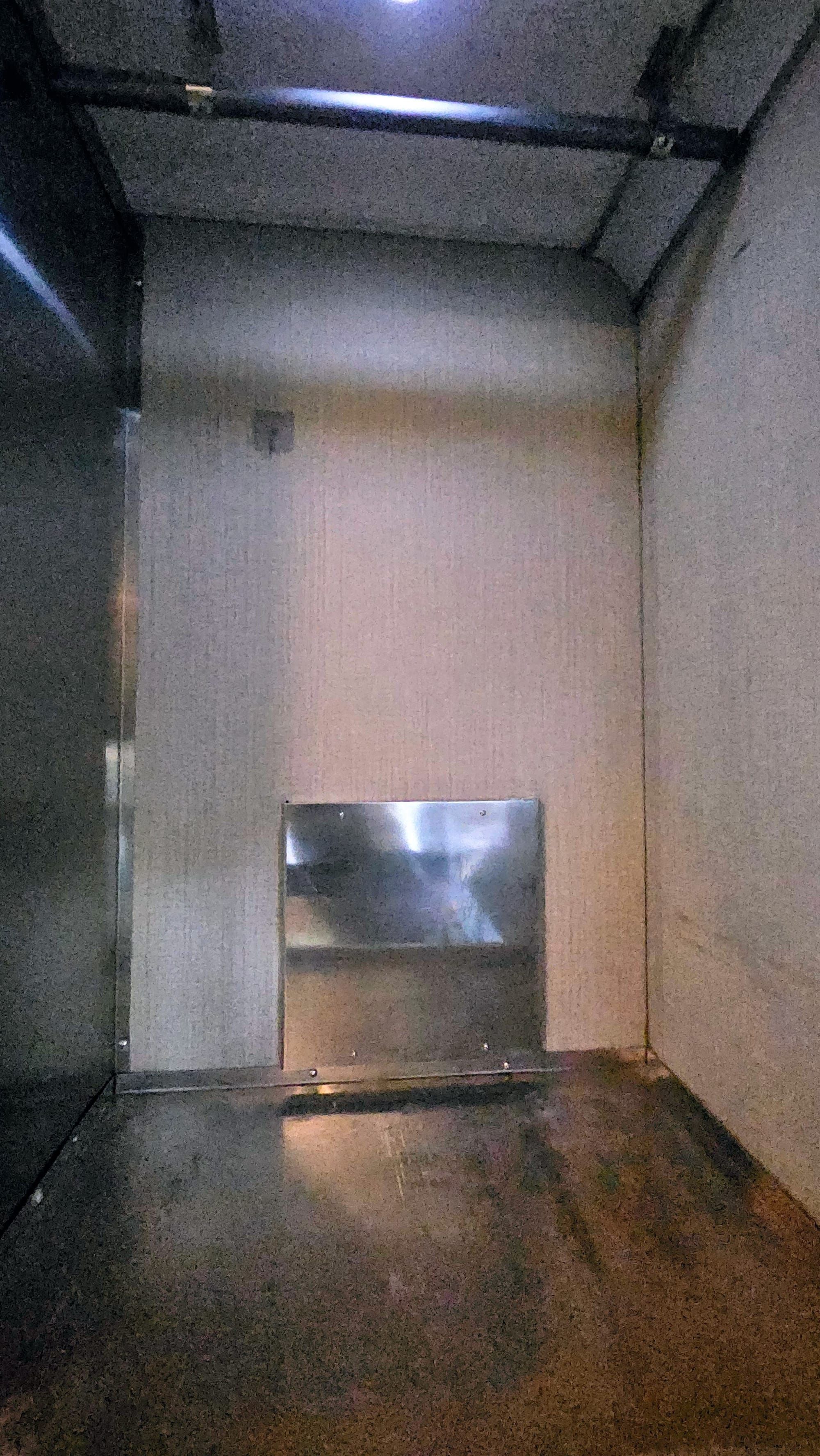
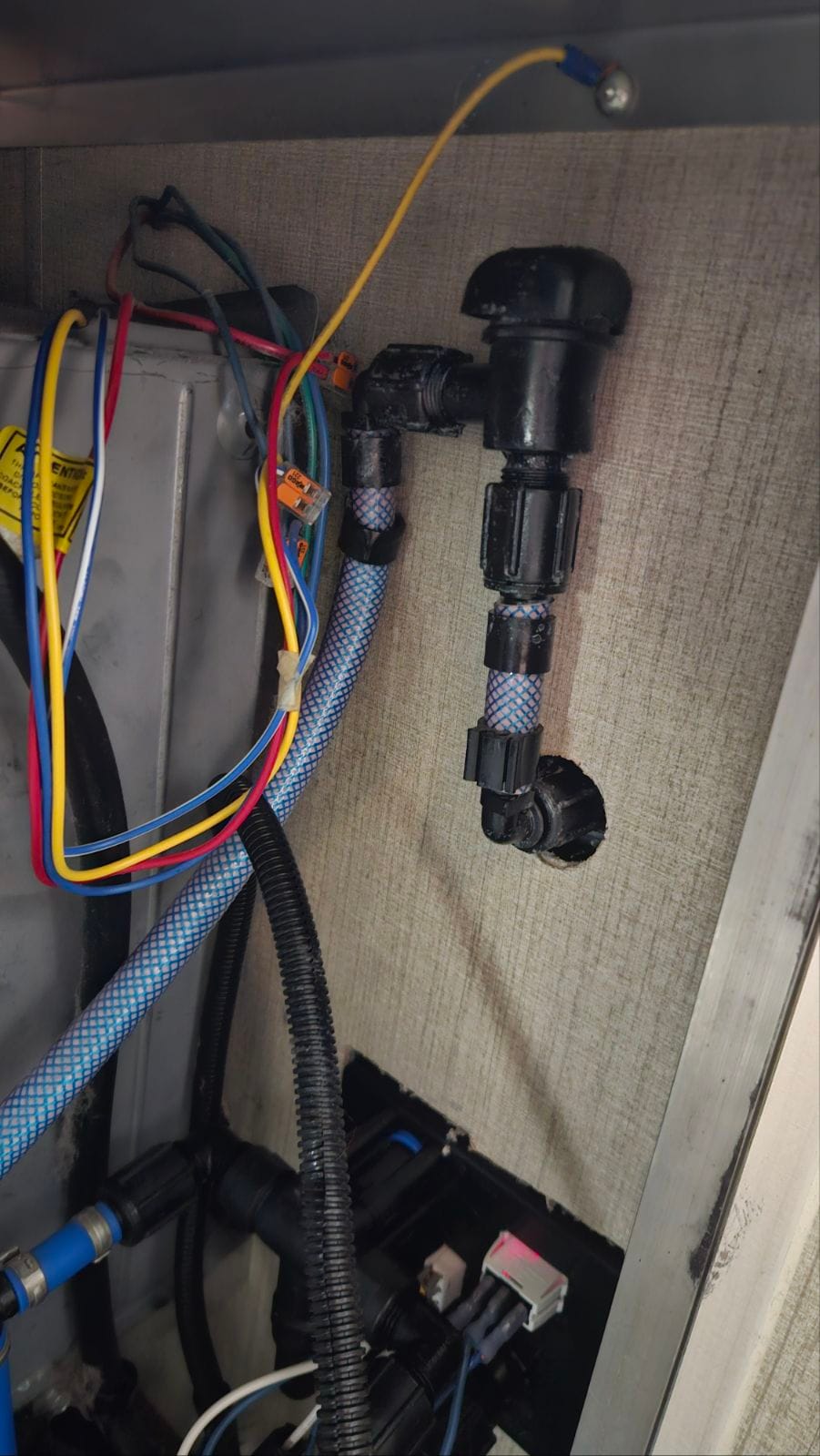
We told TOEC about these leaks, as well as the one we found above our gray tank. They said they would try to find as many as possible and change the connectors. Not only did they find even more leaks than we knew about, but they also found that the furnace had scorched one of the water lines!
Are these fixes actually going to stick, or are they a Band-Aid? A little of both. Most RVers complain about the cheap plastic connectors, and they're right. Metal ones are much stronger. Our issue is a little more complicated, because ATC will use metal connectors some of the time, plastic others. What's worse than just plastic connectors is having both materials connected to each other. Plastic is much weaker and has greater thermal expansion, and the incompatibility of both materials can cause more failures than just cheap plastic alone. So TOEC used all plastic fittings, which could solve some of the problems. But we all know that the greater problem is the furnace itself. For that, step 1 is to not get stuck in prolonged winter ever again. Step 2 is to figure out if there's something we can do to better vent the heat out of the mechanical cabinet. TBD on that one.
Fill and seal the giant mystery hole in our floor
In late fall, we were preparing our trailer for storage for the winter. Ah yes, remember that little life detail? The whole reason we were so ill-prepared for prolonged winter was because we thought we'd be out of the RV! Before moving to our winter rental, Anthony went through the trailer to check and reseal all holes in the RV. What he found was a little more than he expected.
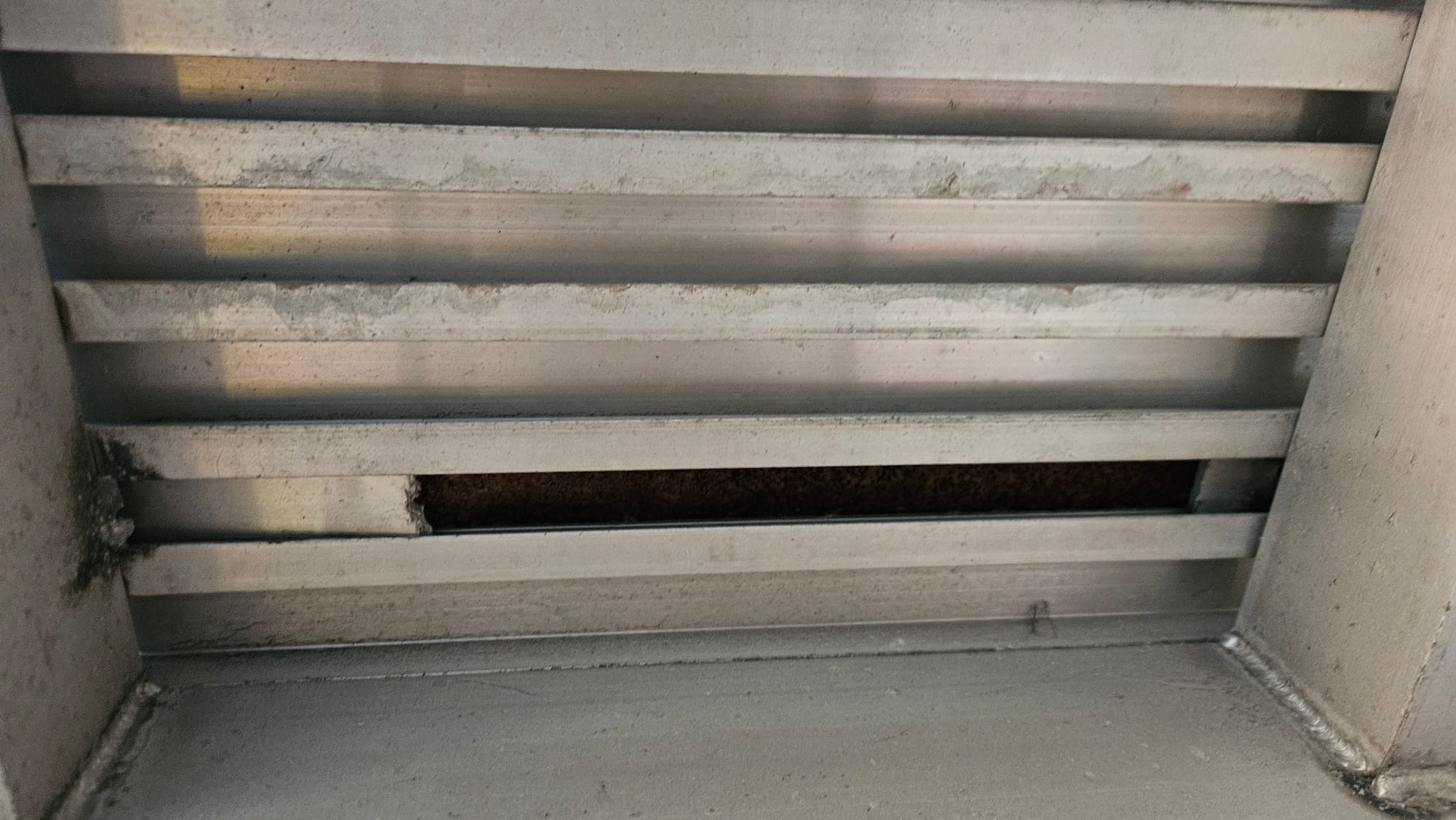
How we lost a foot-long piece of aluminum flooring is still beyond comprehension, but the good news was, it wasn't structural. We could have been traveling with this hole for miles and not even known. Anthony patched it up and reached out to the pros to see what we could do. TOEC said they would try to insert another piece of aluminum and bond it back together with the rest of the floor. Couldn't hurt to try!
When we dropped the trailer off, we showed them the hole, and to our surprise, we also had 3 cracked welds in our trailer! We were concerned, but the tech was not. We learned that cracked welds are par for the course when we're bouncing down the road at 65mph. Now, when a weld in the structural part of the frame busts, this is where the big problems lie, but ours were near the rear of the trailer, not in a structural part of the frame. TOEC fixed the welds for us while they were fixing the hole.
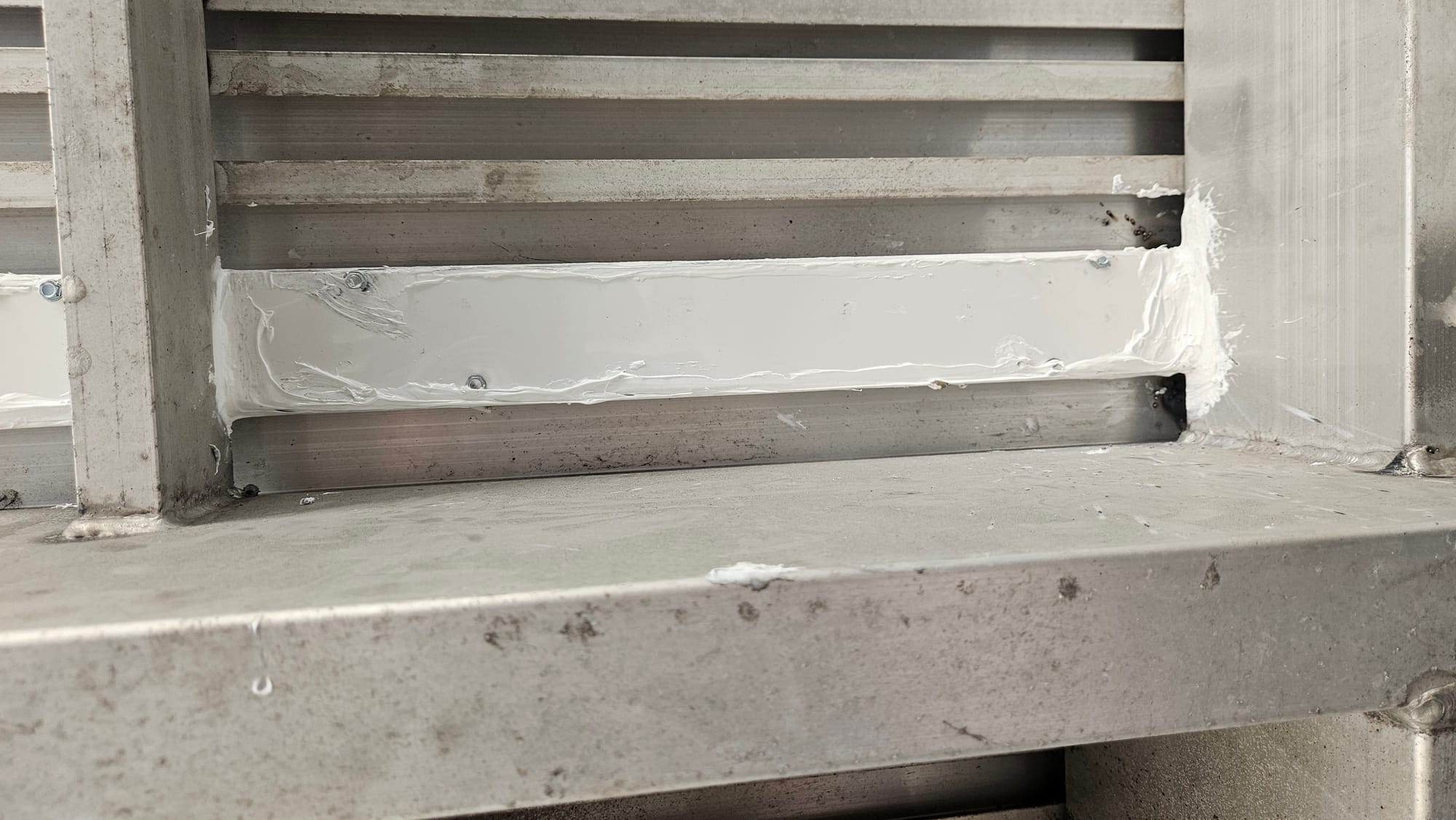
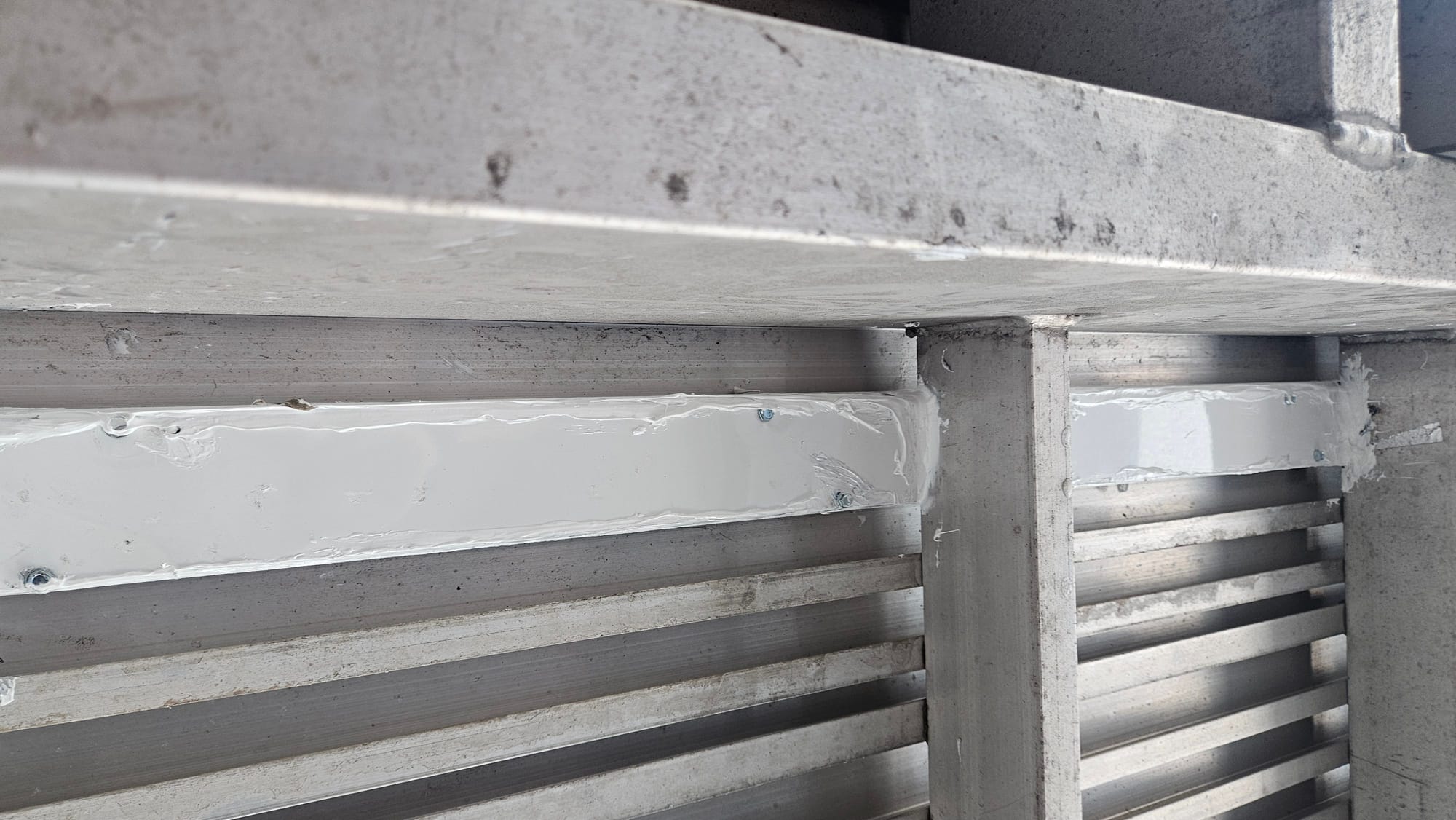
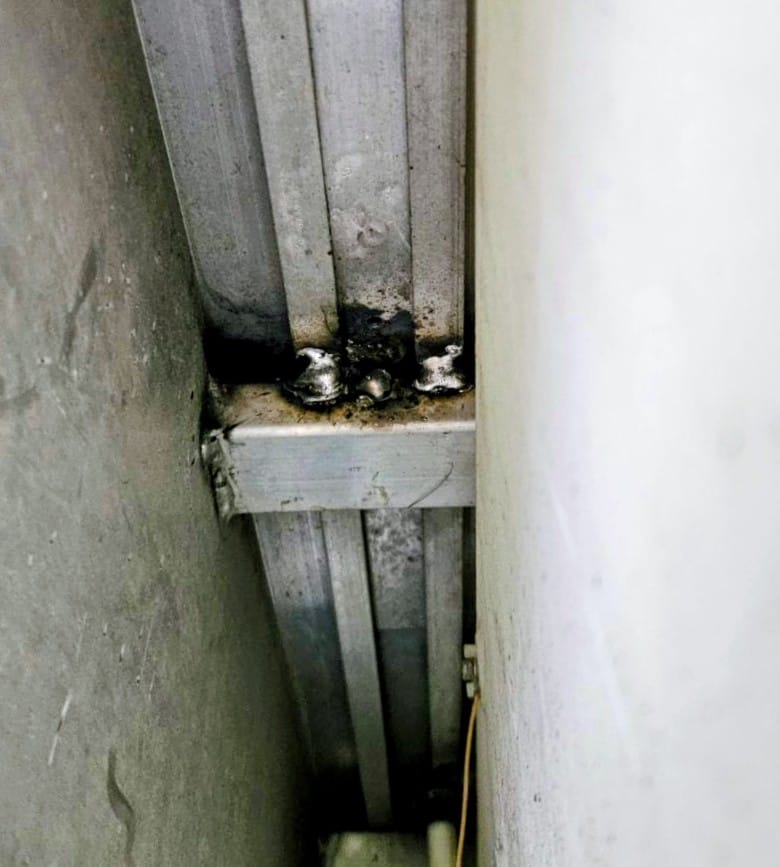
This was a lot to get done in just one day, but we still have big repairs looming, punctuated by the damaged roof needing to get replaced. More repairs and a longer displacement are in our near future, but at least we made good progress during this appointment.